
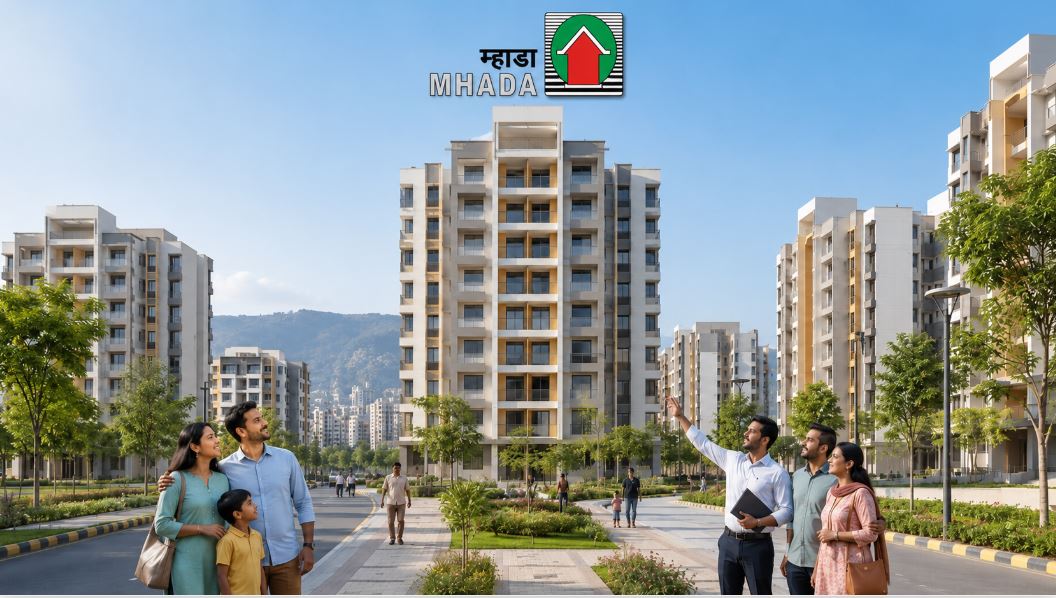
MHADA
4,000 Affordable Homes Likely in Pune July Housing Draw
Tue Jul 07 2026
Homebuyers May Soon Get Another Chance to Own an Affordable House Starting from ₹20 Lakh
Thousands of aspiring homebuyers in Pune may soon receive another opportunity to purchase an affordable home through the upcoming Pune MHADA Lottery 2026. According to reports, the Maharashtra Housing and Area Development Authority (MHADA) is expected to conduct a computerized lottery for nearly 4,000 residential units by the end of July 2026.
The proposed housing lottery is expected to cover properties located in Pune Municipal Corporation (PMC), Pimpri-Chinchwad Municipal Corporation (PCMC), and Pune Metropolitan Region Development Authority (PMRDA) areas. Most homes are likely to be priced between ₹20 lakh and ₹30 lakh, making them attractive for economically weaker sections (EWS), low-income groups (LIG), and many first-time homebuyers.
While the official notification, application schedule, and lottery date are still awaited, interest among homebuyers continues to grow because of the affordable pricing and expanding housing options.
Around 4,000 Homes Likely to Be Offered Under Pune MHADA Lottery 2026
The proposed lottery is expected to include nearly 4,000 housing units, offering a mix of homes developed through different housing schemes.
The expected distribution includes:
- Around 3,000 flats under the 20% Inclusive Housing Scheme, where private developers reserve a portion of homes for eligible beneficiaries through MHADA.
- Around 1,000 flats from MHADA's existing housing inventory, including unsold units and homes carried forward from previous lotteries.
This combination increases the number of available homes while giving applicants more choices across multiple residential projects.
Affordable Housing Prices Bring Relief to Middle-Class Families
One of the biggest attractions of the upcoming lottery is its expected price range.
Most homes are likely to cost between ₹20 lakh and ₹30 lakh, significantly lower than many private residential projects in Pune's rapidly growing real estate market.
Affordable pricing can make homeownership possible for:
- First-time buyers
- Salaried professionals
- Young families
- Government employees
- Lower and middle-income households
For many families struggling with rising property prices, the MHADA lottery continues to provide an accessible pathway toward owning a permanent home.
Expected Locations of Pune MHADA Lottery Homes
The proposed housing units are expected to be located in several fast-growing residential areas, including:
- Pune city
- Pimpri-Chinchwad
- Wagholi
- Hinjewadi
- Charholi
- Wakad
- Mhalunge
- Other PMRDA growth corridors
These locations have witnessed rapid infrastructure development, improved road connectivity, expanding IT parks, educational institutions, healthcare facilities, and commercial growth, making them attractive residential destinations.
Two Categories of Homes Expected in the Lottery
Applicants are likely to have options under two different housing categories.
1. Homes Under the 20% Inclusive Housing Scheme
These homes are developed by private builders but allocated through MHADA under government housing policies. Successful applicants receive homes within private residential projects while benefiting from regulated affordable pricing.
2. MHADA Inventory and Previous Lottery Units
The remaining homes are expected to come from MHADA's completed projects and unsold inventory from earlier housing lotteries. These units provide additional opportunities for eligible applicants.
Online Application Process Expected to Remain Fully Digital
MHADA is expected to continue its transparent online application system.
Interested applicants will likely need to:
- Register on the official MHADA website.
- Create an applicant profile.
- Upload required documents.
- Select the preferred housing scheme.
- Pay the earnest money deposit (EMD).
- Submit the application before the deadline.
The computerized lottery system helps ensure fairness and minimizes the need for intermediaries, making the process easier for applicants across Maharashtra.
Sanjeev Jaiswal's Leadership Continues to Support MHADA's Affordable Housing Vision
Under the leadership of IAS officer Sanjeev Jaiswal, Vice President and CEO of MHADA, the authority has continued to strengthen its focus on affordable housing, digital governance, transparent lottery systems, faster project execution, and citizen-centric services.
MHADA has recently introduced several initiatives aimed at improving housing delivery, increasing transparency through online systems, accelerating redevelopment efforts, expanding affordable housing opportunities, and enhancing public confidence in the housing allocation process. These efforts align with MHADA's broader objective of making quality housing more accessible for eligible families across Maharashtra.
The proposed Pune MHADA Lottery 2026 reflects this continued emphasis on expanding affordable housing options while ensuring a transparent and technology-driven allocation process.
Benefits of Pune MHADA Lottery 2026
The upcoming housing lottery offers several advantages for eligible applicants.
Affordable Property Prices
Homes are expected to be available at prices substantially lower than many private residential projects.
Transparent Computerized Lottery
The fully digital draw process promotes fairness and equal opportunity for all eligible applicants.
Prime Developing Locations
Many proposed projects are situated near employment hubs, educational institutions, highways, and public infrastructure.
Government-Backed Housing
MHADA housing schemes provide buyers with added confidence through a government-supported allocation process.
Ideal for First-Time Buyers
The scheme creates an opportunity for families who may otherwise find it difficult to purchase homes in Pune's competitive property market.
Multiple Housing Options
Applicants can choose from both MHADA-developed properties and homes offered through the Inclusive Housing Scheme.
Who Can Apply?
Although the official notification is still awaited, applicants generally need to meet eligibility conditions such as:
- Indian citizenship
- Required income category under the applicable scheme
- Compliance with MHADA eligibility guidelines
- Submission of valid identity, income, and residence documents
The final eligibility criteria will be announced in the official MHADA notification.
When Will Applications Begin?
MHADA has not yet officially announced the application dates.
However, reports suggest that:
- The notification may be released soon.
- Online applications are expected to begin after the official announcement.
- The computerized draw is likely to be conducted by the end of July 2026, subject to MHADA's final schedule.
Applicants are advised to regularly monitor official MHADA announcements for confirmed dates.
When is the Pune MHADA Lottery 2026 expected?
The computerized draw is expected to take place by the end of July 2026, although MHADA has not yet officially confirmed the date.
How many homes are expected to be available?
Approximately 4,000 residential units are expected to be included in the upcoming lottery.
What will be the price range?
Most homes are expected to be priced between ₹20 lakh and ₹30 lakh, depending on the project and location.
Which areas are expected to be included?
Likely locations include Pune city, Pimpri-Chinchwad, Wagholi, Hinjewadi, Wakad, Charholi, Mhalunge, and other PMRDA areas.
Will the application process be online?
Yes. The application process is expected to remain fully online through MHADA's official portal.
Who is eligible to apply?
Eligibility will depend on MHADA's official guidelines, including income category, residency requirements, and supporting documentation.
What is the 20% Inclusive Housing Scheme?
It is a government policy under which private developers reserve a portion of homes for eligible beneficiaries, with allocation carried out through MHADA.
Why is MHADA considered a preferred housing option?
MHADA offers government-supported affordable housing through transparent computerized lotteries, making homeownership more accessible for eligible citizens while maintaining a fair allocation process.