
MHADA
634 MHADA Tathawade Homes Back on Sale in Pune
Tue Jul 21 2026
The affordable housing conversation often focuses on supply shortages. But sometimes the bigger question is whether the homes being built actually match what buyers are willing and able to purchase. MHADA's latest decision to re-launch 634 unsold homes in Pune's Tathawade project reflects this reality. Rather than allowing completed homes to remain vacant, the authority has chosen to widen eligibility, simplify access, and give more homebuyers another opportunity through a fresh lottery scheduled for August 25. The move is not just about selling homes, it is about making housing policy more responsive to market demand.
One of the key developments under the leadership of IAS Sanjeev Jaiswal, Vice President and Chief Executive Officer of MHADA, has been a stronger focus on improving housing accessibility while ensuring completed residential projects reach deserving buyers. The decision to re-lottery unsold homes in Tathawade, combined with relaxed income eligibility conditions, reflects a practical approach that prioritizes occupancy over idle inventory. Instead of maintaining rigid eligibility norms, MHADA's Pune Board has adapted its strategy to expand participation and improve access to affordable housing.
Highlight: MHADA's latest Tathawade lottery demonstrates that successful housing policy depends not only on building homes but also on ensuring the right buyers can access them.
MHADA to Re-Lottery 634 Unsold Homes in Tathawade
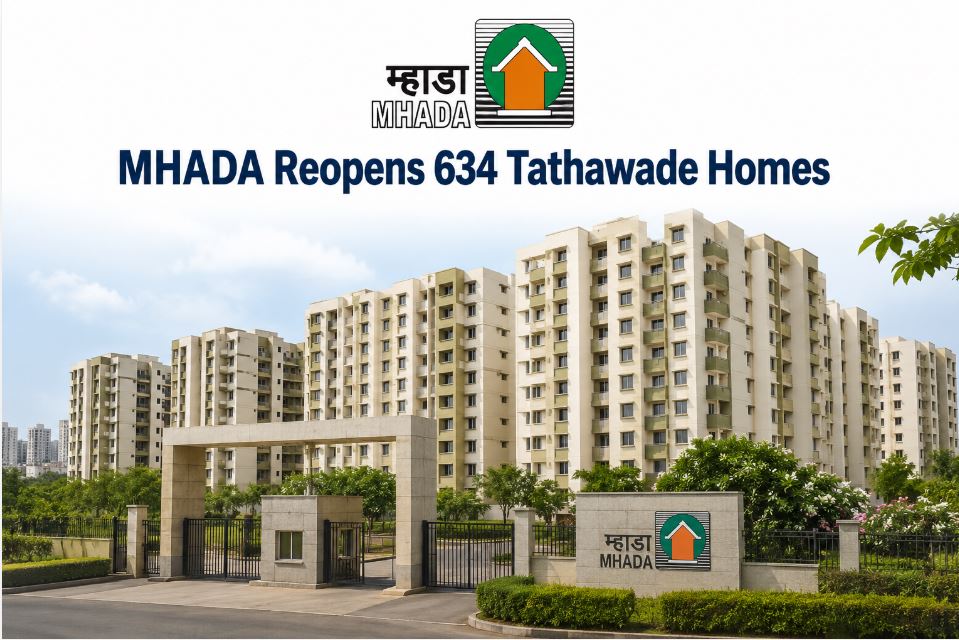
The Pune Board has announced that 634 houses from the second phase of its Tathawade housing project will be offered again through a fresh computerized lottery.
Originally, the second phase consisted of 792 houses. However, despite the project's completion nearing its final stage, only 158 units received successful buyers, leaving 634 houses vacant.
Recognizing the need to improve participation, MHADA has now published a fresh lottery advertisement. Registration, application sales, and acceptance officially begin on July 20, giving interested buyers another opportunity to participate.
The lottery itself will be conducted on August 25, following a month-long application and verification process.
Why Did So Many Homes Remain Unsold?
The response to the earlier lottery highlighted an important lesson for public housing agencies.
According to the Pune Board, many potential buyers considered the homes expensive relative to their expectations. As a result, a significant portion of the available inventory remained unsold despite being located in one of Pune's growing residential corridors.
Instead of delaying the project or leaving completed homes vacant, MHADA has revised its eligibility criteria. This policy adjustment acknowledges that housing demand is influenced not only by availability but also by affordability and eligibility conditions.
The revised lottery attempts to bridge that gap without changing the housing stock itself.
Income Eligibility Relaxed Across All Categories
The most significant change in the new lottery is the relaxation of income conditions.
Previously, applicants were restricted by income categories while applying for homes under specific housing segments. Under the revised rules, applicants from all income groups can now participate.
Eligible applicants now include individuals from:
- Economically Weaker Sections (EWS)
- Low Income Group (LIG)
- Middle Income Group (MIG)
- High Income Group (HIG)
This broader eligibility expands the pool of potential buyers and increases the likelihood that completed homes will be occupied sooner.
The decision also provides flexibility for families who may have previously been excluded because of income classification despite having genuine housing requirements.
Home Prices Remain Clearly Defined
The fresh lottery includes two housing configurations.
Interested applicants can apply for:
- Approximately 1 BHK homes priced around ₹46 lakh
- Approximately 2 BHK homes priced at ₹64.50 lakh
These prices remain unchanged, indicating that MHADA's strategy focuses on widening access through eligibility reforms rather than altering project pricing.
For many buyers, this creates another opportunity to secure a government-developed home through a transparent lottery process.
Tathawade Project Reflects Long-Term Housing Planning
The Tathawade housing project represents a larger residential development undertaken by MHADA's Pune Board.
Several years ago, the Board acquired land in Tathawade and initiated construction of more than 1,500 homes in two phases.
The first phase included more than 600 houses, which were completed and allotted through an earlier lottery.
The current lottery concerns the 792 homes constructed in the second phase, where the majority of units remained vacant after the initial allotment process.
Rather than treating unsold inventory as a setback, MHADA has chosen to modify policy conditions and reopen applications, a decision that may improve occupancy while maximizing the public value of completed housing.
Complete MHADA Tathawade Lottery Schedule
The Pune Board has also released the complete timetable for the lottery process.
The schedule is as follows:
- July 19: Lottery advertisement published
- July 20: Registration and application sales begin
- August 17: Last date for online applications
- August 18: Last date to deposit application amount through RTGS/NEFT
- August 20: Draft list of applications
- August 22: Submission of claims and objections
- August 23: Final list of eligible applicants
- August 25: Computerized lottery draw
The structured timeline provides applicants with clear milestones while ensuring transparency throughout the allocation process.
What This Means for Pune's Housing Market
The Tathawade re-lottery highlights an important shift in public housing administration.
Government housing initiatives cannot rely solely on construction targets. Matching eligibility rules with actual buyer demand is equally important. When completed homes remain vacant, both public investment and housing supply remain underutilized.
By expanding eligibility instead of allowing completed inventory to sit idle, MHADA has adopted a more flexible approach. This decision could improve occupancy rates while giving a broader section of homebuyers access to government-developed housing.
The experience from Tathawade may also offer valuable lessons for future affordable housing projects. Market feedback, pricing perceptions, and eligibility norms all influence participation. Responding to these realities can make housing schemes more effective without compromising transparency.