
Maharashtra
Amit Shah Highlights Maharashtra’s Role in Connecting Indian Languages
Tue Sep 15 2026
Hindi Should Build Bridges Between Indian Languages
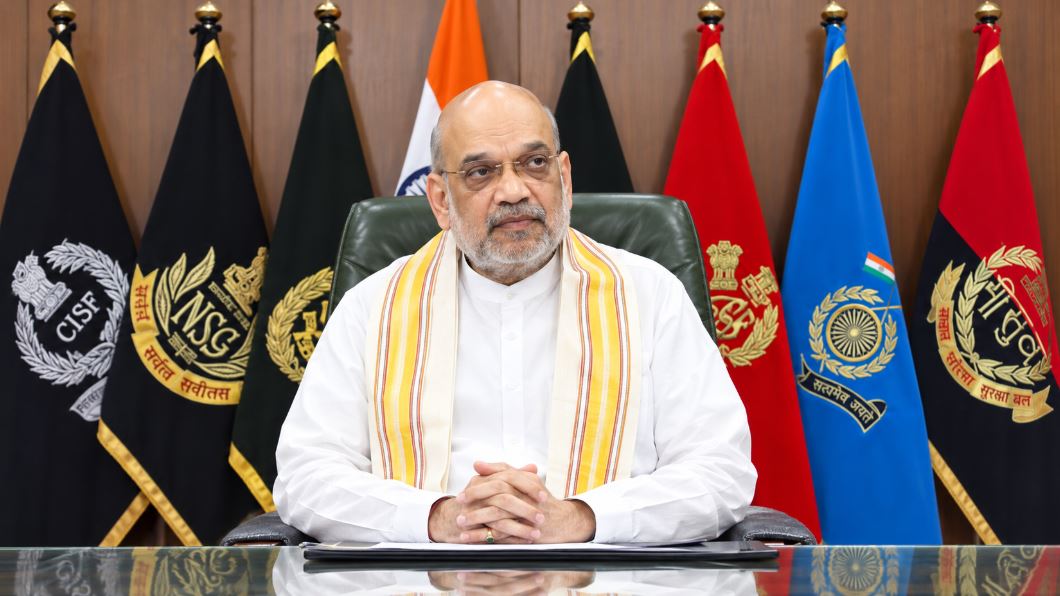
Union Home Minister Amit Shah said Maharashtra represents one of India’s strongest examples of multilingual culture, with people using Marathi, Hindi, Konkani, Gujarati, Sindhi, Kannada, Warli and other languages. He said Hindi should serve as a bridge between Indian languages and communities rather than compete with regional languages.
Shah was speaking at the 6th All India Rajbhasha Sammelan held in Vashi, Navi Mumbai, on the occasion of Hindi Diwas. He said India’s languages may have different expressions and identities, but the feeling of being Indian should remain common.
He also called for political differences to be kept aside when promoting Indian languages. According to Shah, a child develops a deeper understanding of the country through his or her mother tongue.
Maharashtra’s Languages Reflect India’s Diversity
Shah highlighted Maharashtra’s rich linguistic heritage and said the state has developed a particularly diverse multilingual culture. He also noted that Marathi received classical language status in 2024.
He referred to Chhatrapati Shivaji Maharaj and said Marathi had an important place in governance during his time. Shah also recalled the contribution of Bal Gangadhar Tilak, who used public Ganesh celebrations and Chhatrapati Shivaji Maharaj’s birth anniversary events to build cultural awareness and patriotic sentiment during the freedom movement.
Shah said India’s cultural identity becomes stronger when people respect and promote every Indian language.
Hindi Shabd Sindhu Expands With Regional Words
The Home Minister highlighted the growth of the Hindi Shabd Sindhu dictionary. He said the initiative started with about 51,000 words and has now expanded to around eight lakh words, with the goal of becoming the world’s largest dictionary by 2029.
More than 50,000 words from Indian regional languages have reportedly been added to the dictionary. These include words from Marathi, Tamil, Telugu, Gujarati, Bengali and Odia, among others.
Shah said this approach can make Hindi more flexible while also giving greater recognition to the richness of India’s regional languages.
Translation Tools Aim to Support Indian Languages
Shah said the government is working to increase the use of Indian languages in governance, education and science. He highlighted multilingual translation technology developed by the Rajbhasha Department, including the AI-based Bharati translation tool.
He also mentioned the Bharatiya Bhasha Anubhag and other language-learning initiatives. More than five lakh Central government employees have received language training, he said.
The government has also developed resources such as Kanthasth 2.0, Leela Rajbhasha and Leela Pravah to support language learning and translation.
Shah invited elected representatives from Maharashtra to communicate with the Central government in Marathi, saying translation arrangements were available.
Indian Languages in Education and Competitive Exams
Shah pointed to the growing use of Indian languages in education and competitive examinations. He said candidates can take major examinations such as the IAS and IPS exams in their mother tongue.
He also noted that examinations such as JEE, NEET and undergraduate entrance tests are being offered in multiple Indian languages.
He connected the promotion of Indian languages with the National Education Policy and said mother-tongue education can help children learn more effectively.
Leaders Call for Equal Respect for All Languages
Maharashtra Chief Minister Devendra Fadnavis also called for equal respect for all Indian languages. He said education in the mother tongue can improve learning and make administration easier for citizens.
Deputy Chief Minister Eknath Shinde described Marathi and Hindi as sister languages that share the Devanagari script. He supported greater use of Indian languages in areas such as law, science and technology.
Deputy Chief Minister Sunetra Pawar emphasized the need to make official and administrative language simpler so government communication can be understood easily by the public.
Vande Mataram and India’s Cultural Identity
Shah also spoke about Vande Mataram and its role in India’s freedom movement. He described the national song as an important part of the effort to awaken national consciousness and strengthen cultural identity.
He said Indian culture can be understood as a many-petalled lotus, with each regional language representing one of its petals. The languages may remain diverse, he said, while the national sentiment and India’s collective voice can remain united.
The Rajbhasha Sammelan also featured the release of several publications and language resources, including a special issue of Rajbhasha Bharati and a digital Hindi Shabd Sindhu resource. Awards under the Rajbhasha Kirti and Rajbhasha Gaurav categories were also presented during the event.