
Maharashtra
BMC Fast-Tracks Mumbai's Key Infrastructure Projects
Mon Jul 13 2026
Mumbai's Major Road Projects Get Fresh Completion Timelines to Reduce Traffic Across Key Corridors
Mumbai is set to witness significant improvements in road connectivity as the Brihanmumbai Municipal Corporation (BMC) has announced new completion deadlines for three major infrastructure projects. The long-awaited Vidyavihar East-West Connector is expected to open by the end of August 2026, while the first operational phase of the Goregaon-Mulund Link Road (GMLR) is targeted for September 2026. The Mankhurd–Maharashtra Nagar Flyover, another important traffic relief project, is scheduled for completion by May 2027.
The updated timelines were finalized following a project review conducted by Additional Municipal Commissioner Abhijit Bangar, who directed officials to accelerate construction and remove hurdles delaying progress. The projects are part of Mumbai's larger infrastructure expansion aimed at reducing congestion, improving east-west connectivity, and supporting faster travel across the city.
Vidyavihar East-West Connector Nears Completion After More Than 30 Years
One of Mumbai's most awaited infrastructure projects, the Vidyavihar East-West Connector, is finally approaching completion after remaining in planning and construction stages for over three decades.
The project, developed at an estimated cost of ₹76.18 crore, is expected to open to traffic by August 31, 2026. Once operational, the 650-meter, two-lane flyover will directly connect LBS Marg with Ramchandra Chemburkar Marg, creating a faster route between Vidyavihar East and West.
A key engineering highlight of the project is its 100-meter railway-span steel girder, making it one of the city's longest railway bridge spans. The connector is expected to reduce travel time between both sides of Vidyavihar from more than 30 minutes to nearly 10–15 minutes, providing major relief to daily commuters.
The project also includes several upgrades for pedestrians around Vidyavihar railway station. These improvements include new access roads, reconstructed station infrastructure, and a staircase connecting the foot overbridge directly to the subway, making movement safer and easier for thousands of passengers.
According to BMC officials, nearly 80% of the construction work has already been completed, with finishing activities currently underway.
Dindoshi–Film City Flyover to Open in September as First Phase of GMLR
Another important project moving toward completion is the Dindoshi–Film City Flyover, which is now expected to open in September 2026 after missing its earlier target of May.
The 1.2-kilometer elevated corridor, built at an estimated cost of around ₹300 crore, will connect Dindoshi on the Western Express Highway with Film City near Sanjay Gandhi National Park (SGNP).
The new flyover is designed to ease heavy traffic on the Western Express Highway while improving access to Film City and nearby residential areas.
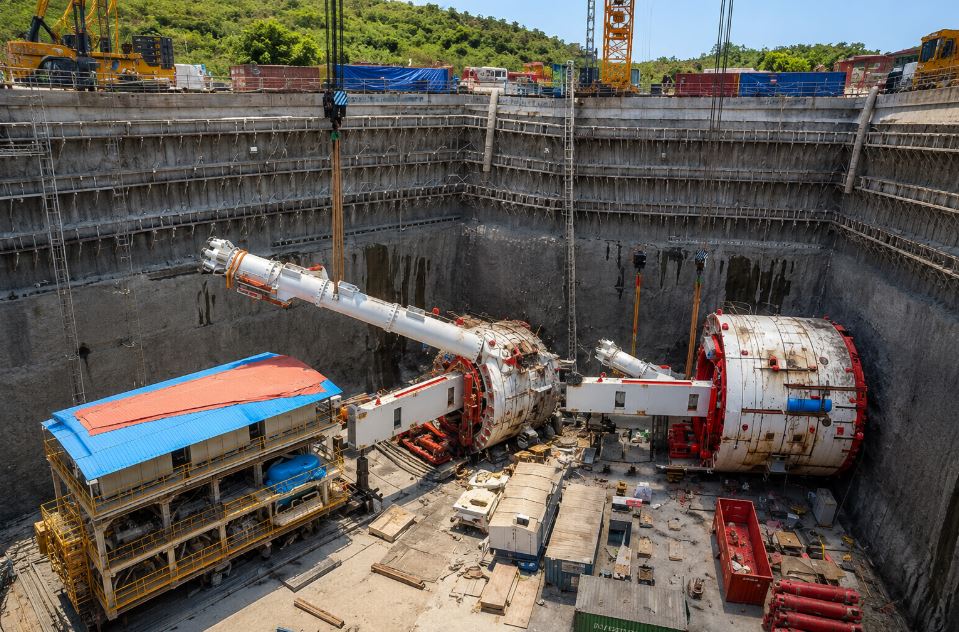
More importantly, it represents the first operational phase of the ambitious ₹14,000-crore Goregaon-Mulund Link Road (GMLR). Once the project's twin tunnels become operational, currently targeted for 2027, commuters will benefit from a direct high-speed connection between Mumbai's eastern and western suburbs.
BMC officials confirmed that the major civil construction has already been completed. The remaining work includes road surfacing, lane markings, painting, installation of traffic signals, lighting, and directional signage before the flyover is opened to the public.
Mankhurd–Maharashtra Nagar Flyover to Ease Traffic Between Mumbai and Navi Mumbai
Motorists using the busy Sion-Panvel Highway can also expect long-term relief as work continues on the Mankhurd–Maharashtra Nagar Flyover, with completion targeted by May 31, 2027.
The project has been designed to eliminate congestion at the heavily crowded Mankhurd T-Junction, one of the city's busiest traffic intersections connecting Mumbai with Navi Mumbai.
The flyover consists of two separate two-lane elevated arms.
The first arm, measuring 1.42 kilometers, will allow vehicles traveling from the Ghatkopar-Mankhurd Link Road to move directly toward Vashi without stopping at the junction.
The second arm, stretching 1.95 kilometers, will carry traffic from Vashi directly toward Ghatkopar, reducing delays for thousands of daily commuters.
Construction officially began in October 2024, and BMC officials stated that approximately 33% of the project has been completed so far.
BMC Orders Faster Construction and Better Traffic Planning
During the latest site inspection, Additional Municipal Commissioner Abhijit Bangar instructed project teams to ensure that all deadlines are met without further delays.
For the Vidyavihar Connector, officials were directed to prepare a comprehensive traffic management plan in coordination with the local ward office, Mumbai Traffic Police, and the garden department. The plan includes removing encroachments, improving footpaths where necessary, managing roadside trees, and eliminating bottlenecks to ensure smooth vehicle movement once the flyover opens.
Bangar also instructed engineers working on the Mankhurd–Maharashtra Nagar Flyover to deploy additional manpower and machinery to maintain construction speed. He emphasized strict compliance with safety standards and reviewed the ongoing relocation of utility infrastructure, including transmission lines belonging to Mahavitaran and Tata Power, to prevent future project delays.
Mumbai's Infrastructure Push Continues
The revised deadlines reflect BMC's continued focus on completing long-pending infrastructure projects that aim to transform Mumbai's road network. Along with other ongoing initiatives such as the Coastal Road, Metro expansion, and the Goregaon-Mulund Link Road, these projects are expected to significantly improve connectivity, reduce travel time, and support smoother movement across the city's eastern and western suburbs.
Once completed, the Vidyavihar Connector, Dindoshi–Film City Flyover, and Mankhurd–Maharashtra Nagar Flyover are expected to become important links in Mumbai's growing transport infrastructure, benefiting lakhs of daily commuters while supporting future urban growth.