
Maharashtra
BMC Generates 39,032 Ayushman Bharat Cards in 33 Days
Sat Nov 14 2026
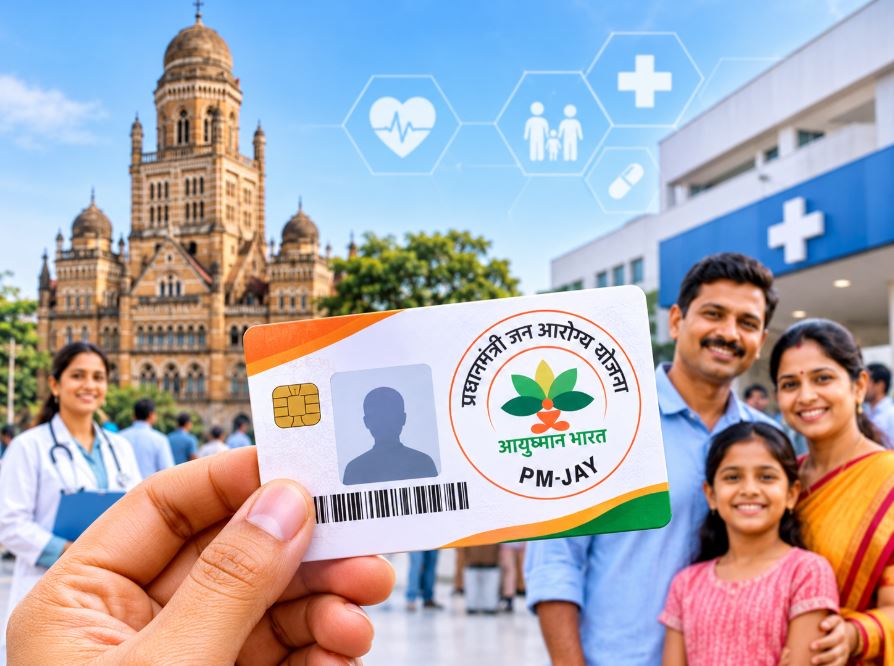
BMC Generates 39,032 Ayushman Bharat Health Cards in 33 Days Under Mumbai DigiHealth Connect Campaign
The Brihanmumbai Municipal Corporation (BMC) has generated 39,032 health insurance cards under the Ayushman Bharat and Mahatma Jyotirao Phule Jan Arogya Yojana (MJPJAY) schemes within the first 33 days of its 100-day Mumbai DigiHealth Connect campaign. The initiative aims to help more eligible Mumbai residents access affordable healthcare and cashless medical treatment.
Although the campaign has made progress, ward-level data shows differences in registration performance. C Ward has emerged as the only ward to exceed its assigned target, while several suburban wards need to increase their efforts to reach more eligible families.
Mumbai DigiHealth Connect Campaign Targets Wider Health Insurance Coverage
Launched on October 2, 2026, the Mumbai DigiHealth Connect campaign aims to bring more eligible residents under the Ayushman Bharat Pradhan Mantri Jan Arogya Yojana (PM-JAY) and MJPJAY health insurance programs.
Both schemes provide eligible families with cashless hospital treatment coverage of up to Rs. 5 lakh per year at participating government and private hospitals, subject to the applicable scheme guidelines.
The 100-day campaign will continue until January 2027. Through this initiative, the BMC is working to make health insurance registration easier and improve awareness about government healthcare benefits across Mumbai.
BMC Generates 39,032 Health Cards in First 33 Days
According to the BMC's cumulative zonal data up to November 3, the civic body generated a total of 39,032 Ayushman Bharat and MJPJAY health cards during the first 33 days.
This represents an average of approximately 1,183 cards every day, showing the progress made through the civic body's registration and public outreach activities.
Among the six zones, Zone 2 recorded the highest performance with 10,927 cards. Zone 6 followed with 8,676 cards, while Zone 3 generated 6,333 cards.
On the other hand, Zone 5 recorded 1,481 cards, the lowest among the six zones. Zone 1 generated 2,400 cards during the same period.
C Ward Leads Mumbai With 104.7% Target Achievement
At the ward level, S Ward, covering Bhandup and Kanjurmarg, generated the highest number of health cards at 6,335. G/S Ward, which includes Worli and Lower Parel, followed with 5,396 cards.
However, C Ward, covering Marine Lines and Kalbadevi, recorded the strongest performance against its assigned target. It generated 1,007 cards and achieved 104.7% of its target, becoming the only ward to cross the 100% mark.
This performance highlights the importance of focused registration drives and effective coordination between civic officials and local communities.
Several Mumbai Wards Need to Improve Registration
While some wards have made encouraging progress, the latest figures show that registration activities need to increase in several parts of Mumbai.
P/N Ward, covering Malad and Malvani, recorded the lowest performance with just 62 cards and zero percent target achievement.
M/W Ward, covering Chembur and Tilak Nagar, and M/E Ward, covering Govandi and Mankhurd, achieved only 0.4% of their respective targets. L Ward, which includes Kurla and Chandivali, recorded 0.3%.
These figures indicate that more awareness campaigns and door-to-door outreach may help the BMC connect with eligible residents in areas where registrations remain low.
October 30 Records Highest Daily Health Card Generation
The campaign also recorded a strong daily performance on October 30, when the BMC generated 2,580 health cards and distributed 1,887 cards.
The daily figures highlight the potential for faster registration when multiple civic departments and community-level teams work together.
BMC Expands Health Card Registration Through Local Centers
To make the process more accessible, the BMC is accepting and facilitating registrations through several civic facilities, including municipal hospitals, dispensaries, Aapla Dawakhana centers, ward offices and ration shops.
ASHA workers and community health volunteers are also supporting the campaign by identifying eligible families, helping residents complete registration forms and assisting with ration card verification and electronic Know Your Customer (e-KYC) procedures.
With nearly two-thirds of the 100-day campaign still remaining as of November 3, the BMC plans to strengthen its registration efforts, particularly in suburban wards with lower performance.
The initiative is expected to help more eligible Mumbai families access government-supported health insurance benefits and reduce the financial burden of medical treatment. Continued public participation and wider awareness will play an important role in helping the campaign achieve its overall target.