
Maharashtra
BMC Launches GPS Slum Sanitation Monitoring Plan Worth ₹136 Crore
Mon Oct 05 2026
BMC Introduces GPS-Based Slum Sanitation Monitoring With ₹136 Crore Annual Plan for 10,309 Units
Technology to Improve Sanitation Services in Mumbai’s Underserved Settlements
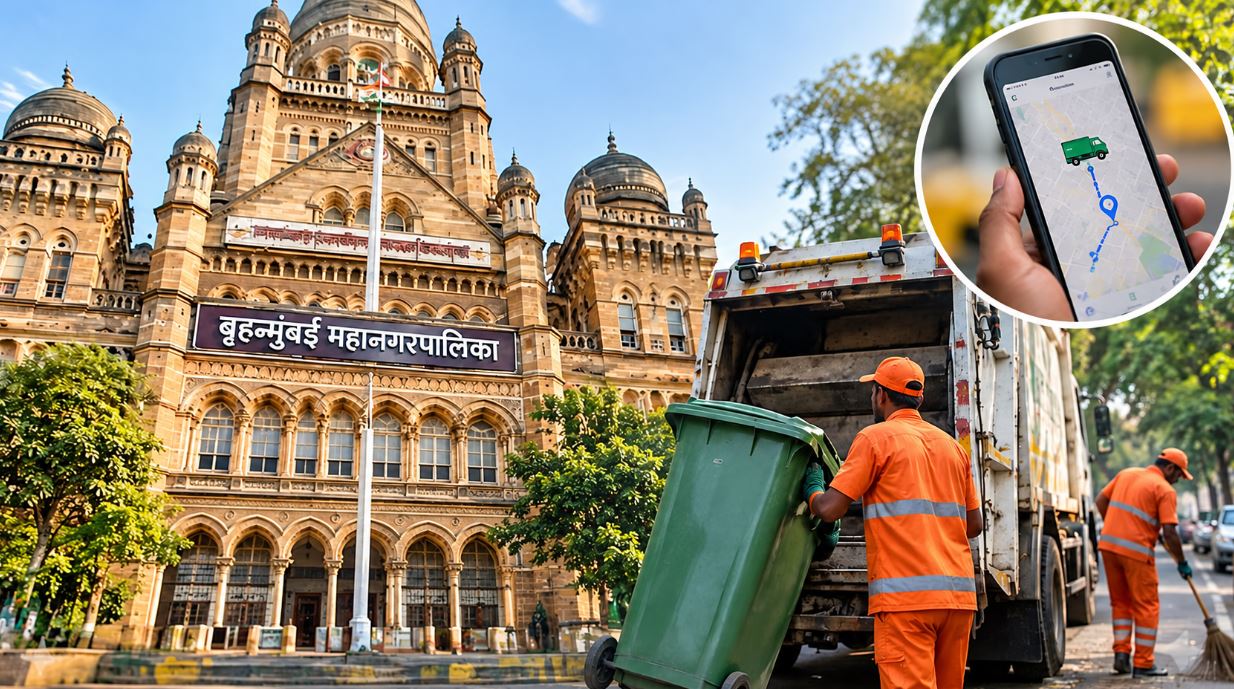
The Brihanmumbai Municipal Corporation (BMC) is set to strengthen sanitation services in Mumbai’s underserved slum areas with a revamped scheme worth around ₹136 crore annually. The new plan will use GPS-based real-time tracking and before-and-after photographs to monitor sanitation work and improve accountability.
The scheme will cover 10,309 units that currently do not receive adequate sanitation services through the BMC’s regular system. It will also extend services to settlements linked to the Slum Rehabilitation Authority (SRA), Maharashtra Housing and Area Development Authority (MHADA), project-affected families and other residential buildings.
The annual expenditure will come from the BMC’s Solid Waste Management department budget. The civic body’s Standing Committee has approved the proposal.
GPS Tracking to Monitor Ground-Level Work
The revamped Brihanmumbai Sanitation Services Scheme will bring technology into daily sanitation operations across slum pockets.
Activities such as garbage collection, drain cleaning, road sweeping, public toilet cleaning and other sanitation work will be monitored through GPS-based systems. The BMC will be able to track whether assigned agencies are carrying out their work at the designated locations.
Agencies will also have to upload photographs taken before and after sanitation activities. This system is expected to give civic officials a clearer view of the work completed on the ground and help identify areas that require additional attention.
Expanded Services for MHADA and SRA Settlements
The revised scheme aims to address sanitation gaps in settlements that are outside the scope of the BMC’s regular services.
The expansion includes SRA settlements, MHADA low-income and middle-income housing areas, project-affected colonies and other buildings. The move is expected to provide more consistent waste collection and cleaning services to residents in these communities.
During discussions on the proposal, BJP corporator Tejinder Tiwana called for door-to-door garbage collection in SRA, MHADA LIG and MIG settlements and project-affected colonies. He pointed out that residents in these areas are also taxpayers and voters and should have access to essential civic services.
Each Sanitation Unit to Cover 150 Families
The revised structure will organize sanitation work into smaller units for better management.
Each unit will cover around 150 families or approximately 750 residents. A sanitation organization can be assigned between five and 15 units within a settlement.
Under the proposed payment structure, organizations will receive ₹90,000 per unit every month for sanitation activities. An additional ₹9,000 will be provided for equipment, materials, record maintenance and mobile phone use.
This will bring the total monthly grant to ₹99,000 per unit.
New System Adds Greater Accountability
The revised model is based on the Swachhata Mumbai Prabodhan Abhiyan, which was introduced in 2013. Under the earlier system, one organization was responsible for several sanitation activities, including lane and drain cleaning, door-to-door garbage collection, public toilet and garbage bin cleaning, road sweeping and cleanliness awareness.
The updated approach adds stronger monitoring and digital reporting. GPS tracking and photographic records are expected to help the BMC verify whether sanitation work is being completed properly and on schedule.
Monthly Incentive for Better-Performing Agencies
The BMC has also proposed a performance-based incentive to encourage sanitation organizations to improve their work.
Organizations will be evaluated every month based on their performance scores. A monthly incentive of ₹21,000 has been proposed for better-performing agencies. One organization will be selected through a draw based on its performance assessment.
Corporators Seek Better Coordination
The proposal also led to questions about how the new system will be implemented across Mumbai’s 227 electoral wards.
Shiv Sena (Shinde) corporator Anjali Naik questioned whether local corporators would have sufficient involvement in the rollout. Shiv Sena (UBT) corporator Yashodhar Phanse also raised concerns that assigning garbage collection and drain-cleaning responsibilities to different agencies could create coordination issues.
The BMC’s technology-driven approach is intended to make sanitation services more measurable, transparent and responsive. With GPS monitoring, photographic proof and performance-linked incentives, the civic body aims to improve cleanliness in underserved settlements while extending essential services to more Mumbai residents.