
Maharashtra
BMC's 2027 Water Plan: 1,233 MLD Recycled Water for Mumbai
Mon Jun 22 2026
Seven Mega Sewage Treatment Plants Near Completion as Mumbai Moves Towards Sustainable Water Use
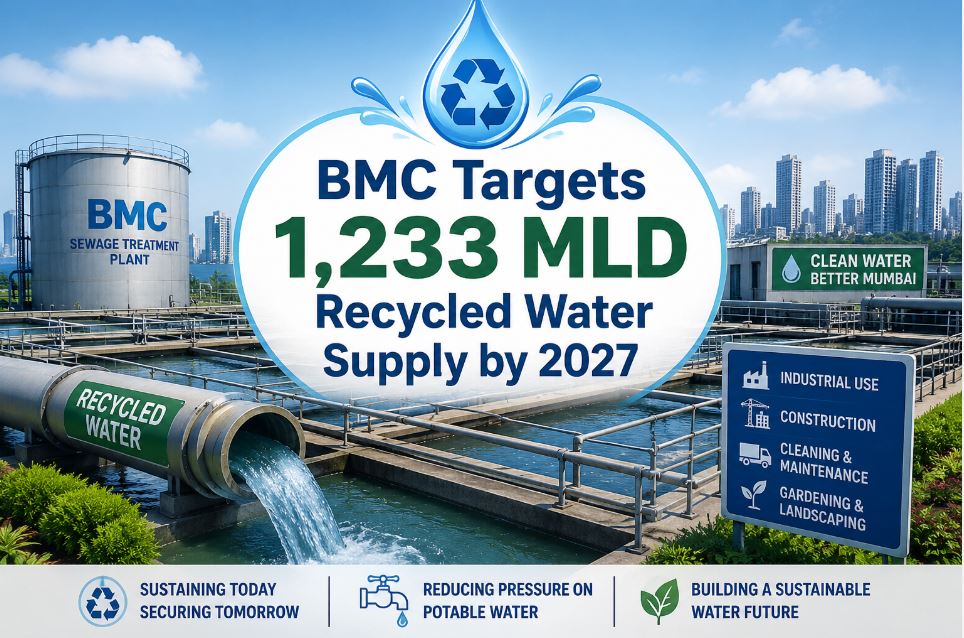
Mumbai is preparing for a major shift in water management as the Brihanmumbai Municipal Corporation (BMC) speeds up work on its large-scale sewage treatment project. By late 2027, the city is expected to receive around 1,233 million liters per day (MLD) of recycled water for non-drinking purposes, helping reduce pressure on freshwater resources.
This ambitious project, valued at ₹17,181 crore, is one of the city’s biggest infrastructure initiatives aimed at improving water security for the future.
BMC’s Sewage Treatment Project Reaches 60% Completion
According to civic officials, nearly 60% of the total construction work across seven sewage treatment plants (STPs) has already been completed.
The Bhandup sewage treatment plant is expected to become operational by October 2026, while the remaining facilities are likely to begin functioning by July 2027. However, officials indicated that the supply of tertiary-treated recycled water may begin between October and November 2027, as monsoon conditions can dilute treated water output.
Once operational, these treatment plants will generate a large volume of treated water that can be reused across the city.
What Is Tertiary-Treated Water and How Will Mumbai Use It?
The recycled water produced under this project will be tertiary-treated and non-potable, meaning it will not be suitable for drinking.
However, the water can support several city functions, including:
- Industrial operations
- Construction activities
- Road cleaning and maintenance
- Watering gardens and roadside plantations
- Municipal utility services
Officials believe this move will significantly reduce dependence on potable water and help conserve drinking water supplies.
Additional Municipal Commissioner Abhijit Bangar stated that once completed, Mumbai will have access to nearly 1,200 MLD of treated water for all non-drinking requirements.
Seven Sewage Plants Across Mumbai to Drive Water Recycling
The BMC began construction of these sewage treatment plants in July 2022 after years of delay.
The facilities are being developed across key locations in Mumbai:
- Worli
- Bandra
- Dharavi
- Versova
- Malad
- Bhandup
- Ghatkopar
Together, these plants will process 2,464 MLD of sewage through secondary treatment systems.
Out of this total, nearly 50% — or 1,233 MLD — will undergo advanced tertiary treatment and become available for reuse.
Advanced Technology to Improve Treatment Efficiency
The sewage treatment plants are using different technologies based on site requirements.
- Worli and Bandra plants are being developed using Membrane Bioreactor (MBR) technology.
- Bhandup plant is using Constant Flow Technology.
- The remaining plants are adopting Sequential Batch Reactor (SBR) systems.
Officials said that the most complex engineering and technical work has already been completed over the last four years, making the remaining stages comparatively faster.
Mumbai’s Growing Water Demand Makes Project Critical
Mumbai’s water demand continues to rise rapidly.
At present, the city requires around 4,665 MLD of water daily but receives approximately 4,100 MLD. A considerable amount is also lost due to leakages and unauthorized usage.
Looking ahead, Mumbai’s water demand is projected to increase to nearly 6,424 MLD by 2041.
Against this backdrop, the sewage treatment initiative is expected to become an important solution to support future urban growth.
Current Progress of Mumbai’s Sewage Treatment Plants
Below is the latest project status:
- Worli – 56.30% completed | Capacity: 500 MLD
- Bandra – 60.42% completed | Capacity: 360 MLD
- Dharavi – 67.61% completed | Capacity: 418 MLD
- Versova – 64.84% completed | Capacity: 180 MLD
- Bhandup – 78.20% completed | Capacity: 215 MLD
- Ghatkopar – 59% completed | Capacity: 337 MLD
Total Secondary Treatment Capacity: 2,464 MLD
Expected Recycled Water for Non-Potable Use: 1,233 MLD
A Long-Term Solution for Mumbai’s Water Future
With water levels under pressure and seasonal shortages becoming more common, Mumbai’s recycled water mission could become a major milestone in urban sustainability.
By diverting treated water towards industrial and civic activities, the city aims to protect precious drinking water reserves and create a more resilient water supply system for the years ahead.