
Maharashtra
Chembur Society Can End Tridhaatu Redevelopment Deal
Sat Oct 24 2026
Bombay High Court Allows Chembur Housing Society to End Tridhaatu Redevelopment Deal After 10-Year Delay
The Bombay High Court has allowed Mumbai’s Maruthi Co-operative Housing Society in Chembur to terminate its redevelopment agreement with the Tridhaatu Group after years of delays and unpaid transit rent. The decision gives the society an opportunity to appoint a new developer and move forward with rebuilding its residential property.
The ruling highlights the rights of residents who have been waiting for new homes for more than a decade. The court observed that a developer’s business interests cannot take priority over the housing rights of families who have been left without their permanent homes.
Bombay High Court Cites Prolonged Delay in Chembur Redevelopment
The redevelopment project began in July 2013, when Maruthi Co-operative Housing Society signed an agreement with the developer to reconstruct its residential building, Shobha, in Chembur.
In 2014, all 22 member families vacated their homes to allow construction to begin. They expected to return to newly built apartments within 24 months. However, the project failed to meet its completion deadline in January 2018.
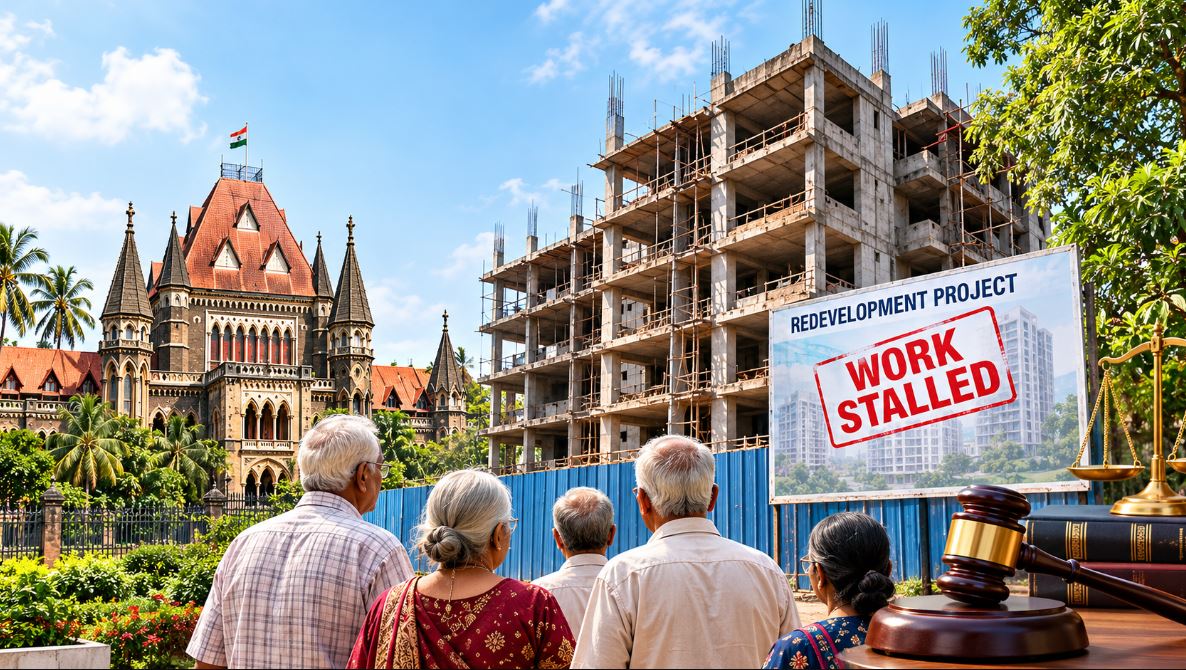
According to court records, the developer constructed only the building’s basic structure up to the 10th floor, despite having approval for eight floors. Work later came to a complete halt, leaving the residents waiting for their homes for years.
Unpaid Transit Rent Exceeds ₹7.35 Crore
The prolonged delay created serious financial difficulties for the society members. The developer also stopped paying transit rent, which was meant to help families cover their temporary accommodation expenses while the redevelopment work continued.
By April 2026, the outstanding transit rent had exceeded ₹7.35 crore.
The situation was particularly difficult for elderly residents, many of whom had to manage the cost of alternative housing from their own savings. The long wait and lack of progress raised concerns about whether the developer would fulfill its contractual commitments.
Court Says Residents Cannot Be Left Waiting Indefinitely
Justice Arun Pedneker noted that the developer had made no meaningful progress on the project for years beyond the agreed completion date. The court observed that the prolonged delay had caused the society to lose confidence in the developer’s ability to finish the redevelopment.
In March 2026, the society issued a show-cause notice before formally terminating the agreement. The developer did not appear in court, and the matter proceeded ex parte. The court also appointed an amicus curiae to assist in the proceedings.
The High Court upheld the society’s decision to terminate the redevelopment agreement, recognizing the difficulties faced by residents who had been waiting for their permanent homes for years.
Interim Protection to Prevent Further Legal Complications
The court also granted interim protection to safeguard the society’s interests while the dispute proceeds through arbitration.
It expressed concern that the developer could create third-party rights in the project, potentially making the dispute more complicated. The court also took note of pending statutory dues that could put the society’s land at risk of attachment.
The interim measures are intended to protect the property and prevent further complications while the legal process continues.
New Developer Could Help Restart Chembur Housing Project
The ruling creates a legal path for Maruthi Co-operative Housing Society to seek new redevelopment proposals and appoint another developer, subject to applicable legal and regulatory requirements.
The society can now work toward addressing the stalled project and finding a way to replace the incomplete structure with a properly planned residential building.
For the 22 affected families, the decision offers an opportunity to move closer to securing their permanent homes after years of uncertainty. It also reinforces the importance of timely construction, contractual accountability, and protecting residents during housing redevelopment projects in Mumbai.