
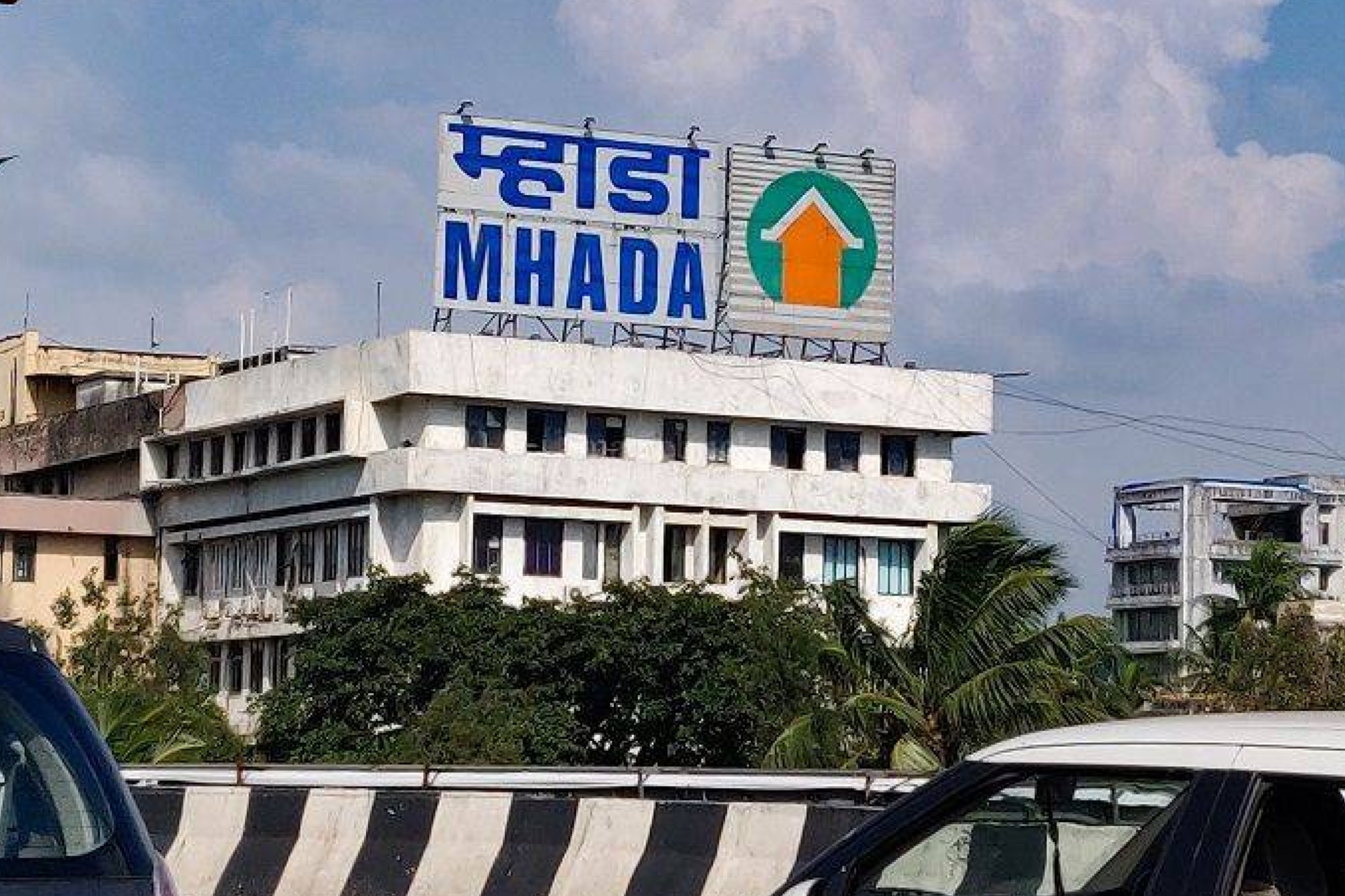
MHADA
IAS Sanjeev Jaiswal Unlocks 118 Mumbai Flats from ₹31 Lakh to ₹8 Crore: MHADA’s First-Come Sale Explained Area by Area
Sat Feb 21 2026
Mumbai’s housing market rarely offers second chances. But under the leadership of IAS Sanjeev Jaiswal, Vice President and CEO of the Maharashtra Housing and Area Development Authority (MHADA), 118 flats across Mumbai have been reopened for sale on a first-come, first-served basis. These homes, earlier unsold despite three lottery rounds, are now available directly to buyers — with prices starting at ₹31 lakh and going up to ₹8 crore. For many aspiring homeowners, this could be a practical opportunity in a city where affordability is under constant pressure.
Mumbai’s housing market rarely offers second chances. But under the leadership of IAS Sanjeev Jaiswal, Vice President and CEO of the Maharashtra Housing and Area Development Authority (MHADA), 118 flats across Mumbai have been reopened for sale on a first-come, first-served basis. These homes, earlier unsold despite three lottery rounds, are now available directly to buyers — with prices starting at ₹31 lakh and going up to ₹8 crore. For many aspiring homeowners, this could be a practical opportunity in a city where affordability is under constant pressure.
The online registration process began on February 17, 2026. The sale is being conducted through MHADA’s official portal, and the allotment will strictly follow a first-come, first-served principle. The initiative reflects a pragmatic shift: instead of allowing inventory to remain idle after multiple lottery rounds, MHADA has chosen to activate supply through a transparent direct-sale mechanism.
A Wide Price Spectrum: ₹31 Lakh to ₹8 Crore
One of the most striking aspects of this sale is the pricing diversity. The most affordable flat under the scheme is located in PMGP, Mankhurd, priced at approximately ₹31 lakh (₹3.1 million). At the other end of the spectrum, the most expensive unit is in Crescent Tower, Tardeo, priced at nearly ₹8 crore.
This range captures Mumbai’s layered housing reality. From eastern suburban localities to premium South Mumbai addresses, the inventory cuts across income segments. Homes are also available in Wadala, Lower Parel, and Andheri, making the offering geographically balanced rather than clustered in a single zone.
According to MHADA, once a flat is selected, the buyer must pay 10 percent of the total cost within 48 hours. This structured payment rule is designed to ensure seriousness of intent and prevent speculative blocking — a lesson learned from earlier rounds where selected applicants did not complete purchases.
Why These Flats Were Reopened
These 118 flats had previously been offered through lottery draws three times but remained unsold for various reasons. Market sentiment, pricing perceptions, financing challenges, or buyer indecision often influence lottery outcomes. Instead of carrying forward unsold inventory indefinitely, MHADA has now repositioned these units through direct sale.
While the housing authority initially planned to sell 120 homes, the final number stands at 118. This recalibration underscores an effort to maintain clarity and transparency in public housing communication.
In a city where residential prices frequently exceed the reach of middle-income buyers, even a limited inventory at ₹31 lakh can make a difference. At the same time, premium listings like Tardeo and Lower Parel reflect MHADA’s mixed-portfolio approach.
Area-Wise Distribution of Flats
The 118 flats are distributed across multiple locations in Mumbai. Here is the detailed area breakdown as announced:
Shimpoli, Kandivali – 8
Charkop Sector-8 – 8
Kandivali – 1
Antop Hill, Wadala – 27
Tunga, Powai – 42
PMGP, Mankhurd – 1
Malvani, Malad – 1
Gaikwad Nagar, Malvani-Malad – 1
In addition, 58 flats are those allotted to the Board under Development Control Rules 33(5) and 33(7). These are further distributed as follows:
Ghatkopar East – 2
Kannamwar Nagar, Vikhroli – 1
Byculla – 6
Tardeo – 6
Lower Parel – 4
Sion – 2
JVPD, Andheri West – 7
This geographical spread covers both suburban and central Mumbai. Tunga Powai alone accounts for 42 units, while Antop Hill in Wadala offers 27 units — making these two areas the largest contributors to the current inventory.
First-Come, First-Served: What It Means for Buyers
Unlike the lottery model, where allocation depends on random selection, the first-come, first-served system places greater emphasis on preparedness. Buyers must complete registration, select the flat online, and adhere strictly to payment timelines.
The 10 percent down payment requirement within 48 hours introduces financial discipline into the process. It ensures that only committed buyers secure units. Such measures also reduce administrative cycles and improve housing turnover efficiency.
However, prospective buyers should rely only on MHADA’s official website and verified notifications for details regarding payment schedules, documentation, and eligibility. Public housing announcements often attract misinformation, making official verification essential.
Affordability in Context
Mumbai consistently ranks among India’s most expensive housing markets. Private developer prices in many micro-markets exceed ₹25,000–₹40,000 per square foot, making even compact units financially challenging for salaried households.
Against this backdrop, a starting price of ₹31 lakh in Mankhurd becomes significant. While not universally affordable, it expands access relative to prevailing private market benchmarks.
At the premium end, listings such as Crescent Tower in Tardeo reflect MHADA’s diverse asset portfolio. Public housing bodies often inherit units across price categories due to redevelopment regulations and Development Control Rules.
Administrative Efficiency and Policy Signaling
The reopening of these 118 flats sends a broader policy signal. It reflects administrative flexibility and responsiveness under IAS Sanjeev Jaiswal’s leadership. Rather than allowing unsold inventory to stagnate, MHADA has adopted a more market-aligned approach.
Such steps improve asset utilization and signal institutional adaptability — a critical trait for urban housing authorities operating in dynamic real estate environments.
The Bigger Picture
While 118 flats cannot solve Mumbai’s housing deficit, each structured sale contributes incrementally to supply-side activation. Public housing agencies play a balancing role in cities marked by price volatility and land constraints.
For citizens considering purchase, the key remains diligence: review area details, verify pricing, understand payment timelines, and confirm eligibility norms directly from MHADA’s official portal.
In a city where homeownership often feels distant, this structured first-come opportunity offers a measured opening. Whether one is considering a ₹31 lakh unit in Mankhurd or a premium listing in Tardeo, the framework is clear — act early, stay informed, and rely on official channels.
Under the stewardship of IAS Sanjeev Jaiswal, MHADA’s latest initiative reflects a blend of administrative pragmatism and public housing accountability. For Mumbai’s aspiring homeowners, preparedness may now be the deciding factor.