
Maharashtra
INS Mangrol Joins Indian Navy to Boost Coastal Defense
Tue Oct 13 2026
Indian Navy Commissions INS Mangrol in Mumbai to Boost Coastal Anti-Submarine Warfare
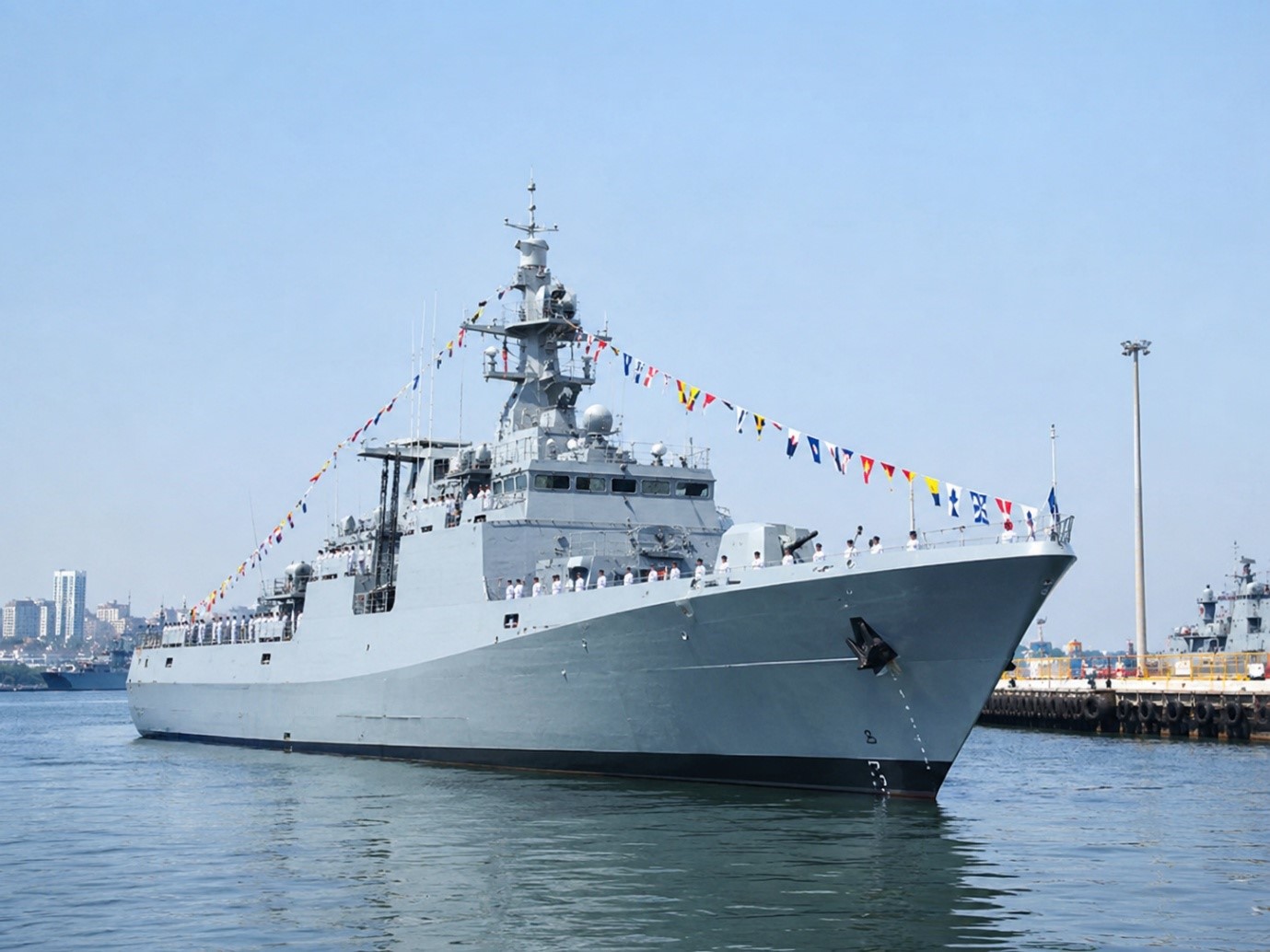
The Indian Navy has inducted INS Mangrol, the third vessel in its Mahe-class anti-submarine warfare shallow water craft series, at Mumbai's Naval Dockyard. Constructed by Cochin Shipyard Limited with more than 80% indigenous content, the vessel is equipped with advanced sonar systems, lightweight torpedoes and waterjet propulsion to strengthen maritime security along India's coastline.
Mumbai: The Indian Navy has commissioned INS Mangrol, a new indigenous anti-submarine warfare shallow water craft, at the Naval Dockyard in Mumbai on Monday. The vessel is designed to improve the Navy's ability to identify and respond to underwater threats, particularly in coastal areas and shallow waters.
INS Mangrol Joins the Mahe-Class Fleet
INS Mangrol is the third vessel in the Navy's Mahe-class series of anti-submarine warfare shallow water craft (ASW-SWC). These vessels are designed to detect and counter hostile submarines operating close to the coastline, where underwater surveillance and rapid response are particularly important.
The ship features advanced detection and defence equipment, including the Abhay hull-mounted sonar system, which helps identify, track and respond to underwater threats. Its armament includes lightweight torpedoes and an indigenous anti-submarine rocket launcher. The vessel is also fitted with the Mareech advanced torpedo defence system, designed to help protect warships against incoming torpedo attacks.
Measuring 78.8 metres in length, INS Mangrol is built for operations in challenging coastal environments, where manoeuvrability and effective underwater detection are essential.
More Than 80% Indigenous Content
Constructed by Cochin Shipyard Limited (CSL), INS Mangrol incorporates more than 80% indigenous content, reflecting India's continuing efforts to develop domestic naval manufacturing and reduce dependence on imported defence equipment.
The vessel is powered by three diesel engines and uses waterjet propulsion, enabling it to manoeuvre effectively in shallow waters. Beyond anti-submarine warfare, it can support underwater surveillance, low-intensity maritime operations and mine warfare-related activities.
Vice Admiral Sanjay Vatsayan, Flag Officer Commanding-in-Chief of the Western Naval Command, presided over the commissioning ceremony in Mumbai.
The induction of INS Mangrol is expected to improve the Navy's ability to monitor coastal waters and safeguard strategically important locations, including ports, harbours and maritime approaches. The vessel can also work alongside naval helicopters, maritime patrol aircraft and other warships during coordinated surveillance and anti-submarine missions.
Vice Admiral Vatsayan Highlights Emerging Maritime Threats
Addressing the significance of the commissioning, Vice Admiral Vatsayan highlighted the growing complexity of the maritime security environment amid geopolitical tensions, technological advancements and increasing strategic competition at sea.
He emphasised that underwater warfare remains one of the most challenging aspects of naval operations. Effective responses, he noted, depend on continuous vigilance, professional expertise, coordination among personnel and the ability to identify and assess potential threats before they escalate.
Vice Admiral Vatsayan has also been associated with key stages of the vessel's development. According to the supplied report, he was involved in the process leading to the ship's acceptance of necessity, contract finalisation and naming during his earlier assignments in naval planning and policy. The commissioning ceremony took place under his leadership as head of the Western Naval Command.
INS Mangrol Carries Forward a Naval Legacy
The vessel takes its name from Mangrol, a coastal town and fishing harbour in Gujarat's Junagadh district. It also honours the legacy of the earlier INS Mangrol (M85), a minesweeper that served the Indian Navy until April 2004.
The naming reflects the Navy's tradition of retaining the names of former vessels and preserving their association with India's maritime history.
Indian Navy Expands Its Fleet
The commissioning comes as the Indian Navy continues to expand and modernise its fleet through the induction of new vessels and the development of indigenous platforms.
According to the figures cited in the supplied report, the Navy has commissioned 10 ships during the year, with eight additional inductions anticipated by year-end. Its existing fleet comprises 151 platforms, including 131 ships and 20 submarines.
Around 42 ships are reportedly under construction at Indian shipyards. The report also states that Acceptance of Necessity has been granted for another 69 ships, six submarines and 120 fast interceptor craft.
The Navy's fleet is projected to exceed 170 platforms in the coming years, with new vessels expected to enter service at regular intervals. By 2034, approximately 60% of its platforms are projected to be less than 10 years old on average, reflecting the planned renewal and modernisation of its fleet.
The commissioning of INS Mangrol represents another step in strengthening India's indigenous naval capabilities, improving coastal surveillance and enhancing the Navy's preparedness to address evolving underwater threats.