Maharashtra
Maharashtra Approves 6,500 Crore BEST Electric Bus Plan
Wed Jul 22 2026
State Clears Major Fleet Expansion to Reduce Dependence on Leased Buses and Improve Mumbai’s Bus Network
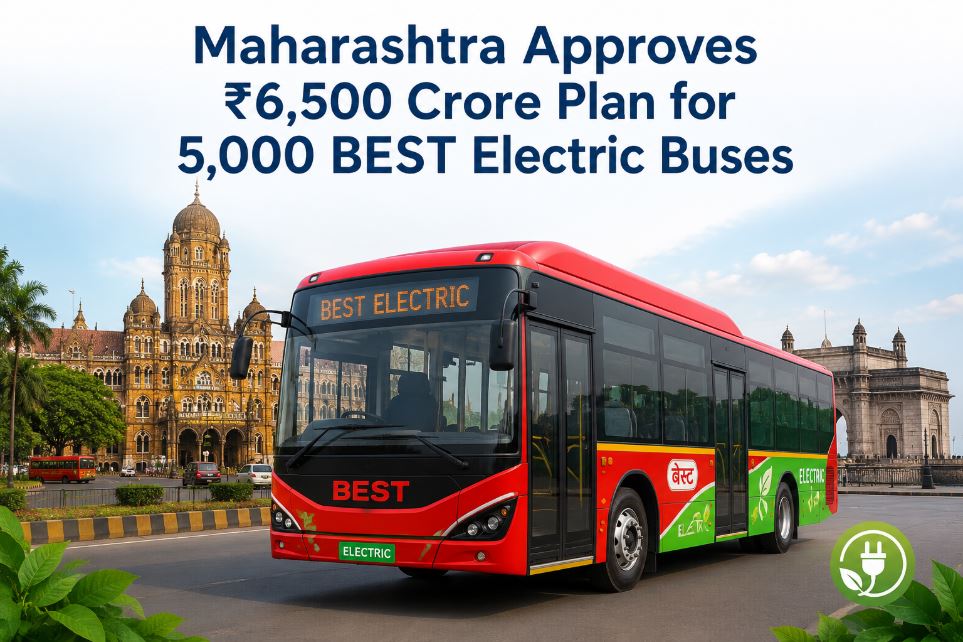
Mumbai is set for one of its biggest public transport upgrades after the Maharashtra government approved a ₹6,500 crore proposal to procure 5,000 air-conditioned electric buses for the Brihanmumbai Electric Supply and Transport (BEST) Undertaking. The decision marks a significant shift in the city's transport strategy, with BEST returning to a self-owned fleet after relying heavily on privately operated wet-lease buses for nearly a decade.
The approval, granted by Deputy Chief Minister Eknath Shinde, is expected to transform Mumbai's bus services over the next three to four years while supporting the state's broader vision of cleaner, greener, and more reliable public transportation.
BEST to Rebuild Its Self-Owned Electric Bus Fleet
The newly approved project will allow BEST to purchase 5,000 fully air-conditioned electric buses for its own fleet. The total investment is estimated at around ₹6,500 crore, making it one of the largest electric bus procurement plans undertaken by any urban transport agency in India.
BEST General Manager Sonia Sethi confirmed that the undertaking has received official approval to begin the procurement process. Unlike the existing wet-lease model, the new buses will be owned by BEST and operated with drivers appointed by the undertaking, restoring greater operational control.
Officials said the buses will be added in phases over the next three to four years, depending on funding approvals and procurement timelines.
Major Shift Away From the Wet-Lease Model
For years, BEST has increasingly depended on the wet-lease model, where private companies own, operate, maintain, and charge buses while BEST manages routes, ticketing, and passenger services.
Currently, BEST operates approximately 2,800 buses, but only 249 buses are owned directly by the undertaking, while nearly 2,551 buses belong to private contractors under lease agreements.
The latest decision represents a major policy shift aimed at rebuilding BEST's independent fleet. Officials believe owning more buses will improve service quality, reduce operational dependence on private operators, and give the undertaking better control over maintenance and scheduling.
The move also follows growing public concern over accidents involving leased buses in recent years, prompting discussions on improving accountability and operational standards.
Government Targets a 10,000 Electric Buses Public Transport Network
The 5,000-bus procurement forms part of Maharashtra's long-term strategy to expand BEST's fleet to 10,000 buses, helping meet the increasing transportation needs of Mumbai's growing population.
A larger fleet is expected to:
- Improve service frequency across the city
- Reduce passenger waiting times
- Expand routes in developing suburbs
- Strengthen environmentally friendly urban mobility
- Support Maharashtra's electric mobility and climate goals
The initiative also aligns with India's nationwide push toward electric public transportation under various central and state clean mobility programs.
Financial Structure Under Preparation
While the project has received policy approval, officials said the detailed financial model is still being finalized.
The proposal will be presented before the BEST Committee in the coming meetings for further administrative approvals before the procurement process begins.
Authorities are also examining whether drivers currently working under private wet-lease operators can be absorbed into BEST's workforce. The proposal has been forwarded to the state's Finance Department and Law and Judiciary Department for detailed evaluation.
Redevelopment of 23 BEST Depots to Support Expansion
To strengthen its finances and support future investments, BEST is also considering the redevelopment of its valuable land assets.
Officials have identified 23 bus depots covering nearly 132 acres for redevelopment. The plan could generate significant revenue for the financially stressed undertaking while modernizing transport infrastructure.
However, the proposal has received opposition from employee unions.
Union representatives welcomed the government's decision to increase the number of self-owned buses but expressed concerns about leasing or redeveloping depot land, arguing that municipal funding is already available for purchasing the new electric buses.
Separate Plan to Add 1,500 Electric Feeder Buses
Apart from the self-owned fleet expansion, BEST is moving ahead with another important public transport initiative.
The undertaking has already approved the induction of 1,500 air-conditioned electric feeder buses under the wet-lease model. These smaller 9-meter electric buses will primarily connect residential neighborhoods with Metro stations, suburban railway stations, and major transport hubs, making last-mile travel more convenient.
The feeder bus project is being implemented under the Central Government's PM E-Drive Scheme, which offers a subsidy of ₹25 lakh per electric bus. The total central assistance is expected to reach nearly ₹375 crore, helping reduce the financial burden on BEST.
Private operators will continue to supply, maintain, and charge these feeder buses, while BEST will retain control over routes, schedules, and fares.
Project Follows Delays in Earlier Electric Bus Procurement
The feeder bus expansion also comes after delays in an earlier electric bus procurement.
BEST had previously placed an order for 2,400 electric buses from Olectra Greentech, but only a small number of buses have been delivered so far, slowing the city's electric mobility plans.
The new procurement strategy is expected to accelerate fleet modernization and ensure that Mumbai continues expanding its electric public transport network despite previous delivery challenges.
Financial Challenges Continue for BEST
Despite the ambitious expansion plans, BEST continues to face significant financial pressure.
According to official figures, the undertaking's cumulative liabilities stood at ₹23,296 crore as of March 31, 2026.
During the 2025–26 financial year:
- The electricity distribution business recorded a surplus of ₹115 crore.
- The transport division reported a deficit of approximately ₹1,805 crore.
Officials believe that a modern electric fleet, combined with improved operational efficiency and better passenger connectivity, can gradually strengthen BEST's long-term financial sustainability.
A New Chapter for Mumbai’s Public Transport
The approval of 5,000 self-owned electric buses, along with the ongoing addition of 1,500 feeder electric buses, signals one of the biggest transformations in Mumbai's public transport system in recent years.
The initiative is expected to improve service reliability, reduce dependence on private operators, strengthen last-mile connectivity, and support Maharashtra's clean mobility goals. As procurement moves forward over the coming years, commuters can expect a larger, greener, and more efficient BEST bus network that complements Mumbai's expanding Metro and suburban rail systems while advancing the city's transition toward sustainable urban transportation.