
Maharashtra
Maharashtra CM Fadnavis Gets Power to Override Ministers
Sat Aug 22 2026
New Maharashtra Rules Expand the Chief Minister’s Supervisory Powers
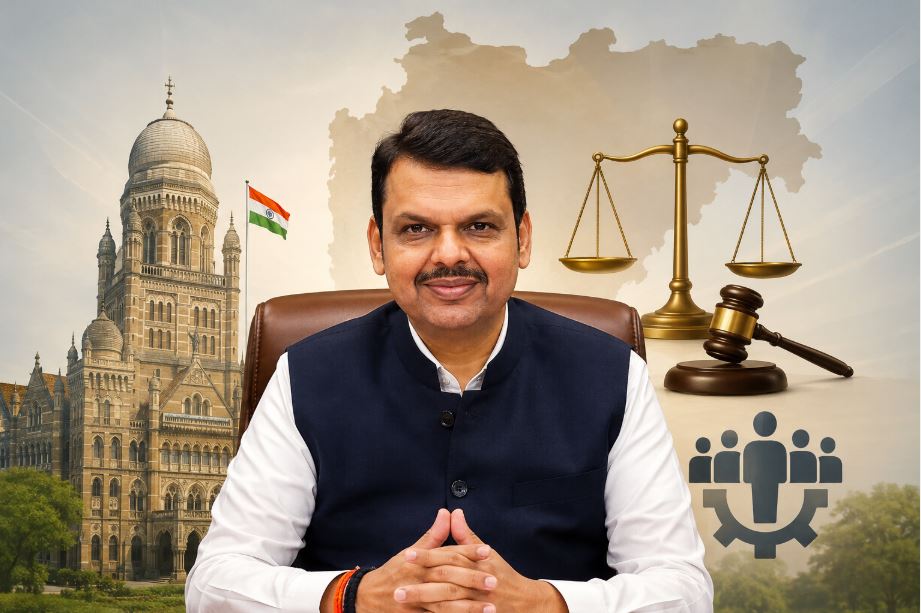
Maharashtra has introduced new Rules of Business that give Chief Minister Devendra Fadnavis greater authority to intervene in decisions made by state ministers. The Maharashtra Government Rules of Business, 2026, replace the rules that had governed the state administration since 1975.
Under the new rules, the Chief Minister can step in and override a decision taken by a minister when the intervention is considered necessary in the public interest. The reasons for such action must also be recorded in writing.
The change marks an important shift in how major administrative decisions can be reviewed within the Maharashtra government.
What the New Maharashtra Rules Say
Rule 13(5) of the newly notified rules gives the Chief Minister the authority to intervene in a minister’s decision, with one key exception: judicial matters.
The provision allows the CM to override a decision when it is considered to be in the public interest. It also requires written reasons for the intervention, creating a formal record of why the decision was changed.
The new provision gives the Chief Minister a clearly defined supervisory role that was not available under the earlier rules.
Bombay High Court Ruling Led to the Change
The amendment comes three years after an important Bombay High Court ruling highlighted the limits of the Chief Minister’s powers under the 1975 Rules of Business.
On March 3, 2023, the Nagpur Bench of the Bombay High Court heard a case related to the Chandrapur District Central Cooperative Bank.
At the time, then-Cooperation Minister Atul Save had allowed the bank to move ahead with recruitment for vacant positions. Later, then-Chief Minister Eknath Shinde directed that the recruitment process be put on hold.
The bank challenged the Chief Minister’s decision in court.
The Bombay High Court eventually quashed the order, stating that the 1975 Rules of Business did not give the Chief Minister supervisory authority to review or change a decision made by the minister responsible for the department.
That ruling exposed a gap in the existing administrative framework.
New Rules Create a Clearer Decision-Making Framework
The 2026 rules now address that gap by specifically defining the Chief Minister’s authority.
The provision does not give the CM unrestricted power over every ministerial decision. It establishes conditions under which intervention can take place. The matter must involve public interest, and the reasons for overriding the decision must be documented.
This could provide a more structured process for resolving major administrative disagreements within the government.
For citizens, the written-reason requirement may also make such interventions easier to examine and understand because the government will have to officially record the basis for its action.
Political Discussion Around the New Powers
The Maharashtra government has said the rule change is intended to strengthen administrative functioning and is not driven by political considerations.
However, the move has attracted attention in political circles, particularly because of reported differences among members of the Mahayuti alliance.
The issue has also drawn interest because Eknath Shinde, who previously served as Chief Minister when the Bombay High Court ruling was delivered, is now a Deputy Chief Minister in the Fadnavis-led government.
Still, the practical impact of the new rule will depend largely on how the power is used in individual cases.
What This Means for Maharashtra Governance
The new Maharashtra Rules of Business could bring greater clarity to the relationship between the Chief Minister and individual ministers.
Earlier, the absence of an explicit supervisory provision created uncertainty over whether the CM could review or modify a minister’s departmental decision. The new rule establishes a formal mechanism for intervention.
If used carefully, the provision could help the government address decisions that have wider public consequences and ensure that major administrative issues receive appropriate review.
At the same time, the requirement to record reasons in writing provides an important level of accountability.
A Significant Administrative Change
The Maharashtra Government Rules of Business, 2026, represent a significant update to the state's administrative framework after more than five decades under the previous rules.
By giving the Chief Minister a defined power to intervene in ministerial decisions in the public interest, the new rules seek to provide a clearer chain of authority within the state government.
The real test will now be how this power is applied. If exercised transparently and within the limits set by the rules, it could strengthen coordination and decision-making across Maharashtra's government departments.