
Maharashtra
Maharashtra Launches India’s First AI-Powered Skill Census
Wed Aug 05 2026
AI-Driven Workforce Mapping Initiative Aims to Boost Jobs, Skills, and Entrepreneurship Across Mumbai Suburban
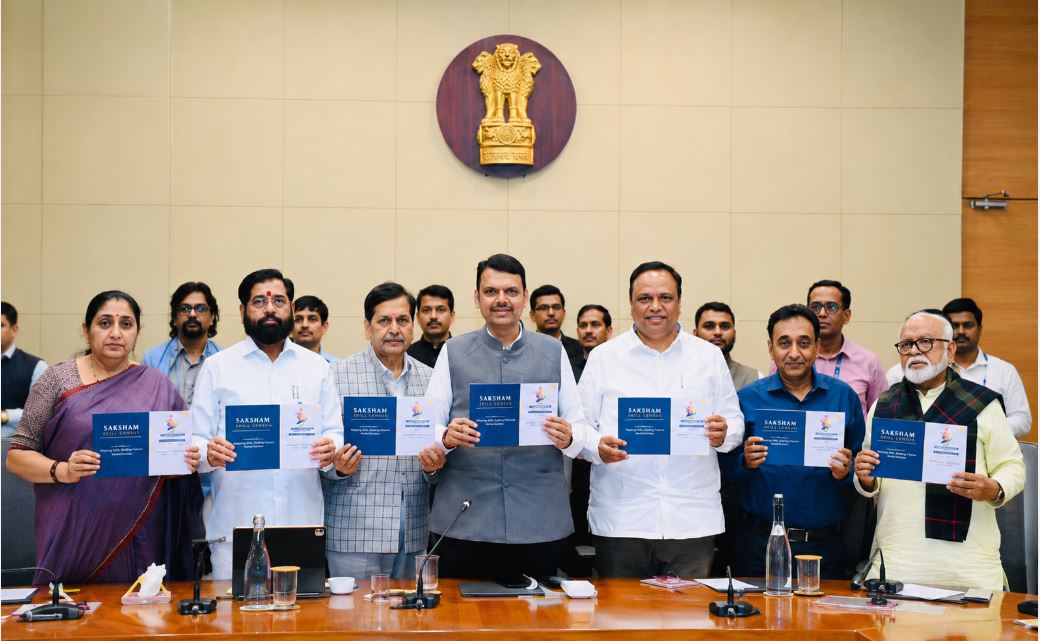
The Maharashtra Government has taken a significant step toward building a future-ready workforce with the launch of the ‘Saksham Skill Census’ Coffee Table Book, unveiled by Chief Minister Devendra Fadnavis. The publication highlights the success of the country's first AI-powered hyperlocal skill census, an initiative designed to strengthen employment, skill development, entrepreneurship, and workforce planning across Mumbai Suburban.
The innovative project, led by the Mumbai Suburban Collectorate in partnership with the District Skill Development, Employment and Entrepreneurship Guidance Centre, uses artificial intelligence to create a detailed skills database that connects job seekers with employers, training institutions, and government support programs.
Top Maharashtra Leaders Attend the Launch
The launch ceremony was attended by several senior state leaders, including Deputy Chief Minister Eknath Shinde, Deputy Chief Minister Sunetra Ajit Pawar, Mumbai Suburban Guardian Minister Ashish Shelar, Co-Guardian Minister Mangal Prabhat Lodha, Chief Secretary Rajesh Agrawal, and Mumbai Suburban Collector Saurabh Katiyar, along with members of the Maharashtra Council of Ministers.
The event underscored the state's commitment to using technology and data-driven governance to improve livelihoods and create better employment opportunities for citizens.
Nearly 60,000 Households Surveyed to Build a Smart Skills Database
The Saksham Skill Census has created one of the most comprehensive workforce databases in the region by surveying nearly 59,824 households and registering 44,982 individuals. The exercise also involved 1,018 employers and 52 skill training institutes, making it a collaborative effort between the government, industry, and educational organizations.
The survey collected detailed information on unemployed youth, job seekers, individuals looking to upgrade their skills, aspiring entrepreneurs, homemakers, and other groups that can benefit from targeted employment and livelihood programs.
By creating a hyperlocal AI-enabled database, the administration aims to ensure that training programs are better aligned with industry demand while helping employers identify skilled candidates more efficiently.
Survey Highlights Need for Formal Skill Certification
One of the key findings of the census is that nearly 98% of the surveyed population does not possess formal skill certification, despite many individuals having practical experience and work-related abilities.
This insight provides valuable guidance for policymakers, allowing the government to design customized training programs that improve employability while increasing access to nationally recognized skill certifications.
Officials believe the data will help bridge the long-standing gap between workforce capabilities and industry requirements.
Thousands to Receive Career Guidance, Training, and Employment Support
Based on the survey findings, the administration has planned a series of targeted interventions to improve employment outcomes.
More than 32,000 candidates will receive personalized career counseling, while over 22,000 individuals are expected to be enrolled in market-oriented skill development programs.
The initiative also focuses on immediate employment support. More than 5,800 unemployed youth are being connected with job opportunities, and over 1,690 candidates have already been contacted directly by employers for interviews and recruitment.
Officials say these efforts demonstrate how data-driven governance can accelerate employment generation while ensuring that job seekers receive guidance suited to their individual skills and aspirations.
Entrepreneurship and Inclusive Growth at the Core
Beyond employment, the Saksham Skill Census places a strong emphasis on entrepreneurship and inclusive economic participation.
The project aims to support over 4,000 aspiring entrepreneurs by offering business mentoring, entrepreneurship training, and advisory services to help them establish and expand their enterprises.
Additionally, more than 6,000 homemakers, persons with disabilities, and individuals from disadvantaged communities are expected to benefit through structured livelihood, self-employment, and skill development initiatives, promoting greater economic inclusion.
Pilot Project Exceeds Annual Employment Targets
According to officials, the pilot implementation has already delivered remarkable results, significantly surpassing the district's annual employment and skill development target of approximately 800 to 1,000 beneficiaries.
The project has already created livelihood opportunities for nearly 22,000 individuals within a single pilot ward, demonstrating the effectiveness of AI-enabled workforce mapping in identifying local talent and connecting people with suitable opportunities.
Next Phase to Focus on Job Fairs and AI-Based Planning
Building on the success of the pilot, the Mumbai Suburban administration is preparing for the next phase of the initiative.
Upcoming plans include organizing ward-level employment fairs, expanding industry-specific skill training, promoting entrepreneurship through government schemes such as PMEGP and Mudra, strengthening apprenticeship opportunities, continuously updating the AI-powered skills database, and using data analytics to support future workforce planning and policy decisions.
The newly released coffee table book captures the project's journey, key achievements, best practices, and roadmap for expanding the initiative, showcasing Maharashtra's growing focus on technology-enabled governance, employment generation, and inclusive economic development.