
Maharashtra
Maharashtra Launches New Health Training Policy for Workforce
Sat Aug 22 2026
New Training Framework Aims to Improve Skills and Quality of Government Healthcare Services
The Maharashtra government has introduced a new health workforce training policy designed to strengthen the skills, knowledge and professional capabilities of officers and employees working in the state’s public healthcare system.
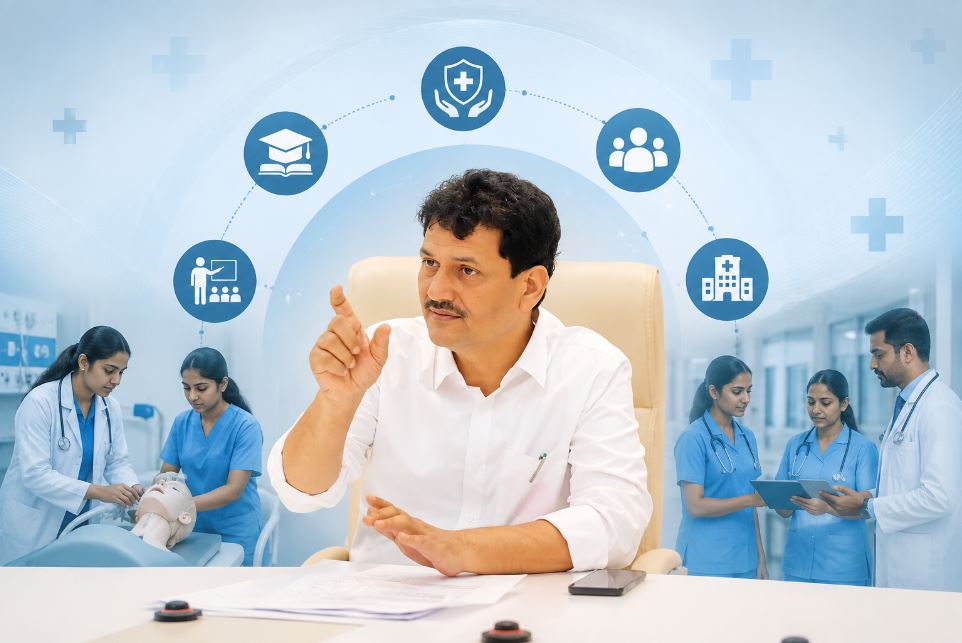
Health Minister Prakash Abitkar said the policy is aimed at creating a more skilled and capable workforce while improving the quality of healthcare services available to citizens. The new framework applies to both regular and contractual employees and makes structured training an important part of professional development.
Training to Become a Key Part of Public Health Workforce Development
Under the new policy, employee training will move beyond being an administrative requirement and become a planned investment in human resource development.
The government plans to bring health training institutions across Maharashtra under the technical and administrative supervision of the Directorate of Public Health Services Training, Nagpur. The move is expected to create greater consistency in training standards and improve the overall effectiveness of healthcare workforce development.
SIHFW Nagpur to Lead Statewide Healthcare Training
The State Institute of Health and Family Welfare (SIHFW), Nagpur, has been designated as the nodal institution for healthcare training under the new framework.
Training facilities at the divisional, district and taluka levels will also be strengthened. New training centers may be established in areas where additional facilities are needed.
This wider network is expected to make professional training more accessible to healthcare employees across Maharashtra.
Mandatory Training for Regular and Contractual Employees
The policy makes training mandatory for both regular and contractual employees in the public health system.
Newly recruited employees will be required to complete their initial training within one year of joining service. Employees who move into higher positions through promotion will also receive training suited to their new responsibilities.
The policy introduces a long-term training structure as well. Refresher courses will be provided after four to six years of service, while advanced or senior-level training will be introduced after 10 years.
28-Day Skill Lab Program to Focus on Practical Learning
One of the key features of the new policy is a proposed 28-day residential Skill Lab Program.
The Program will include 20 days of practical learning in skill laboratories, followed by eight days of field training at district hospitals. The approach is intended to give healthcare workers direct practical experience and help them apply their knowledge in real-world healthcare settings.
By combining classroom learning, laboratory practice and field exposure, the Program is expected to strengthen the practical abilities of public healthcare employees.
Five-Year Training Plans to Match Job Responsibilities
The Public Health Department will prepare five-year training frameworks along with annual training plans based on the requirements of different positions.
Training Programs will also be linked more closely to the actual responsibilities of employees. This approach is expected to ensure that staff receive relevant knowledge and skills that can be directly applied to their daily work.
Government Focuses on Better Public Healthcare Services
Health Minister Prakash Abitkar said the new policy will help create a skilled and capable healthcare workforce and support the delivery of better-quality public healthcare services across Maharashtra.
Principal Secretary Nipun Vinayak said the initiative will strengthen the public health system, improve uniformity in training and help increase citizens’ confidence in government healthcare services.
With structured training, practical learning and long-term professional development at the center of the policy, Maharashtra is seeking to build a stronger public healthcare workforce that is better prepared to meet the needs of citizens.