
Maharashtra
Maharashtra Plans 50,000 Electric Buses in 4 Years
Sat Oct 31 2026
Maharashtra Plans to Add 50,000 Electric Buses in 3-4 Years, Says CM Devendra Fadnavis
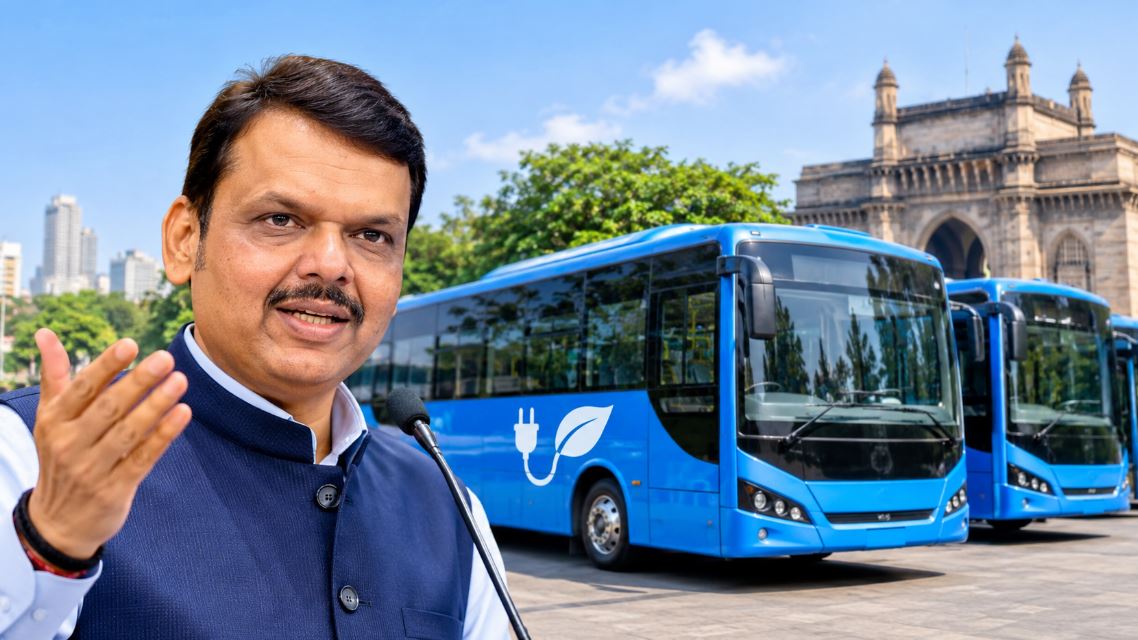
Maharashtra is preparing for a major expansion of its electric public transport network, with plans to introduce around 50,000 electric buses over the next three to four years. Chief Minister Devendra Fadnavis says the state is encouraging local manufacturing and expanding EV charging infrastructure to support the growing demand.
Maharashtra Needs 50,000 Electric Buses to Strengthen Public Transport
Maharashtra is planning a major shift toward electric public transportation. Chief Minister Devendra Fadnavis announced that the state will need approximately 50,000 electric buses over the next three to four years to meet the growing demand from public transport agencies and municipal corporations.
Speaking at the inauguration of Pinnacle Industries' new manufacturing facility in Pune on October 30, Fadnavis highlighted the state's growing requirements for electric buses.
He said the Brihanmumbai Municipal Corporation (BMC) alone plans to purchase around 10,000 electric buses. Meanwhile, the Maharashtra State Road Transport Corporation (MSRTC) will require approximately 30,000 buses. Pune and Nagpur municipal corporations are also expected to need a significant number of electric buses.
However, the Chief Minister pointed out that the existing manufacturing capacity may not be enough to meet the state's requirements.
CM Fadnavis Encourages Electric Bus Manufacturing in Maharashtra
To support the state's growing demand, Fadnavis has encouraged electric vehicle manufacturers to increase their production capacity.
He said buses manufactured under the Make in Maharashtra initiative would be more convenient for the state and help meet its transportation needs.
The Chief Minister also emphasized the importance of strengthening local manufacturing facilities to support the expansion of electric public transportation.
Maharashtra Plans 46 GW Power Generation Capacity by 2030
Along with electric bus expansion, Maharashtra is also working to strengthen its clean energy infrastructure.
Fadnavis announced that the state aims to add 46 GW of power generation capacity by 2030. Around 91% of this additional capacity is expected to come from green energy sources.
The state government has also prepared a master plan to expand electric vehicle charging infrastructure across Maharashtra in coordination with manufacturers.
The initiative is expected to support the increasing number of electric buses and other electric vehicles on the state's roads.
Nitin Gadkari Calls for Lower EV Charging Rates
Union Minister for Road Transport and Highways Nitin Gadkari, who attended the event, called for lower electricity rates at electric vehicle charging stations to encourage more people and businesses to adopt electric vehicles.
Gadkari suggested that the Maharashtra government consider reducing electricity charges at EV charging stations to ₹5 per unit between 8 AM and 6 PM.
He also said he had approached the Union Power Ministry to reduce the existing charging rate of ₹22 per unit at charging stations along national highways.
Responding to the suggestion, Fadnavis said the state government would begin the process of reducing electricity costs for EV charging. He also highlighted Maharashtra's surplus solar power, which could help support the state's growing electric vehicle charging network.
Maharashtra aims to increase the share of renewable energy in its overall power mix to 52% by 2030 and 65% by 2035.
Six New Manufacturing Facilities Opened in Pune
The event also marked the inauguration of six manufacturing facilities operated by EKA Mobility and Pinnacle Industries.
With these new facilities, the group's total manufacturing network has increased to 11 plants. Together, the facilities have the capacity to manufacture more than 40,000 electric vehicles every year.
The group has invested more than ₹3,500 crore in developing its electric commercial vehicle manufacturing operations.
The expansion is expected to strengthen India's electric vehicle manufacturing ecosystem and support the growing demand for electric buses and commercial vehicles.
What Does Maharashtra's 50,000 Electric Bus Plan Mean for the State?
Maharashtra's proposed electric bus expansion is an important step toward cleaner and more efficient public transportation.
With major requirements from BMC, MSRTC, and other city transport authorities, the state is focusing on increasing local manufacturing, improving charging facilities, and making electricity more affordable for electric vehicles.
If these plans move forward as expected, Maharashtra could see a significant increase in electric public transport over the next three to four years, while also creating new opportunities for the state's electric vehicle manufacturing industry.