
Maharashtra
Maharashtra Revamps Government Land Allotment Policy for Housing
Thu Aug 20 2026
Maharashtra has approved a revised policy for allotting government land to cooperative housing societies, replacing the earlier lottery-based system with a transparent auction process. The move is expected to restart a land allotment process that has been on hold since 2010 and provide new opportunities for eligible employees, journalists, artists, defence personnel and other sections seeking affordable housing.
Maharashtra Introduces Auction-Based Government Land Allotment
Under the new policy, district collectors will identify available government land and invite bids through public advertisements. Eligible applicants will participate through technical and financial bids, with the highest qualified bidder selected for allotment.
The base price will be set at 2.5% of the market value of the land in Mumbai city and its suburbs. In other parts of Maharashtra, the base price will be 5% of the market value.
Unlike the earlier system, the allotted land will be provided on a 30-year lease rather than directly granting ownership rights. Once the lease period ends, the land can be considered for conversion to Occupant Class-I status.
The revised policy was prepared on the initiative of Revenue Minister Chandrashekhar Bawankule and is aimed at making the process more open, structured and accountable.
Special Housing Reservations for Key Groups
The new policy includes category-wise reservations to ensure that government land opportunities reach different sections of society.
The reservation structure includes:
- 15% for state government, local body and corporation employees
- 10% for Scheduled Castes, Scheduled Tribes and nomadic tribes
- 10% for writers, artists, sportspersons and journalists
- 5% for Central government employees and defence personnel
- 5% for elected representatives
- 5% for freedom fighters and their heirs
- 5% for persons with disabilities
- 5% for economically weaker sections
The policy also requires housing societies to maintain 20% representation from backward communities and 5% representation of persons with disabilities.
New Housing Eligibility Rules Based on Pay Commission
The government has also revised income and carpet-area limits for eligible employees in line with the Seventh Pay Commission.
Group-D employees earning up to Rs. 50,000 per month can qualify for homes measuring up to 300 square feet. Group-C employees with a monthly income of up to Rs. 1 lakh can be eligible for homes of up to 450 square feet.
Group-B employees can receive homes of up to 650 square feet, while Group-A employees can qualify for homes measuring up to 1,076 square feet without an income ceiling.
The revised limits are designed to better match housing requirements with current government employee salary structures.
Action Against Dummy and Benami Flats
The new policy also introduces safeguards against misuse of housing schemes. District collectors will have the authority to take over dummy or benami flats without compensation.
The government has also decided that pending proposals submitted under the old policy will be closed. However, cases where letters of intent have already been issued will be allowed to continue.
Maharashtra Moves to Speed Up Deemed Conveyance for Housing Societies
Alongside the new land allotment policy, Maharashtra has also taken steps to speed up deemed conveyance for cooperative housing societies across the state.
The state has around 1.15 lakh registered cooperative housing societies. Of these, an estimated 60,000 to 70,000 societies are still waiting to complete the deemed conveyance process.
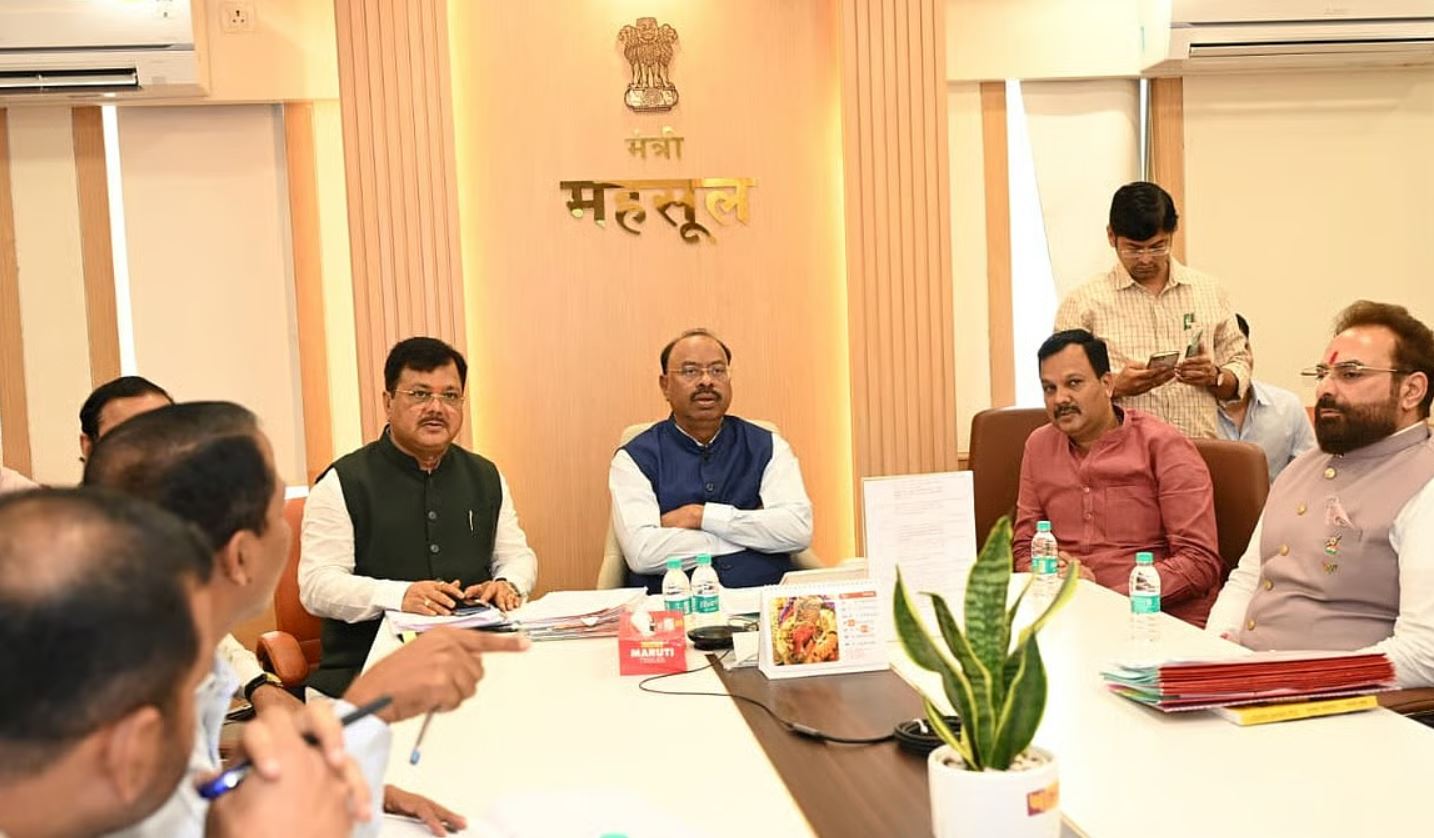
Revenue Minister Chandrashekhar Bawankule recently chaired a meeting at Mantralaya to review the problems faced by housing societies. MLAs Pravin Darekar and Sanjay Kelkar also attended the meeting.
Officials from the Revenue, Cooperation, Land Records and Inspector General of Registration departments were asked to work together to simplify the process.
Property Records to Be Updated for Faster Conveyance
One of the key directions is to record the name of the concerned registered housing society directly on the property card or, where applicable, in the "other rights" section of the 7/12 land record.
This step is expected to make title transfers easier and reduce delays faced by housing societies.
The government is also reviewing issues affecting societies located on MHADA land. Although the government has abolished non-agricultural assessment tax for cooperative housing societies under MHADA, the levy is reportedly still being collected in some locations.
Officials have been directed to resolve these issues and ensure that the policy is implemented properly.
Push for Faster Self-Redevelopment Projects
Self-redevelopment is another major focus of the government's housing measures. Several cooperative housing societies have faced difficulties because their projects are not covered under the Unified Development Control and Promotion Regulations, or UDCPR.
To address these challenges, officials have been directed to implement tax concessions and a 10% incentive provided under the 2019 government resolution.
The government also plans to prepare simplified standard formats for work contracts and development agreements. These documents could help societies reduce procedural complications while taking up self-redevelopment projects.
Government Considers Additional Financial Relief
The Housing Department has been asked to submit a proposal to the Finance Department seeking a 4% concession. The Inspector General of Registration has also been directed to provide clarity on registration-related matters.
Together, these steps are aimed at reducing the financial and administrative burden on cooperative housing societies.
A Broader Housing Reform for Maharashtra
The revised government land allotment policy and the push for faster deemed conveyance represent a broader effort to make housing processes more transparent and practical across Maharashtra.
By replacing the old lottery system with auctions, introducing category-based reservations, updating eligibility rules and improving land record procedures, the government is seeking to address long-standing challenges faced by housing societies.
For thousands of cooperative housing societies waiting for deemed conveyance or planning self-redevelopment, faster approvals, clearer rules and financial concessions could make it easier to move forward. The new measures could also provide eligible groups with a more structured route to access government land for housing.