
Maharashtra
Maharashtra Signs MoU to Boost Agri-Tourism and Rural Skills
Tue Oct 13 2026
Maharashtra Signs MoU to Strengthen Agri-Tourism Training, Digital Skills and Rural Entrepreneurship
The Maharashtra Tourism Department has partnered with Agri Tourism Development Company, also known as Agri Tourism India, to strengthen skill development and promote rural entrepreneurship. The proposed initiative aims to establish the Baramati Agri & Rural Tourism Training Center in Palshiwadi as a state-level hub for training, research and knowledge exchange.
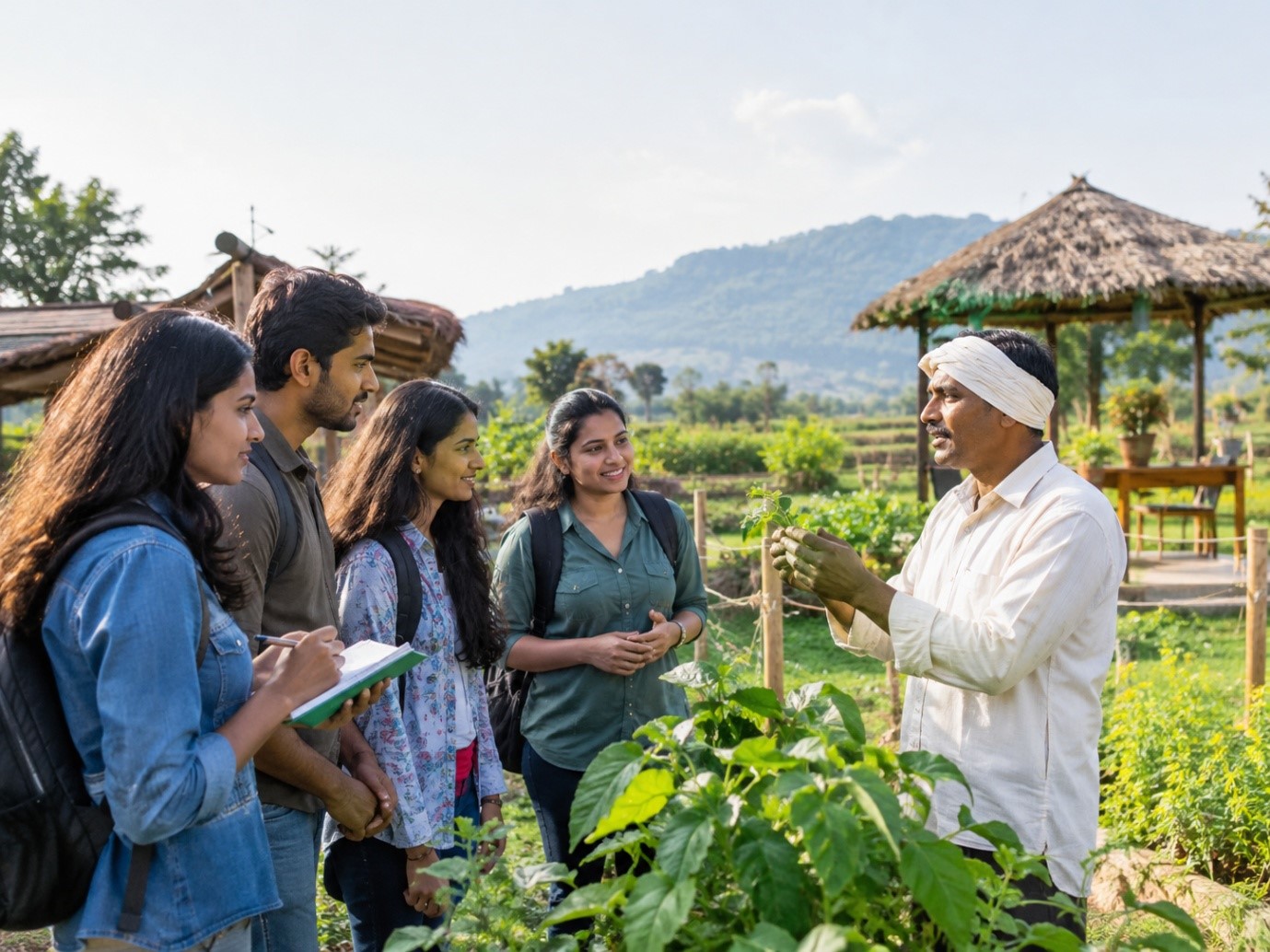
Mumbai: The Maharashtra government has taken another step towards strengthening rural tourism and entrepreneurship by signing a Memorandum of Understanding (MoU) with Agri Tourism Development Company Pvt. Ltd., known as Agri Tourism India. The partnership will focus on training farmers, rural youth, women and entrepreneurs to develop professional skills and expand opportunities in the agri-tourism sector.
Training to Cover Hospitality, Digital Marketing and Business Management
The proposed programme will cover several areas essential to operating an agri-tourism enterprise. Participants will receive training in hospitality services, rural cuisine, hygiene, tourist safety, digital marketing, online booking systems and business planning.
Hospitality training is expected to help participants improve how they welcome visitors, manage guest services and deliver a better rural tourism experience. Training in rural cuisine will also highlight the role of local food and traditional culinary practices in attracting tourists.
Safety and hygiene will form another important part of the programme, with a focus on maintaining appropriate standards for visitors at farms and rural tourism destinations. These skills can help participating businesses prepare for tourists while improving service quality.
The digital component will introduce participants to tools and techniques for promoting their establishments online, reaching prospective visitors and managing bookings. Business planning will help aspiring entrepreneurs understand the practical aspects of developing and managing tourism-related ventures.
Training Model to Combine Practical and Classroom Learning
The programme's proposed curriculum will combine classroom instruction with practical exposure and field-based learning. According to the reported training structure, the curriculum is divided into four components:
- 40% practical training: Hands-on learning and practical exposure to agri-tourism activities.
- 30% classroom instruction: Structured lessons covering relevant concepts and skills.
- 20% field visits: Exposure to tourism operations and on-site learning.
- 10% business planning: Understanding the planning and management requirements of an agri-tourism enterprise.
This approach is intended to give participants experience beyond theoretical instruction. Practical sessions and field visits can help them understand how rural tourism facilities operate, how visitors are served and how agricultural resources can be incorporated into tourism experiences.
Baramati Centre Proposed as a State-Level Training Hub
The Baramati Agri & Rural Tourism Training Center at Palshiwadi is expected to play a central role in the partnership. The proposed development aims to strengthen the facility's role in training, research, capacity building and knowledge sharing related to agri-tourism.
Reports on the initiative describe facilities and demonstration areas associated with the centre, including training spaces, a rural kitchen, a demonstration farm, gardens and accommodation facilities for trainees. These resources can provide opportunities to connect classroom learning with practical rural tourism activities.
The proposed state-level role could also help create a common platform for sharing knowledge and improving skills among people interested in developing agri-tourism businesses across Maharashtra.
Focus on Farmers, Women and Rural Youth
Farmers, rural youth, women and existing agri-tourism entrepreneurs are among the key groups targeted by the initiative. The programme seeks to strengthen their capabilities and help them explore opportunities in tourism-related activities.
For farmers, agri-tourism can offer a way to complement agricultural operations by welcoming visitors to experience rural life, local food, farming activities and village traditions. Depending on the facilities and business model, such ventures may include farm visits, rural dining experiences, educational activities and visitor accommodation.
For women and rural youth, training in hospitality, online promotion and business management could provide useful skills for establishing or supporting tourism enterprises. Local businesses may also benefit from visitor demand for regional food, handicrafts and other locally produced goods.
However, the scale of these opportunities will depend on implementation, market demand, access to resources and the ability of participating businesses to operate sustainably.
Government and Industry Collaboration
Under the reported arrangement, the Maharashtra Tourism Department will provide institutional guidance, while Agri Tourism India will organise training and practical sessions for participants across the state.
The collaboration brings together government support and industry experience to strengthen the skills required for rural tourism development. Its broader objective is to help build a more professional agri-tourism ecosystem while encouraging local participation in tourism-related economic activities.
The initiative also reflects an approach in which tourism supports agriculture rather than replacing it. By connecting farming with visitor experiences, rural communities may be able to develop additional business activities while showcasing local traditions, food and agricultural practices.
What the Initiative Could Mean for Maharashtra's Rural Economy
Maharashtra has agricultural regions with potential for rural tourism experiences based on farming, local cuisine, village culture and nature. Developing the skills needed to manage these experiences could help participating communities improve visitor services and promote their destinations more effectively.
Training in digital marketing and online bookings may be particularly relevant for smaller rural enterprises seeking to reach visitors beyond their immediate areas. Better hospitality, safety and business management practices could also help strengthen visitor confidence.
The MoU establishes a framework for collaboration, but its wider impact will depend on the rollout of training programmes, participation by rural communities and the development of viable tourism businesses.
Through the proposed training initiative, Maharashtra aims to strengthen the connection between agriculture, tourism and entrepreneurship while creating opportunities for rural communities to participate in the state's tourism economy.