
Maharashtra
Manori Desalination Tunnel Strengthens Mumbai Water Supply
Tue Jul 21 2026
BMC Plans Major Underground Water Link to Strengthen Mumbai's Future Water Supply
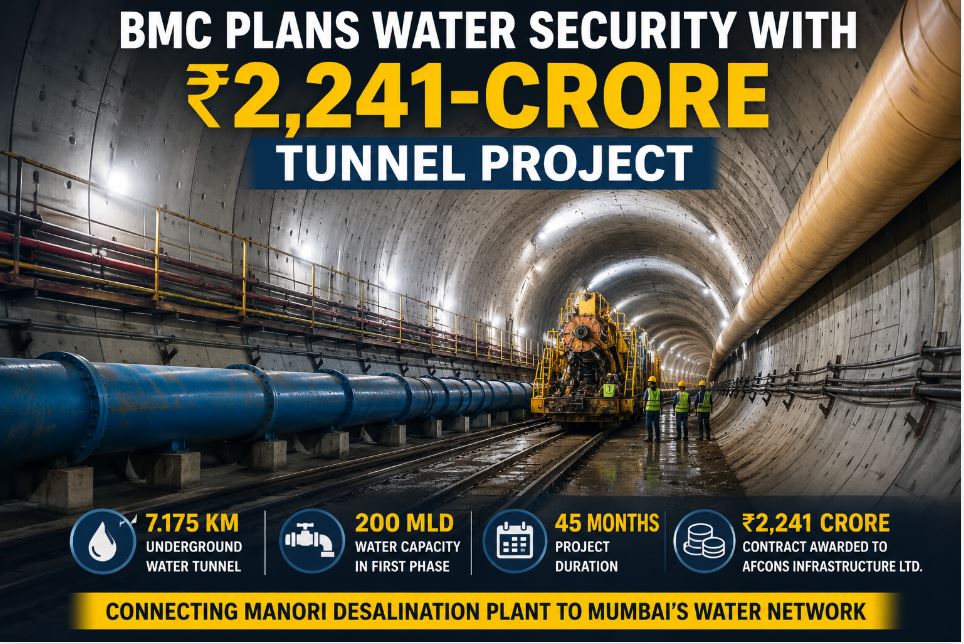
Mumbai is moving ahead with one of its biggest water infrastructure projects as the Brihanmumbai Municipal Corporation (BMC) has proposed awarding a ₹2,241-crore contract to Afcons Infrastructure Ltd for the construction of a 7.175-kilometre underground water tunnel. The tunnel will connect the upcoming 200 Million Litres per Day (MLD) Manori desalination plant to Mumbai's existing water distribution network in Kandivali.
The project is a key part of the city's long-term strategy to improve water security, reduce dependence on rainfall, and create a more reliable drinking water supply for millions of residents.
Underground Tunnel Will Carry Desalinated Water Into Mumbai's Network
According to the proposal, the tunnel will transport treated water from the Manori desalination plant to the city's distribution system through an underground pipeline extending from Manori in Malad to Charkop Municipal Garden and finally to Mahavir Nagar in Kandivali.
The total tunnel length will be 7.175 kilometres, including:
- 4.63 km from Manori to Charkop Municipal Garden
- 2.545 km from Charkop Municipal Garden to Mahavir Nagar
The tunnel will have a diameter of 2.5 metres, allowing it to carry large volumes of treated drinking water safely beneath the city.
Once operational, the project will integrate desalinated seawater into Mumbai's regular water supply system, providing an additional source of potable water during periods of low rainfall or increasing demand.
Infrastructure Designed for Future Expansion
The tunnel and its associated pumping station are being planned with a long-term vision.
While the first phase of the project will support 200 MLD of water from the Manori desalination plant, the infrastructure itself is being designed to accommodate 400 MLD in the future. This approach allows the city to expand production capacity later without requiring major structural upgrades.
Officials believe this future-ready design will help Mumbai meet growing water demand driven by population growth and urban expansion.
Advanced Tunnel Construction Planned Deep Underground
The water tunnel will be constructed using two Tunnel Boring Machines (TBMs) operating at depths ranging between 104 and 128 metres below ground level.
Construction will include three major access shafts located at:
- Manori
- Charkop Municipal Garden
- Mahavir Nagar
The deep underground alignment is expected to reduce disruption to traffic, public utilities, and daily life during construction compared with traditional surface excavation methods.
As part of the project, the pumping station will also feature a 100-kilowatt solar power system, helping lower electricity consumption while reducing long-term operating costs for the civic body.
Project Timelines Aligned With Desalination Plant
The BMC has synchronized the construction schedule of the water tunnel with the desalination plant to ensure both facilities become operational together.
The proposed desalination plant has a 48-month construction period, while the water tunnel is expected to be completed in 45 months. Completing the tunnel ahead of the plant will allow seamless commissioning once desalinated water production begins.
The desalination facility itself was awarded to GVPR Engineers Limited in December 2025, marking another major milestone in Mumbai's alternative water supply programme.
Afcons Becomes Lowest Bidder for the Project
The civic body's tender evaluation identified Afcons Infrastructure Ltd as the lowest qualified bidder for the tunnel project.
According to the bid comparison:
- Afcons Infrastructure Ltd quoted 1.82% below the BMC's estimated project cost.
- J. Kumar–MEPL Joint Venture submitted a bid 8.37% above the estimated cost.
Following the evaluation, the BMC has recommended awarding the contract to Afcons. Including applicable taxes, the project's total value is estimated at ₹2,241 crore.
The proposal has now been submitted to the BMC's Standing Committee for final approval.
Desalination Becomes a Key Part of Mumbai's Water Strategy
Mumbai currently depends largely on reservoirs and monsoon rainfall for its drinking water. However, rapid urban growth, climate variability, and increasing demand have encouraged city planners to diversify water sources.
The Manori desalination project represents one of Mumbai's largest investments in climate-resilient infrastructure. By converting seawater into potable drinking water and connecting it through dedicated underground infrastructure, the city aims to create a more dependable water supply throughout the year.
Once completed, the desalination plant and the new transmission tunnel are expected to strengthen Mumbai's water network, improve supply reliability, and support the city's growing population for decades to come.