
MHADA
MHADA–Adani Partnership Advances 143-Acre Motilal Nagar Redevelopment
Sat Apr 18 2026
Mumbai’s long-standing urban challenges, ranging from housing shortages to ageing infrastructure, are now being addressed through a more structured and large-scale approach, with the Motilal Nagar redevelopment emerging as a defining example. Backed by the leadership of Chief Minister Devendra Fadnavis and driven administratively by IAS Sanjeev Jaiswal, the project represents a shift toward integrated, inclusive, and future-ready urban development.
Spread across 143 acres in Goregaon, the Motilal Nagar redevelopment is among the largest initiatives of its kind in India. More than just a redevelopment effort, it reflects a broader vision to transform how Mumbai plans, builds, and sustains its urban spaces.
A Shift from Piecemeal Growth to Planned Development
For decades, Mumbai’s expansion has largely been driven by incremental and often unplanned growth, leading to congestion, infrastructure strain, and uneven access to services. The Motilal Nagar project marks a departure from this pattern by adopting a comprehensive planning approach that integrates housing, infrastructure, and public amenities within a single framework.
The redevelopment of colonies originally built in the 1960s is not just about replacing ageing buildings, it is about reimagining entire neighbourhoods to meet contemporary urban needs.
Housing Upgrade at Scale
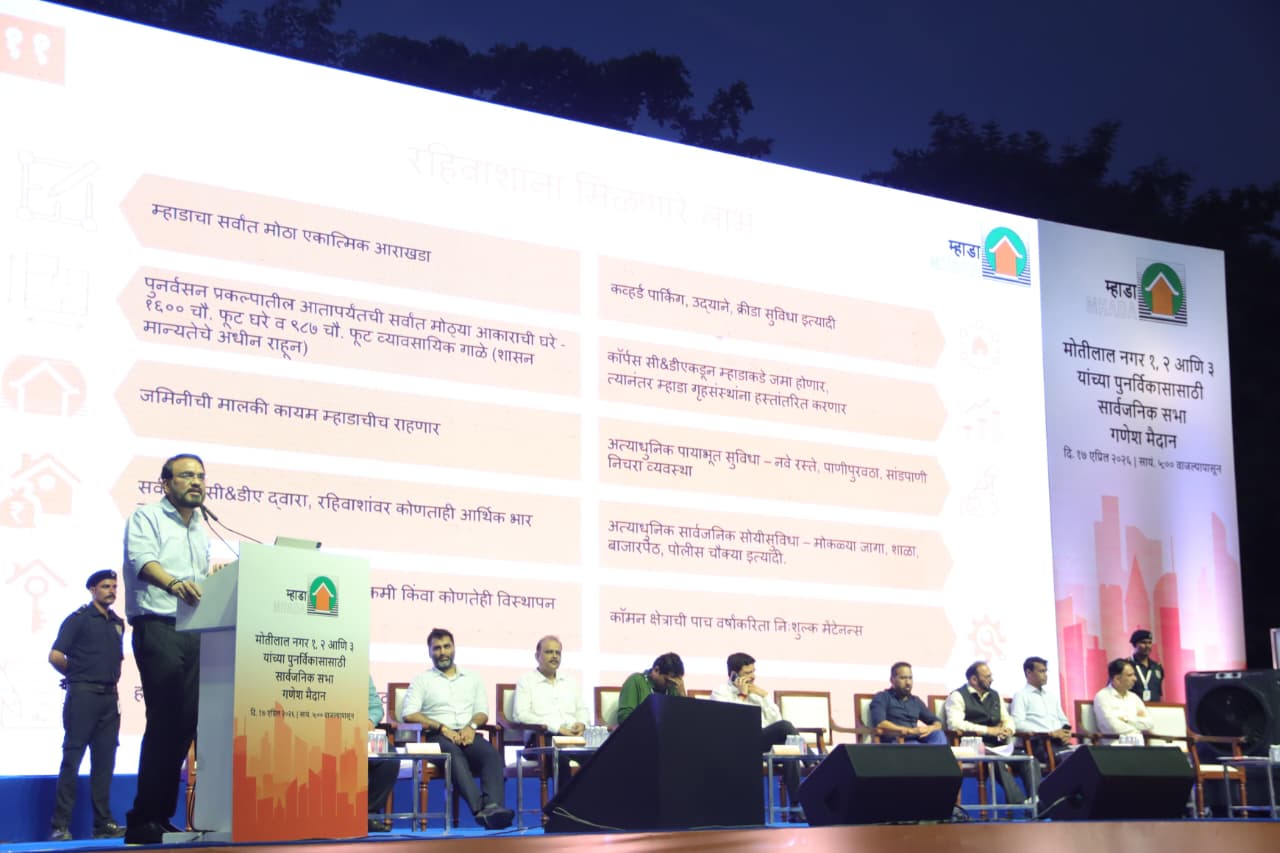
One of the most significant impacts of the project lies in its approach to housing. Thousands of families currently living in older structures will be provided with modern homes that offer improved space, ventilation, and safety standards.
This large-scale housing upgrade is expected to directly improve quality of life for residents, while also setting a benchmark for future redevelopment projects in the city. In a market where space is at a premium, the provision of significantly larger and better-designed homes represents a major step forward.
Rehabilitation-Centric Development
A key strength of the Motilal Nagar redevelopment is its strong focus on rehabilitation. Ensuring that existing residents are accommodated within the same locality helps preserve social networks and reduces the disruption typically associated with large redevelopment projects.
This approach reflects a more people-centric model of urban development, where growth is aligned with the needs and rights of existing communities. It also reinforces confidence among residents in future redevelopment initiatives.
Strengthening Urban Infrastructure
The project directly addresses long-standing civic challenges in Motilal Nagar, including waterlogging, poor road networks, and outdated infrastructure. By introducing modern drainage systems, improved road layouts, and upgraded utilities, the redevelopment aims to create a more resilient and efficient urban environment.
Such infrastructure upgrades are critical for a city like Mumbai, where monsoon-related disruptions and high population density demand robust planning solutions.
Moving Towards Walkable, Self-Sustained Communities
A defining feature of the redevelopment is its emphasis on creating a walkable, self-sustained urban ecosystem. The concept of a compact, accessible neighbourhood, where essential services are within close reach, reduces dependence on long commutes and improves everyday convenience.
This approach aligns with global urban planning trends and represents a significant evolution in how residential areas are designed in Mumbai.
Economic and Real Estate Impact
The scale of the project is also expected to influence Mumbai’s real estate dynamics. With a substantial amount of new housing and mixed-use development entering the pipeline over time, the redevelopment could contribute to increased supply in key segments of the market.
Additionally, the project will generate economic activity through construction, infrastructure development, and allied sectors, creating employment opportunities and supporting local economies.
A Balanced Public-Private Model
The Motilal Nagar redevelopment highlights an evolving model of collaboration between public institutions and private developers. While execution is handled by a private partner, regulatory control and land ownership remain with the public authority.
This balance ensures that efficiency is complemented by accountability, creating a framework that can be replicated for other large-scale projects across the city.
Setting the Stage for Future Redevelopment
The success of Motilal Nagar is likely to have a ripple effect on Mumbai’s broader redevelopment landscape. With several ageing housing clusters across the city awaiting transformation, the project serves as a potential template for future initiatives.
It also feeds into a larger pipeline of redevelopment efforts, indicating a sustained and structured push toward modernising Mumbai’s urban fabric.
A Defining Moment for Mumbai’s Growth Story
The Motilal Nagar redevelopment is not just about rebuilding a locality, it is about redefining how cities evolve. By combining leadership, planning, and execution at scale, the project signals a move toward more organised and inclusive urban growth.
Under the leadership of CM Devendra Fadnavis and the administrative direction of IAS Sanjeev Jaiswal, the initiative represents a forward-looking approach that balances development with responsibility. As Mumbai continues to grow, such projects will play a crucial role in shaping a city that is not only larger, but also more livable, resilient, and equitable.