
MHADA
MHADA Housing Plan: Building a More Inclusive Mumbai
Thu Aug 20 2026
Mumbai is a city of limited space, rising demand, and remarkable resilience. As the city prepares for the next phase of urban growth, affordable housing has emerged as one of its biggest priorities. At the center of this challenge is the Maharashtra Housing and Area Development Authority (MHADA), which has taken on an ambitious role in expanding affordable housing across Mumbai and the wider Maharashtra region.
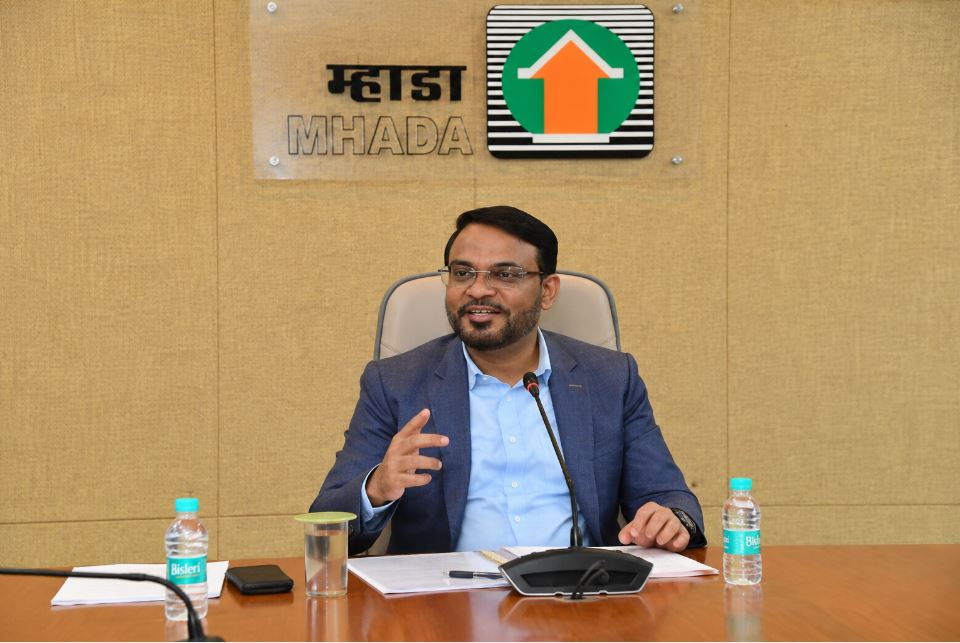
In an exclusive conversation for Homes & Buildings Magazine’s Vision 2030 series, MHADA CEO Sanjeev Jaiswal discussed the road ahead for Mumbai. His vision focuses not only on building homes, but also on making the city more affordable, better planned, more connected, and inclusive.
MHADA’s 8 Lakh Affordable Housing Mission
The Vision 2030 framework places Mumbai and the Mumbai Metropolitan Region (MMR) among the key areas for future urban growth. The broader target is to create nearly 3 million homes in the MMR by 2030.
Around 2.2 million homes are expected to come through slum redevelopment and rehabilitation, while another 8 lakh units are planned under the affordable housing segment. MHADA has taken responsibility for contributing to this affordable housing target through direct construction as well as by supporting and facilitating redevelopment projects.
Jaiswal outlined three major areas of focus
· The first is the redevelopment of old and unsafe buildings, particularly in South Mumbai, through Section 33(7) and larger cluster redevelopment models under Section 33(9).
· The second is the redevelopment of MHADA’s 114 layouts across Mumbai under Section 33(5).
· The third is a wider cluster-based approach that can improve planning, increase density where appropriate, and create additional housing and commercial opportunities.
Several major projects are already moving forward. Motilal Nagar became the first redevelopment project awarded under the Cluster-based New Development model. Abhyudaya Nagar has moved ahead after resolving initial area-related issues, while GTB Nagar is progressing under a similar framework. Bandra Reclamation and Adarsh Nagar have received Cabinet approval, and Aram Nagar is approaching its final clearance stage. Kamathipura is also expected to become an important example of large-scale redevelopment under Section 33(7).
Redefining Affordable Housing for Mumbai
One of the biggest challenges is the meaning of affordability itself.
The national definition of affordable housing is based on a price ceiling of ₹45 lakh. However, Mumbai has a very different economic structure. High land values, construction costs, taxes, premiums, and infrastructure charges make it difficult for many families to find homes at prices that are genuinely affordable.
Jaiswal pointed out that Mumbai’s affordability index is above 51%, compared with the commonly recommended range of 25% to 30%. In simple terms, housing costs can consume more than half of a typical family’s income.
The solution, therefore, is not simply to build smaller homes. It is to reduce the overall cost of creating them.
MHADA has proposed changes to the affordability framework as part of Maharashtra’s housing policy discussions. The focus is on reducing development-related costs while retaining appropriate housing sizes for Economically Weaker Sections (EWS) and Low-Income Groups (LIG).
Lower Development Costs to Make Homes Affordable
Development premiums and approval-related charges are another major factor pushing up housing prices in Mumbai. Development charges, fungible FSI premiums, infrastructure cess, metro cess, and other levies can together account for a significant share of project costs.
These charges help finance major infrastructure projects across Mumbai, including roads, bridges, and the metro network. However, Jaiswal believes the system should be more flexible for affordable and rehabilitation housing.
For EWS and LIG projects, he has advocated a rationalized premium structure, including a potential 40% to 50% reduction in premiums and related charges.
Such reductions could lower the final cost of affordable homes by as much as 30%, making homeownership more realistic for eligible families.
The proposal is not intended as a blanket concession. The focus is specifically on lower-income housing, while premium structures for Middle-Income Group and High-Income Group projects can continue under existing principles.
Rental Housing Could Change Mumbai’s Housing Market
Mumbai’s housing challenge cannot be solved through ownership alone. Rental housing is becoming increasingly important for students, young professionals, migrant workers, industrial employees, senior citizens, and working women.
MHADA’s housing policy approach includes rental housing as an important part of the affordable housing ecosystem. The proposed categories include working women’s hostels, industrial worker dormitories, student hostels, senior citizen facilities, and studio apartments for urban migrants.
To encourage more supply, MHADA has proposed incentives such as additional FSI for qualifying rental housing projects.
Another proposal is a dedicated online rental platform where property owners and tenants can connect directly, helping improve transparency and reduce dependence on middlemen.
Buyback models could also provide developers with a clearer exit strategy after a specified period. This could make rental housing more financially attractive and encourage larger investments.
Cluster Redevelopment Can Create Better Neighborhoods
For Mumbai, redevelopment should be about more than replacing old buildings with new towers.
Jaiswal sees cluster redevelopment as an opportunity to create complete neighborhoods where housing, employment, retail, and community facilities exist together.
Projects in areas such as NM Joshi Marg, Lower Parel, and the BDD chawls demonstrate the potential of this approach.
Mixed-use development can bring affordable homes alongside commercial spaces, retail outlets, and smaller workspaces. This can help reduce the distance between where people live and where they work.
A more balanced urban structure could also reduce daily commuting, traffic congestion, pollution, and pressure on public transportation.
For a city where time is one of the most valuable resources, creating neighborhoods that combine living and working spaces could significantly improve quality of life.
Better Coordination Is Essential for Mumbai’s Growth
Mumbai’s urban development involves several agencies, including MHADA, the Brihanmumbai Municipal Corporation, MMRDA, and the Slum Rehabilitation Authority. Each has its own statutory responsibilities, but major projects often require cooperation across multiple departments.
Jaiswal believes coordination has improved, particularly through high-level mechanisms such as the Chief Minister’s Project War Room. However, he also sees room for a stronger institutional framework.
One possible solution is a Greater Mumbai Urban Commission that could improve coordination without creating another layer of unnecessary bureaucracy.
The objective would be simple: clearer responsibilities, faster dispute resolution, shared data, better planning, and coordinated project execution.
Mumbai’s Unique Urban Challenges
Mumbai cannot be directly compared with cities such as Hyderabad or the National Capital Region. Those cities have had greater opportunities for outward expansion. Mumbai, by contrast, operates within severe geographical constraints.
The Arabian Sea, limited land availability, high population density, and decades-old infrastructure have shaped the city’s development.
The city has also experienced enormous pressure on housing, transportation, water, waste management, and public infrastructure.
Yet Mumbai is now entering a major infrastructure transformation. The coastal road, metro network, and Mumbai Trans Harbour Link are changing the way the city connects with itself and surrounding regions.
The next challenge is ensuring that housing development keeps pace with this infrastructure growth.
Vision 2030: A More Inclusive Mumbai
Jaiswal’s vision for Mumbai in 2030 goes beyond numbers and construction targets.
He sees a city where affordable housing is accessible to lower- and middle-income families without creating unsustainable financial pressure. He envisions a professional and transparent rental housing market that gives people greater flexibility.
He also sees an integrated public transportation system connecting metro lines, suburban railways, buses, and major road corridors. A greener city, better open spaces, stronger environmental planning, and greater resilience to climate-related risks are also part of this vision.
Most importantly, the future Mumbai must remain accessible to the people who keep it running, from teachers and taxi drivers to entrepreneurs, office workers, artists, and small business owners.
Building a Mumbai That Works for Everyone
Mumbai’s future will not be defined only by skyscrapers, infrastructure projects, or rising property values. Its success will depend on whether ordinary citizens can afford to live, work, travel, and build their futures in the city.
MHADA’s affordable housing mission, rental housing proposals, redevelopment strategy, and focus on coordinated urban planning point toward a broader idea of inclusive growth.
The challenge is enormous, but so is Mumbai’s capacity to adapt.
By 2030, the goal should not simply be a larger Mumbai. It should be a more affordable, connected, sustainable, and inclusive Mumbai where growth creates opportunities for a much wider section of society.
That is the real promise of housing the unhoused: not just putting roofs over heads, but building a city where everyone has a fair chance to belong.