
MHADA
MHADA Launches 5 AI-Powered Digital Services
Tue Oct 13 2026
MHADA Introduces Five AI-Powered Digital Services to Make Public Services Faster and Easier
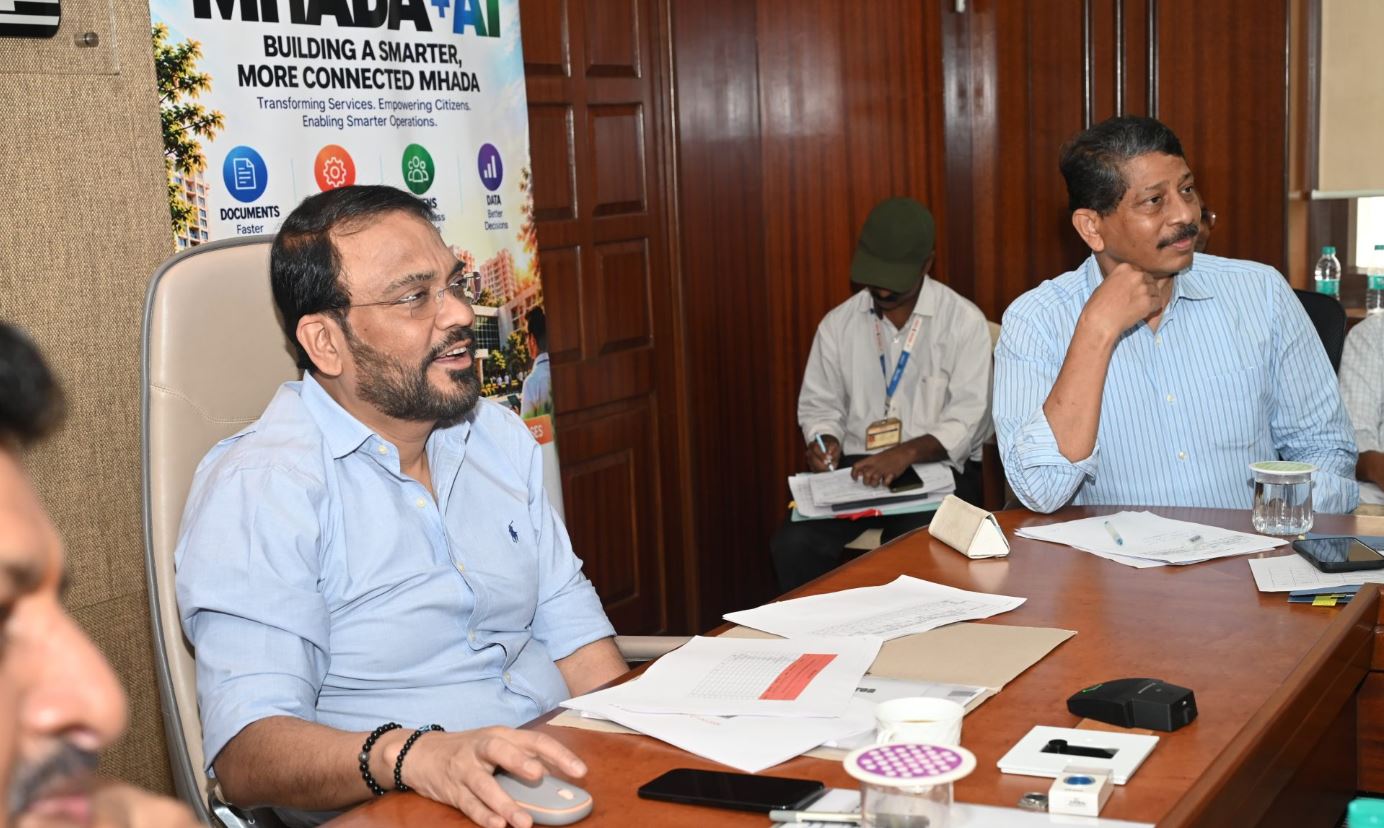
The Maharashtra Housing and Area Development Authority (MHADA) has introduced five artificial intelligence (AI)-powered digital services to improve administrative efficiency, simplify government procedures, and make public services more accessible. Launched on October 12, 2026, by MHADA Vice President and Chief Executive Officer IAS Sanjeev Jaiswal, the new services are part of the authority’s ongoing efforts to modernize its operations through digital technology.
The five services focus on document management, financial reconciliation, land information searches, citizen support, and access to official resolutions. By using AI to handle repetitive tasks and organize information, MHADA aims to reduce manual work, improve accuracy, save time, and make its administrative processes more efficient.
1. AI-Enabled Citizen Facilitation Centre for Easier Applications
MHADA has upgraded its Unified Citizen Facilitation Centre to improve the existing CFC service. The platform allows citizens to submit letters, applications, and supporting documents online without unnecessary office visits.
Its new AI-powered document analysis feature can suggest up to three suitable officers or departments for each submission. This will help applicants send their requests to the correct destination. If citizens are unsure which department should receive their documents, they can select the “Not known” option and seek assistance from CFC officials.
Applicants can also track their submissions using e-Office reference numbers and check the status of their requests. These features are expected to make the application process more convenient and improve communication between citizens and the authority.
2. Finance Reconciliation Engine to Improve Accuracy
The Finance Reconciliation Engine is designed to simplify MHADA’s financial record management. It uses AI to compare bank statements, Real-Time Gross Settlement (RTGS) transactions, and cashbook entries.
The system can automatically identify matching transactions and flag records that do not match for further examination by finance teams. This will help reduce repetitive manual work and make it easier to identify discrepancies.
By improving the reconciliation process, the tool is expected to support more accurate financial records, save staff time, and strengthen the efficiency of financial administration.
3. Smart File Naming and Tagging for Better Document Management
MHADA’s new Files Naming and Tagging system will use AI to classify uploaded documents and apply relevant tags automatically. This will make official files easier to organize, search, and retrieve when required.
The system will also support document summaries in both Marathi and English, helping employees understand important information without having to review lengthy files in full. Secure information-sharing features will further support document access and coordination among authorized users.
The service is expected to improve record management and reduce the time employees spend searching for specific documents.
4. AI Virtual Assistant for Faster Land Information Searches
The fourth service introduces an AI-powered virtual assistant connected to MHADA’s Geographic Information System (GIS). It will help officials search for land-related information through conversational queries.
Instead of manually navigating complex GIS records, users will be able to ask questions in a more natural way and find relevant information more easily. This approach is designed to make land information searches faster and simpler for administrative teams.
The service could also support better access to location-based records and help officials work more efficiently when handling land-related matters.
5. Resolution Extraction and Linking for Quick Access to Official Records
The Resolution Extraction and Linking service will make it easier for MHADA employees to locate decisions approved during official meetings.
Users will be able to search for resolutions by number, subject, or other relevant details. The system will then help them identify the appropriate records and open the relevant pages or sections of the original documents.
This feature is expected to reduce the time required to search through lengthy official files and improve access to important administrative decisions. It will also make document retrieval more convenient for employees who need to refer to past resolutions during their work.
MHADA Strengthens Its Digital Governance Initiative
The launch of these five AI-powered services represents another step in MHADA’s efforts to improve public service delivery through technology. The new tools are designed to do more than simply digitize existing records. They aim to automate routine activities, make information easier to access, and support faster administrative decisions.
The upgraded citizen facilitation platform could make document submissions and tracking more convenient, while the finance and document management tools are expected to improve internal workflows. The GIS virtual assistant and resolution search system will also help employees access important information with less manual effort.
Through this initiative, MHADA aims to build a more efficient, transparent, and citizen-focused administrative system. As the authority expands its use of AI, the new services are expected to provide a stronger digital foundation for improving everyday operations and making government services easier to access.