
MHADA
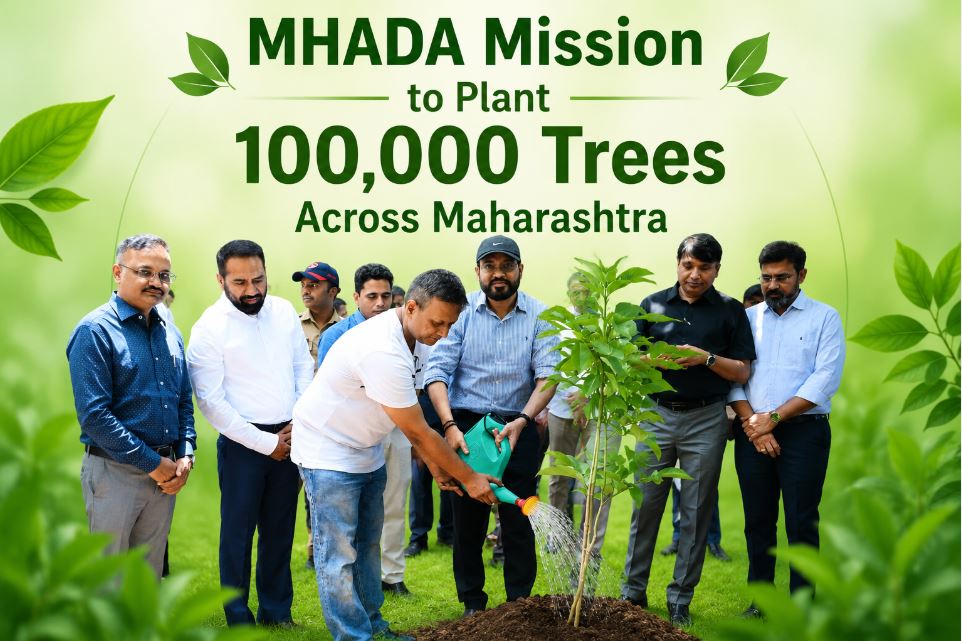
MHADA Launches Mission to Plant 100,000 Trees in Maharashtra
Wed Jul 15 2026
One Lakh Trees, Native Species, Miyawaki Forests, and Geo-Tagging Aim to Boost Urban Green Cover Across the State
Mumbai, July 15, 2026: The Maharashtra Housing and Area Development Authority (MHADA) has launched a large-scale tree plantation and conservation campaign across Maharashtra, setting a target of planting 100,000 trees during this year's Van Mahotsav celebrations. The initiative is part of the authority's broader effort to improve urban greenery, support biodiversity, and promote long-term environmental sustainability amid rising concerns over climate change and rapid urban development.
The campaign officially began at MHADA's headquarters in Bandra East, Mumbai, where Vice Chairman and Chief Executive Officer Sanjeev Jaiswal, IAS, planted 30 Bahava (Golden Shower/Amaltas) saplings as the symbolic start of the statewide mission.
MHADA Focuses on Greener Cities and Environmental Protection
As cities continue to expand and environmental challenges grow, public agencies across India are increasing investments in urban green infrastructure. Following this approach, MHADA's latest campaign focuses not only on planting trees but also on ensuring their long-term survival.
According to MHADA, the initiative aims to improve air quality, strengthen biodiversity, reduce pollution, and create healthier neighborhoods for future generations. Alongside tree plantation, the authority has also installed water and feeding stations for birds and small animals at four locations within its headquarters campus, encouraging urban wildlife conservation.
Bahava Trees Expected to Improve Air Quality
Speaking during the launch, MHADA Vice Chairman and CEO Sanjeev Jaiswal said the newly planted Bahava trees will eventually provide shelter for birds, butterflies, bees, and other pollinators that are essential for a healthy ecosystem.
He added that the 30 trees are expected to absorb more than 3,000 kilograms of carbon dioxide (CO₂) every year while producing approximately 15,000 kilograms of oxygen annually. Over time, he said, the MHADA headquarters campus has the potential to become one of Bandra's important green spaces, helping improve the local environment.
Tree Plantation Drive Expands Across Maharashtra
The campaign is already underway across MHADA's regional offices, with thousands of trees planted during the initial phase.
Current progress includes:
- Nashik Division: Around 10,000 trees planted.
- Konkan Division: Nearly 4,000 trees planted.
- Pune Division: Around 3,000 trees planted.
- Nagpur Division: About 1,000 trees planted.
- Chhatrapati Sambhajinagar Division: 500 trees planted so far, with a target of 10,050 more trees in the coming week.
- Mumbai Division: Target of 4,000 trees, with the first 500 saplings already planted.
MHADA officials said every regional office has been instructed to continue plantation activities throughout the monsoon season to maximize survival rates.
Native Trees and Miyawaki Forests Take Priority
To improve long-term ecological benefits, MHADA has directed all regional divisions to prioritize native tree species, fruit-bearing plants, and healthy saplings that are approximately 5 to 6 feet tall and suitable for local weather conditions.
The authority is also preparing plans to develop Miyawaki forests on vacant and underutilized land across the Mumbai Metropolitan Region (MMR). The Miyawaki method, widely adopted in several Indian cities, allows dense forests to grow quickly in small urban spaces, improving biodiversity and helping reduce the urban heat island effect.
Geo-Tagging Will Help Track Every Tree
Unlike traditional plantation drives that often end after the planting event, MHADA has introduced a monitoring system to improve accountability.
Every sapling planted under the campaign will be geo-tagged, allowing officials to monitor its location, growth, and maintenance over time. The authority believes this digital tracking system will improve survival rates and ensure better care of planted trees.
The campaign will also encourage participation from municipal bodies, gram panchayats, resident welfare associations (RWAs), cooperative housing societies, non-governmental organizations (NGOs), educational institutions, and local citizens, making it a community-driven environmental initiative.
Building on Last Year's Success
MHADA said last year's plantation campaign resulted in the planting of approximately 150,000 trees across Maharashtra. According to the authority, nearly 80 percent of those trees have survived, while more than 114,000 trees have already been geo-tagged for continuous monitoring.
Officials believe the lessons learned from last year's campaign will help further improve plantation quality, maintenance, and survival during this year's drive.
A Long-Term Green Vision for Maharashtra
Environmental experts have increasingly emphasized that successful tree plantation programs depend not only on the number of saplings planted but also on their survival and maintenance. MHADA's focus on native species, geo-tagging, community participation, and Miyawaki forests reflects a growing shift toward long-term urban forestry instead of one-day plantation events.
With a goal of planting 100,000 trees this year, MHADA hopes the campaign will strengthen Maharashtra's green cover, improve urban biodiversity, and contribute to cleaner air and healthier communities for years to come.