
MHADA
MHADA Plans Redevelopment of Ram Krishna Nagar, Borivali
Thu Jul 02 2026
Government Push Brings Two Aging MHADA Housing Layouts Closer to Redevelopment
Highlight: Mumbai’s next phase of redevelopment is shifting from isolated building upgrades to large-scale neighborhood renewal, aiming to improve both housing quality and urban infrastructure.
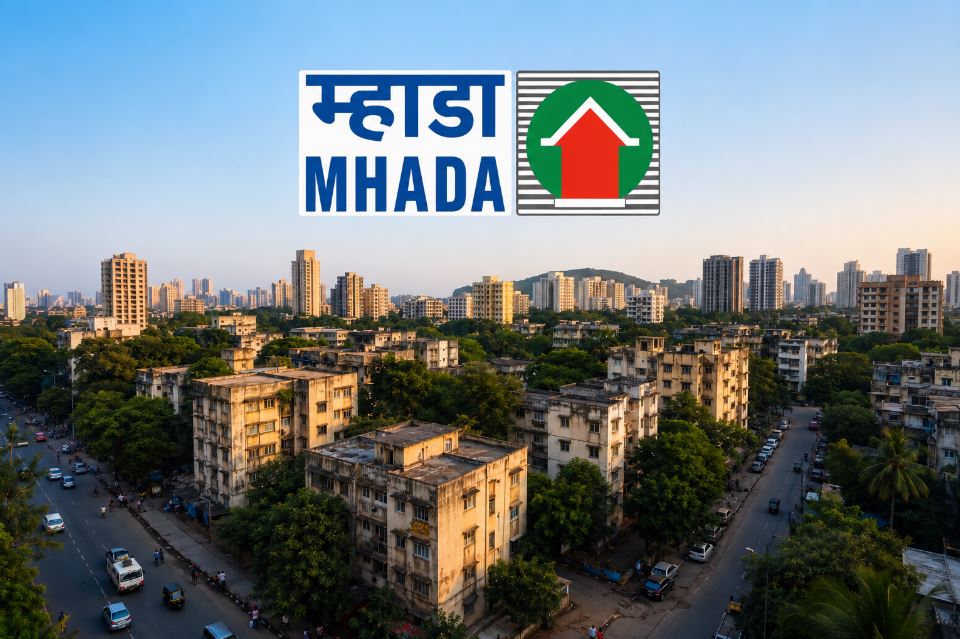
Mumbai’s housing landscape continues to evolve as the Maharashtra Housing and Area Development Authority (MHADA) advances another significant phase of redevelopment. Two of the city’s aging residential layouts - Ram Krishna Nagar in Khar and the Old MHB Colony on Gorai Road in Borivali - have moved a step closer to transformation after redevelopment proposals were submitted to the Maharashtra government. If approved, these projects will mark another milestone in MHADA’s strategy of renewing decades-old housing colonies through comprehensive planning rather than piecemeal reconstruction.
Under the leadership of IAS Sanjeev Jaiswal, Vice President and Chief Executive Officer of MHADA, the authority has increasingly focused on accelerating redevelopment through structured policy frameworks that reduce financial burden on the public agency while improving housing conditions. The proposal for Ram Krishna Nagar and Old MHB Colony reflects this broader approach, where redevelopment is designed to modernize entire neighborhoods, enhance civic infrastructure, and create sustainable urban communities without direct expenditure by MHADA.
Two Historic MHADA Layouts Enter the Next Stage of Redevelopment
The two proposed redevelopment sites differ significantly in scale but share a common challenge - aging infrastructure.
The larger of the two is the Old MHB Colony on Gorai Road in Borivali, covering approximately 1,03,405 square meters. Developed nearly five decades ago, the colony consists of around 20 MHADA residential buildings housing approximately 1,727 flats. Existing apartment sizes range from 225 square feet to 450 square feet, reflecting housing standards of an earlier era.
Ram Krishna Nagar, located near Khar railway station, occupies a comparatively smaller area of approximately 25,234 square meters. The layout consists of 17 residential buildings containing 234 homes, with existing apartment sizes ranging from 387 square feet to 507 square feet.
Both housing layouts are around 50 years old, making structural deterioration a growing concern for residents as well as authorities.
Why Redevelopment Has Become Increasingly Urgent
The redevelopment proposal is driven by the deteriorating physical condition of the buildings.
Residents of the Old MHB Colony have repeatedly highlighted structural issues including water leakage, recurring repairs, and aging construction. According to local residents, repairs are undertaken every few years, yet the problems continue to resurface.
The urgency became even more visible after a recent slab collapse inside one of the flats. Although no injuries were reported, the incident reinforced long-standing concerns about the condition of the buildings.
Several buildings within the colony are reported to be in particularly poor condition, strengthening the argument that redevelopment is no longer simply an urban renewal initiative but also a safety measure.
A Long-Standing Demand Finally Moves Forward
For residents of the Old MHB Colony, redevelopment has been under discussion for nearly 15 years.
Earlier efforts involving a private developer failed to progress despite initial consent from residents. Over time, confidence in the project declined, consent was withdrawn, and the redevelopment process eventually stalled. An arbitration case linked to the earlier proposal continues to remain before the court.
The latest proposal submitted by MHADA therefore represents a fresh opportunity to revive redevelopment through a structured institutional process rather than fragmented negotiations.
Residents have expressed cautious optimism, with many hoping that the redevelopment process now moves more quickly than previous attempts.
How the C&DA Redevelopment Model Works
The proposed projects will be implemented under MHADA's Construction and Development Agency (C&DA) model, a framework that has become central to the authority's redevelopment strategy.
Unlike conventional public redevelopment projects, this model does not require direct financial investment by MHADA.
Instead, the selected development agency undertakes comprehensive redevelopment of the entire layout. This includes construction of residential buildings along with supporting infrastructure such as internal roads, public amenities, open spaces, and civic facilities.
In return, MHADA receives either a land premium or constructed housing units, while the developer gains sale rights over the remaining developable area. The model enables redevelopment of large housing colonies without placing additional financial pressure on the authority.
This approach also allows redevelopment to be planned on a neighborhood scale rather than building by building, resulting in more integrated urban planning.
Larger Homes Planned for Khar Residents
One of the most visible benefits of redevelopment will be improved residential space.
At Ram Krishna Nagar in Khar, existing apartments measuring between 387 and 507 square feet are proposed to be replaced with significantly larger homes ranging from 882 square feet to 1,120 square feet.
This substantial increase in residential area illustrates how redevelopment is not only replacing old buildings but also upgrading living standards for existing occupants.
While detailed rehabilitation plans for the Old MHB Colony are expected after government approval, similar planning principles are likely to guide the project.
Government Approval and Tender Process Remain the Next Steps
According to MHADA officials, redevelopment proposals for both layouts were submitted to the Maharashtra government in May, and approval is currently awaited.
Once clearance is received, detailed project planning will begin, followed by the appointment of a development agency through a competitive tender process.
The redevelopment is expected to be carried out under Development Control and Promotion Regulations (DCPR), 2034, specifically Regulation 33(5) or Regulation 33(9). These regulations provide an estimated Floor Space Index (FSI) of around 4, along with additional fungible FSI, enabling comprehensive redevelopment while accommodating rehabilitation and future development requirements.
Part of a Broader Redevelopment Pipeline
The proposals for Ram Krishna Nagar and Old MHB Colony fit within MHADA's expanding redevelopment program across Mumbai.
Several major housing layouts are already progressing under the C&DA model, including Motilal Nagar in Goregaon and GTB Nagar in Sion.
Meanwhile, projects such as BDD Chawls and PMGP Colony in Jogeshwari are being redeveloped directly by MHADA through contractors.
Additional redevelopment initiatives are also moving through earlier stages. At Bandra Reclamation and Adarsh Nagar in Worli, Adani Properties has emerged as the highest bidder, while a consortium comprising Hanura Realty, Chandak Realtors, Premsagar Infra Realty, and Vantier Realty is leading the redevelopment process for SVP Nagar in Andheri West.
Redevelopment Signals a Shift in Mumbai’s Urban Housing Strategy
The proposals for Ram Krishna Nagar and the Old MHB Colony demonstrate how Mumbai's redevelopment strategy is gradually shifting from isolated building reconstruction toward comprehensive neighborhood renewal. Instead of addressing individual structural failures, MHADA is pursuing a model that combines housing rehabilitation with improved infrastructure, better urban planning, and financially sustainable project execution.
As government approval is awaited, these two housing layouts represent the next chapter in Mumbai's long-term effort to modernize aging residential communities while improving the quality of life for thousands of residents. If implemented as planned, the projects could become another important example of how large-scale redevelopment is reshaping the future of affordable urban housing in the city.