
MHADA
MHADA Targets 8 lakh Affordable Homes by 2030 in Mumbai
Mon Jun 29 2026
MHADA Plans Large-Scale Redevelopment to Make Housing More Affordable Across Mumbai
Mumbai's affordable housing shortage remains one of the city's biggest challenges. Rising property prices, aging buildings, and growing migration continue to increase the demand for quality homes. To address these issues, the Maharashtra Housing and Area Development Authority (MHADA) has introduced an ambitious roadmap aimed at delivering nearly 800,000 affordable homes by 2030.
Leading this effort is MHADA Vice President and CEO Sanjeev Jaiswal, who believes that large-scale redevelopment, better urban planning, and policy reforms will reshape Mumbai's housing landscape over the next few years.
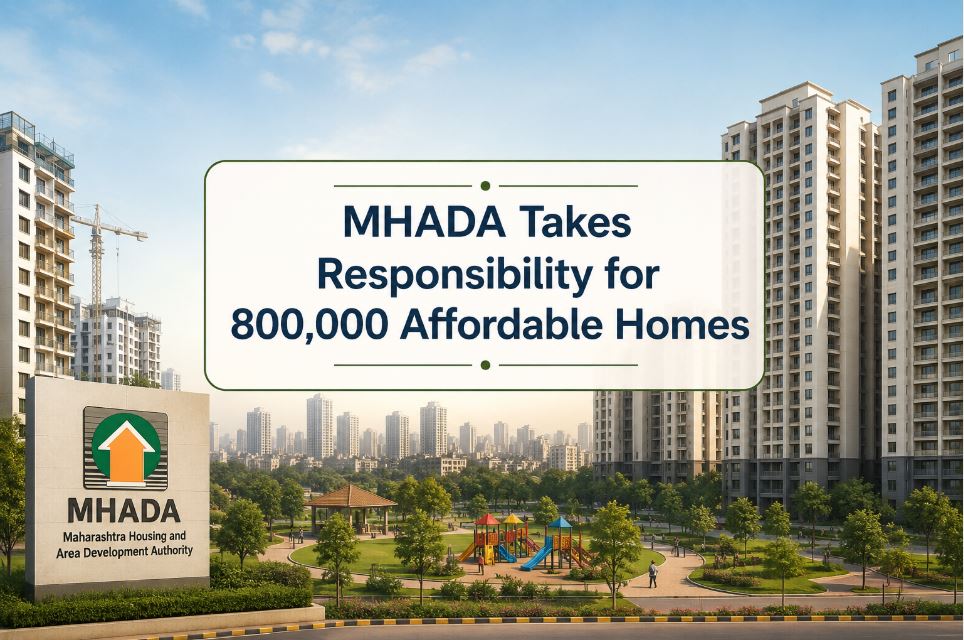
MHADA Takes Responsibility for 800,000 Affordable Homes
As part of Maharashtra's Vision 2030 development strategy, the Mumbai Metropolitan Region (MMR) is expected to witness one of the country's largest housing expansion programs. The broader plan targets nearly three million new homes across the region by 2030.
According to Sanjeev Jaiswal, around 2.2 million homes will be created through slum redevelopment and rehabilitation projects, while MHADA has been entrusted with delivering approximately 800,000 affordable housing units.
The authority plans to achieve this target through direct construction, redevelopment projects, and partnerships across Mumbai and surrounding cities.
Jaiswal described the housing mission as more than just a construction target. He said it represents MHADA's commitment to building an inclusive Mumbai where more families can own safe and affordable homes.
Three Major Strategies Will Drive MHADA's Housing Expansion
MHADA has developed a three-part strategy to achieve its ambitious housing goals.
The first priority is the redevelopment of old and unsafe buildings, especially in South Mumbai. Many structures have exceeded their safe lifespan, making redevelopment necessary for both safety and improved living conditions.
The second focus is the redevelopment of MHADA's own residential layouts spread across the city. More than 100 MHADA layouts are expected to undergo comprehensive redevelopment, allowing better use of available land while creating modern housing communities.
The third strategy involves cluster redevelopment, where multiple neighboring properties are redeveloped together instead of rebuilding individual buildings separately. This approach allows better planning, wider roads, improved infrastructure, more open spaces, and additional housing inventory.
Several Landmark Redevelopment Projects Are Already Underway
MHADA has already launched or approved several major redevelopment projects that will contribute to its long-term housing targets.
Motilal Nagar became the first project awarded under MHADA's Cluster-Based New Development model. The redevelopment is expected to become one of Mumbai's largest urban renewal projects.
Other important projects moving forward include:
- Abhyudaya Nagar redevelopment
- GTB Nagar redevelopment
- Bandra Reclamation redevelopment
- Adarsh Nagar redevelopment
- Aram Nagar redevelopment
- Kamathipura redevelopment
These projects are expected to replace aging structures with modern residential communities while improving roads, public amenities, utilities, and overall urban infrastructure.
Cluster Redevelopment Will Create Better Neighborhoods
Rather than simply replacing old buildings with taller towers, MHADA wants redevelopment projects to create complete neighborhoods.
Sanjeev Jaiswal explained that future redevelopment projects will include residential buildings alongside commercial spaces, retail shops, offices, community facilities, and public infrastructure.
This mixed-use development model is expected to reduce long daily commutes by allowing people to live closer to workplaces and local businesses.
According to MHADA, better urban planning can improve residents' quality of life while also supporting economic growth throughout Mumbai.
Redevelopment Will Improve Safety and Urban Infrastructure
Many residential buildings across Mumbai were constructed several decades ago and now require major structural upgrades.
Redevelopment provides an opportunity to replace aging buildings with safer, earthquake-resistant structures that meet modern construction standards.
At the same time, cluster redevelopment allows authorities to widen roads, improve drainage systems, create green spaces, upgrade water supply networks, and build better public infrastructure.
MHADA believes this integrated approach will help transform congested neighborhoods into modern, well-planned communities.
Affordable Housing Remains the Core Mission
While redevelopment improves infrastructure, MHADA says its primary objective remains increasing the supply of affordable homes.
Demand for MHADA housing continues to far exceed available inventory, with housing lotteries regularly receiving several times more applications than available units.
According to Jaiswal, this demonstrates the urgent need for additional affordable housing across Mumbai.
He believes that combining redevelopment with policy reforms and better land utilization can significantly increase housing supply while making homeownership more accessible for middle-income and lower-income families.
Vision 2030 Aims to Build an Inclusive Mumbai
MHADA's long-term housing strategy goes beyond constructing new apartments.
The authority wants redevelopment projects to create neighborhoods that are safer, greener, and better connected through modern transport infrastructure.
Future developments are expected to include improved public spaces, better community facilities, enhanced connectivity, and balanced urban planning that supports both residential and commercial growth.
Jaiswal said Mumbai's future depends on creating housing opportunities that are inclusive rather than exclusive. He believes redevelopment should benefit existing residents while providing opportunities for future generations.
With multiple redevelopment projects already progressing and additional schemes in the pipeline, MHADA expects to play a central role in shaping Mumbai's urban future.
If successfully implemented, the authority's Vision 2030 roadmap could significantly expand affordable housing availability while transforming some of Mumbai's oldest neighborhoods into modern, sustainable communities.