
MHADA
MHADA to Launch Citizen Grievance Cell for Redevelopment
Mon Aug 03 2026
Citizen First: MHADA to Set Up Special Grievance Cell
The success of any large-scale housing mission depends not only on the number of homes built but also on how effectively citizens are heard throughout the development process. Maharashtra has now taken a significant step in that direction. Chief Minister Devendra Fadnavis has directed the Maharashtra Housing and Area Development Authority (MHADA) to establish a dedicated citizen grievance and feedback cell focused on construction and redevelopment projects. The decision signals a stronger commitment to transparency, accountability, and citizen-centric governance while reinforcing the state's long-term housing vision.
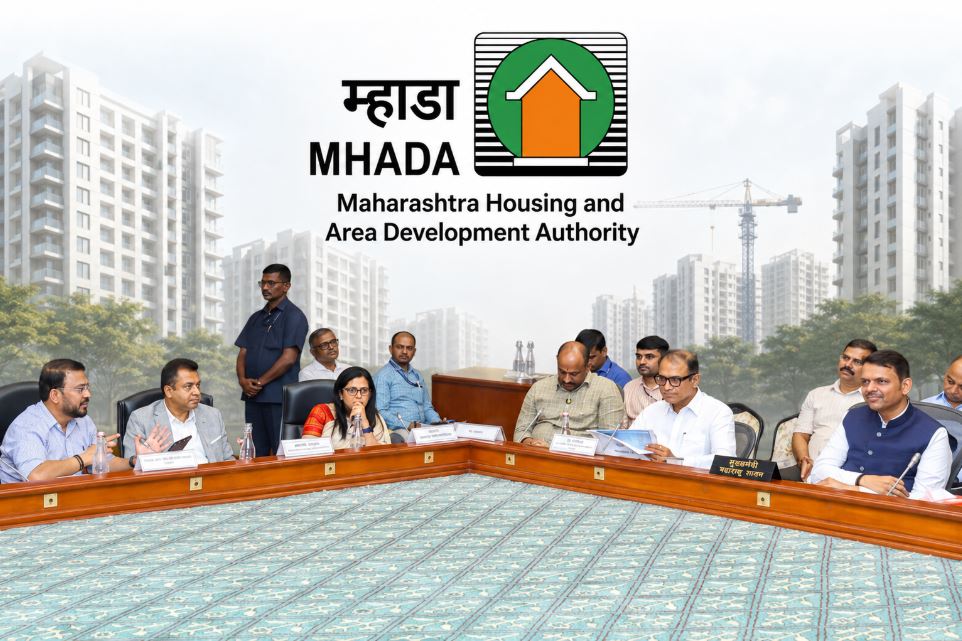
In the review meeting held at Sahyadri Guest House, IAS Sanjeev Jaiswal, Vice President and CEO of MHADA, presented the scale and progress of the authority's redevelopment initiatives. He informed the Chief Minister that MHADA is currently executing 15 major redevelopment projects across the Mumbai Metropolitan Region (MMR), representing a combined investment of approximately Rs 3.70 lakh crore. These projects are expected to deliver more than 2.15 lakh new flats, creating one of the largest urban redevelopment initiatives in Maharashtra. His presentation highlighted both the magnitude of the ongoing work and MHADA's growing role in reshaping urban housing.
Highlight: Maharashtra's housing strategy is evolving from simply constructing homes to building a governance model where citizen participation becomes an integral part of redevelopment.
A Dedicated MHADA Citizen Cell Signals a Governance Shift
The most notable outcome of the review meeting was Chief Minister Devendra Fadnavis' directive to establish a separate MHADA cell dedicated to hearing citizens' concerns, suggestions, and feedback regarding housing construction and redevelopment.
Large redevelopment projects often involve multiple stakeholders, including existing residents, future homebuyers, local communities, and government agencies. A specialized communication platform can help bridge the gap between project execution and public expectations. Instead of addressing concerns through fragmented channels, citizens would have a dedicated mechanism designed specifically for MHADA-related matters.
This move reflects an administrative approach that places public engagement alongside engineering, planning, and project execution.
Massive Redevelopment Pipeline Worth Rs 3.70 Lakh Crore
The figures presented during the meeting underline the scale of MHADA's redevelopment ambitions.
According to IAS Sanjeev Jaiswal, MHADA is implementing 15 redevelopment projects across the Mumbai Metropolitan Region with a combined project value of Rs 3.70 lakh crore. Upon completion, these developments are expected to create more than 2.15 lakh flats through group redevelopment initiatives.
These numbers illustrate how redevelopment has become a central pillar of Maharashtra's urban housing strategy. Rather than relying solely on greenfield expansion, MHADA is focusing on modernizing existing urban areas while creating significantly more housing capacity.
The emphasis on redevelopment also addresses long-standing infrastructure challenges by integrating housing renewal with improved urban planning.
Timely Completion Remains the Government's Priority
While reviewing ongoing projects, Chief Minister Devendra Fadnavis emphasized that quality and timely completion must remain the highest priorities.
He noted that MHADA's projects are expected to make a substantial number of homes available for common citizens in the coming years. However, the benefits of these developments can only be realized if construction schedules are maintained without compromising quality standards.
This balanced emphasis on speed and execution reflects an understanding that housing shortages cannot be solved through project announcements alone. Delivery remains the true measure of success.
Fast-Tracking Rehabilitation Projects Across Mumbai
Among the projects discussed, rehabilitation initiatives received particular attention.
Chief Minister Fadnavis directed that projects involving resident rehabilitation, including the BDD Chawl redevelopment, should be accelerated so that eligible families can be relocated at the earliest.
The review also focused on the ambitious Kamathipura redevelopment project. Alongside faster implementation, the Chief Minister instructed officials to examine supporting infrastructure requirements such as bridges, roads, and improved connectivity to ensure redevelopment is accompanied by better urban mobility.
This integrated planning approach recognizes that successful redevelopment extends beyond residential buildings to include the surrounding public infrastructure.
Foreign Investment Could Expand Housing Opportunities
Another important policy direction emerged during the meeting with the in-principle approval for a high-level committee aimed at attracting foreign investment into housing and development projects across Maharashtra, including the Mumbai Metropolitan Region.
The decision indicates that the state is exploring additional sources of capital to support large-scale urban transformation. As redevelopment projects become increasingly complex and capital-intensive, diversified investment mechanisms can potentially strengthen project execution while supporting long-term housing expansion.
Although the committee's detailed framework is yet to be finalized, the approval demonstrates the government's intent to create an enabling environment for future investment in urban development.
Akkalkot Development Receives Fresh Momentum
The review meeting extended beyond urban redevelopment to include cultural and pilgrimage infrastructure.
The Chief Minister approved the Akkalkot pilgrimage development project to be executed through MHADA. The first phase will include work on the Samadhi and temple, while the second phase will focus on constructing the palanquin path.
The decision reflects MHADA's expanding role beyond residential construction into broader public infrastructure projects that support tourism, heritage, and community development.
Comprehensive Review of Key Redevelopment Projects
The meeting included detailed reviews of several strategically important redevelopment locations across Mumbai.
Projects examined included Abhyudaya Nagar, GTB Nagar, Motilal Nagar, Adarsh Nagar at Worli, Bandra Reclamation, SVP Nagar in Andheri, Kamathipura in South Central Mumbai, Ramakrishna Nagar in Khar, the Old MHB Colony in Borivali, Bharat Nagar in Bandra East, Aram Nagar in Versova, Plot Numbers 7 and 8 in Bandra, Patra Chawl (R-10) in Goregaon, Charkop, and Gorai in Borivali.
The breadth of projects reviewed demonstrates the scale at which MHADA is simultaneously working across multiple parts of Mumbai and the wider metropolitan region.
A Citizen-Centric Vision for Maharashtra's Housing Future
The establishment of a dedicated MHADA citizen grievance cell represents more than an administrative reform. It reflects an evolving governance philosophy where public participation is becoming an essential component of urban redevelopment.
Combined with redevelopment investments worth Rs 3.70 lakh crore, the planned construction of over 2.15 lakh flats, a renewed focus on timely execution, rehabilitation acceleration, infrastructure integration, and efforts to attract foreign investment, Maharashtra is reinforcing a comprehensive approach to housing development.
The review led by Chief Minister Devendra Fadnavis, supported by the detailed project roadmap presented by IAS Sanjeev Jaiswal, illustrates how policy direction and institutional execution can work together to improve housing availability while strengthening public confidence in redevelopment initiatives. As these projects progress, their long-term impact will be measured not only by the number of homes delivered but also by the quality, transparency, and citizen engagement that define the redevelopment process.