
Maharashtra
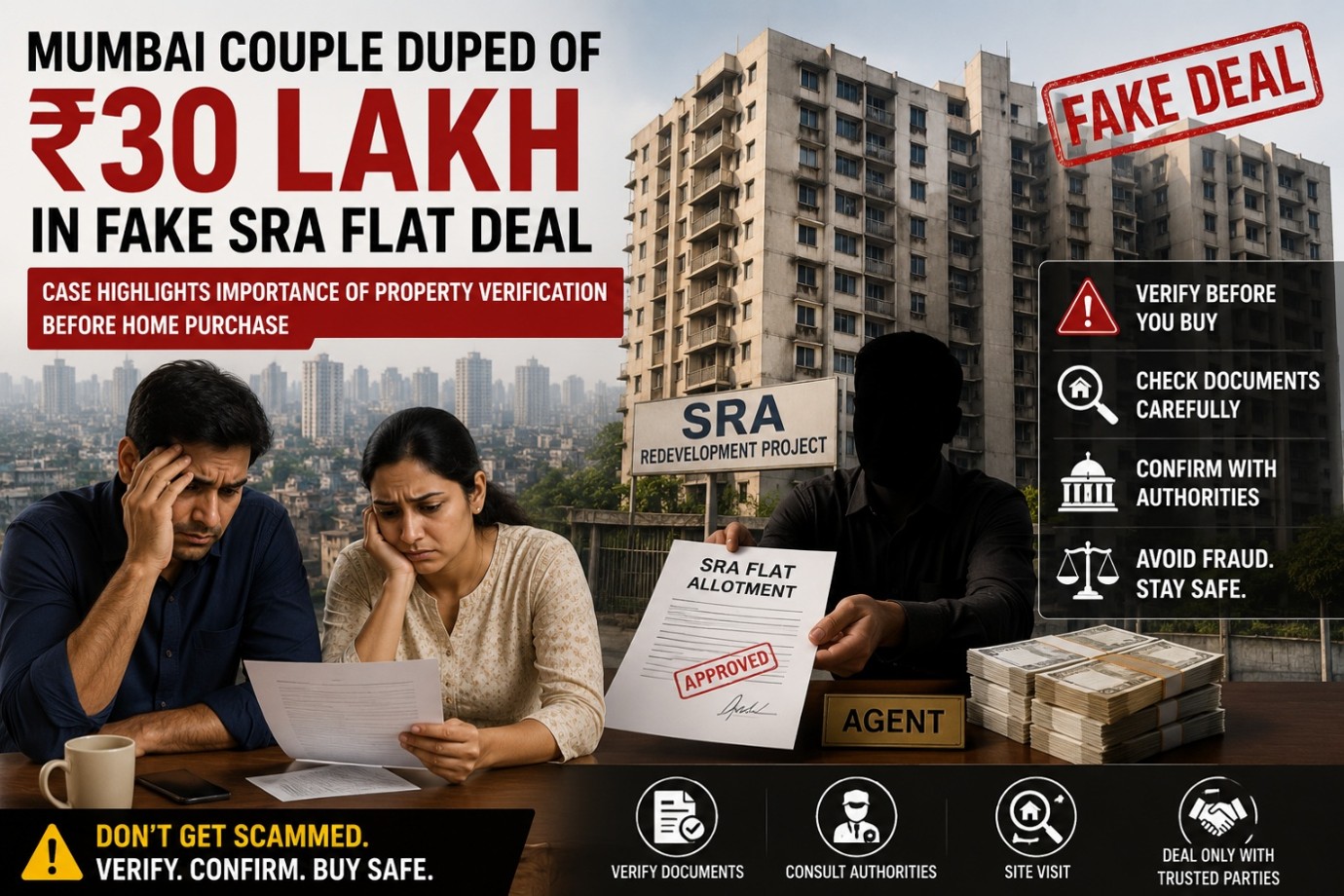
Mumbai Couple Duped of ₹30 Lakh in Fake SRA Flat Deal; Case Highlights Importance of Property Verification Before Home Purchase
Wed May 20 2026
A Mumbai property fraud case has exposed the risks faced by homebuyers seeking affordable housing. Police arrested a man accused of cheating a couple out of nearly ₹30 lakh by promising them an SRA flat in Andheri using forged documents and a fake registration process. The fraud was uncovered when the buyers verified the property with the Slum Rehabilitation Authority (SRA) and discovered the documents were fake. The case highlights the importance of independently verifying ownership records, approvals, allotment details, and registration documents through official authorities before making any property payments. Experts advise SRA and MHADA homebuyers to exercise extra caution and rely only on legally approved channels to avoid fraud.
A shocking property fraud case from Mumbai has once again highlighted why homebuyers must carefully verify documents before investing in SRA or affordable housing projects. Mumbai Police recently arrested a man accused of cheating a couple of nearly ₹30 lakh by allegedly promising them a flat in a Slum Rehabilitation Authority (SRA) building in Andheri using forged documents and fake registration procedures.
While the incident has raised concerns among buyers searching for affordable homes in Mumbai, it also serves as an important reminder about the growing need for proper property verification and awareness during real estate transactions. With large numbers of buyers actively exploring SRA and MHADA housing opportunities due to rising property prices in Mumbai, experts continue advising citizens to rely only on official verification channels and legally approved documentation before making payments.
How the Alleged Fake SRA Flat Deal Happened
According to police officials, complainant Tayamma Mallesh Dhangar and her husband, residents of Andheri, were searching for a residential property in Mumbai and were specifically interested in flats under SRA and MHADA schemes.
Through relatives, the couple reportedly came in contact with Rahul Rajendra Tiwari, who allegedly claimed he could arrange a low-cost SRA flat for them in Andheri.
Officials said the flat deal was finalized for ₹45 lakh, following which legal documents were allegedly prepared after discussions between both parties. The couple initially paid ₹10 lakh as a token amount and later paid an additional ₹20.50 lakh in instalments toward the transaction.
Biometric Process and Fake Documents Raised Suspicion
According to the police complaint, the accused later called the couple in July last year for biometric formalities related to the registration process.
However, the couple was reportedly informed about a “server issue” during the process and was sent back.
Later, another accused identified as Mahesh Karande was introduced to the couple as the person managing the biometric process for the SRA flat transaction.
A few days later, the accused allegedly handed over flat documents and keys to the buyers. But when the couple visited the property, they discovered that the flat had been sealed from outside.
The incident raised suspicion, following which the couple approached the SRA office for verification.
SRA Verification Revealed Documents Were Fake
During verification with the Slum Rehabilitation Authority, the couple allegedly discovered that all the submitted flat documents were fake.
Following this, a police complaint was lodged against Rahul Tiwari, Mahesh Tiwari and Mahesh Karande. Police later registered a case for cheating, criminal breach of trust and preparing forged documents related to the SRA housing transaction. According to officials, Rahul Rajendra Tiwari was arrested after nearly a month and later produced before the court, which remanded him to police custody.
The other two accused are currently absconding, and police are continuing their search operation.
Affordable Housing Buyers Must Stay Alert
The case has once again highlighted how fraudsters often target buyers looking for affordable housing options in Mumbai, especially in SRA and redevelopment-linked projects where demand remains high.
Experts advise buyers to avoid making large payments based solely on verbal assurances, personal references or photocopied documents.
Homebuyers are also encouraged to independently verify:
- Ownership documents
- SRA approvals
- Registration details
- Project permissions
- Biometric and allotment procedures
- Official property records
Verification through official government authorities and legal professionals can significantly reduce the risk of fraud during property purchases.
Why SRA and MHADA Buyers Need Extra Caution
Affordable housing schemes such as SRA and MHADA projects continue attracting strong buyer interest because of comparatively lower pricing in Mumbai’s expensive real estate market.
However, experts say fraudsters often misuse the popularity of such schemes by offering “discounted” or “priority” flats through unofficial channels.
Buyers are therefore advised to:
- Avoid cash transactions without documentation
- Verify all papers through official authorities
- Confirm flat allotment directly with SRA or MHADA offices
- Consult registered legal experts before signing agreements
- Cross-check seller identity and authorization status
Real estate experts believe awareness remains one of the strongest safeguards against property fraud.
Mumbai Police Action Sends Strong Warning Against Housing Fraud
The arrest made by Mumbai Police in the case is also being viewed as an important step in tackling property-related fraud and protecting homebuyers from fake housing schemes.
Officials have reiterated that citizens should immediately approach police or government authorities if they suspect any irregularities during property transactions.
As affordable housing demand continues rising across Mumbai, the latest case serves as an important awareness lesson for buyers to remain cautious, verify every detail carefully and complete transactions only through legally approved and transparent processes.