
Maharashtra
Mumbai Faces Repeated Power Cuts as Heatwave Pushes Electricity Demand to Record Levels
Sat May 23 2026
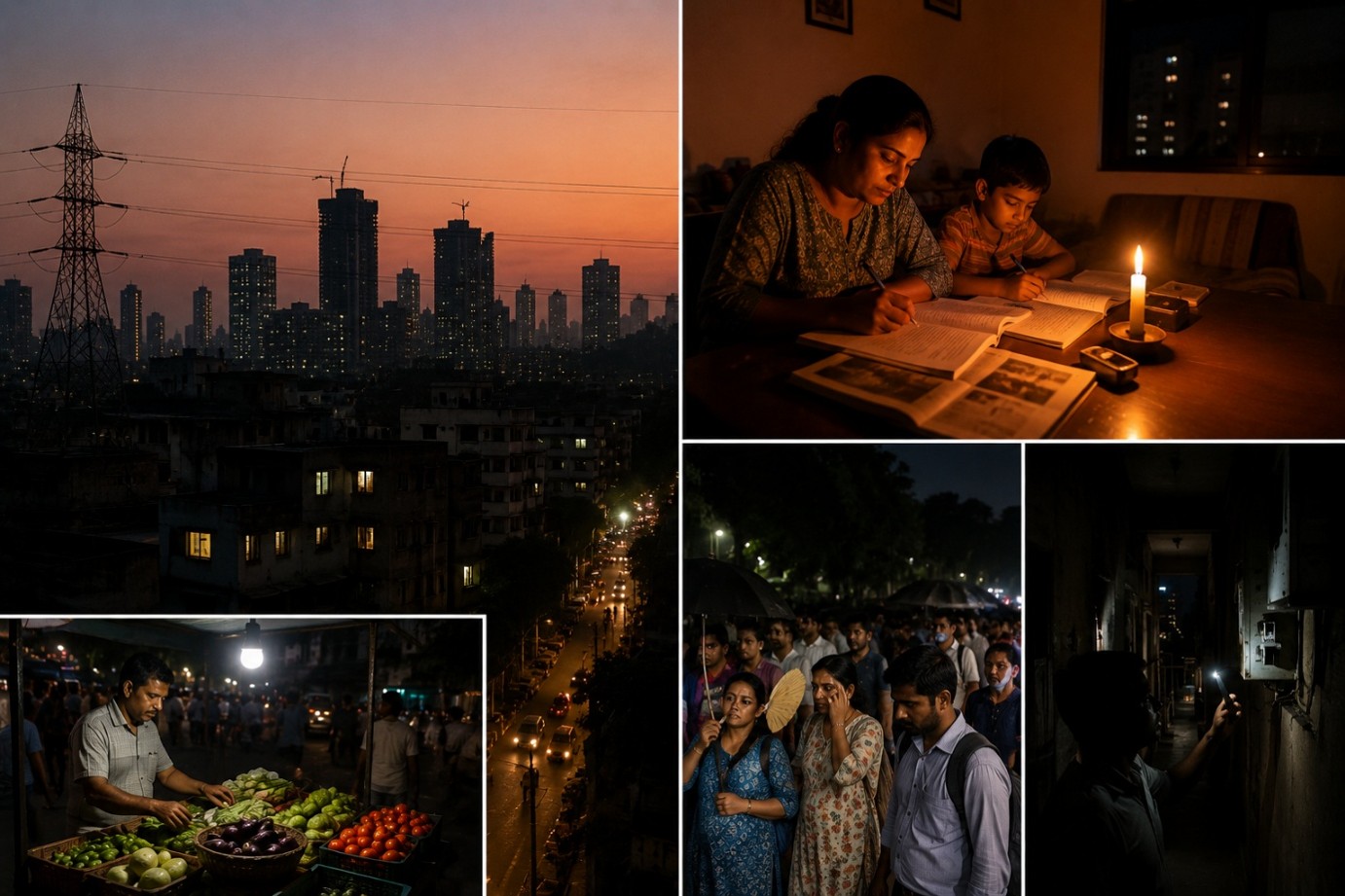
Mumbai has experienced repeated power outages across several areas, including Dadar, Wadala and Girgaon, as soaring temperatures and record electricity demand place heavy pressure on the city’s power infrastructure. Multiple transformer and feeder faults disrupted supply under the BEST network, while electricity demand recently crossed 4,500 MW. The incidents have raised concerns about infrastructure resilience as Mumbai faces continued heatwave conditions and rising energy consumption.
Mumbai has witnessed repeated power outages across several areas over the past two weeks as soaring temperatures and rising electricity consumption continue putting heavy pressure on the city’s power infrastructure. Areas under the BEST Undertaking network, including Dadar, Wadala, Girgaon and nearby localities, have been particularly affected following multiple transformer and feeder faults during peak demand periods.
The latest disruptions have once again highlighted the growing strain on Mumbai’s electricity distribution network as the city battles intense summer heat and record-breaking power consumption driven largely by continuous air-conditioner usage.
Fresh Power Disruptions Reported in Dadar, Wadala and Girgaon
Residents in Dadar, Wadala, Parsi Colony and Girgaon faced fresh power outages on Friday night after multiple technical faults were reported at the Kingsway Receiving Station in Dadar and at Girgaon Chowpatty.
According to preliminary information, the first incident occurred around 9:25 pm at the Kingsway Receiving Station after air trips were reported in Transformer No. 2 and Transformer No. 3, leading to major disruption in electricity supply across multiple areas.
BEST officials immediately initiated restoration work and stated that repair operations were being carried out on priority.
Almost simultaneously, another electricity disruption was reported near Girgaon Chowpatty after a fire broke out in the transformer of the High Voltage Distribution Board.
The incident temporarily affected electricity supply in Girgaon Chowpatty and Gaondevi areas for nearly one hour before restoration efforts were completed.
Multiple Feeder Faults Trigger Large-Scale Outages
According to BEST officials, the Kingsway Receiving Substation functions through four 33,000-volt Extra High Voltage feeder lines.
One feeder connected to Transformer No. 1 was already under repair due to an earlier cable fault, forcing authorities to shift the electrical load through Transformer No. 4.
Officials stated that another fault developed around 6:30 pm on Friday in the feeder supplying Transformer No. 3. The electrical load was subsequently shifted to Transformer No. 2 and supply was temporarily restored by 8 pm.
However, within nearly 30 minutes, another major fault struck the feeder supplying Transformer No. 2, triggering a complete outage across Dadar, Maheshwari Udyan, Naigaon, Wadala East and surrounding areas.
BEST officials said restoration work was being carried out on a “war footing” to normalise supply as quickly as possible.
Heatwave Pushes Mumbai’s Power Demand Above 4,500 MW
The repeated outages come at a time when Mumbai’s electricity demand has reached unprecedented levels because of continuous heatwave conditions and rising temperatures.
According to officials, the city’s power demand crossed an all-time high of 4,500 MW earlier this week as residential and commercial electricity usage surged sharply.
Even on Saturday, Mumbai’s electricity demand reportedly touched 3,878 MW by 12:30 pm.
The massive increase in power consumption is primarily being linked to extensive usage of air conditioners, cooling systems and electrical appliances across households and commercial establishments.
Officials admitted that the unusually high demand has significantly increased pressure on transformers, feeder lines and power distribution infrastructure across the city.
Earlier Outages Had Already Raised Infrastructure Concerns
The latest incidents are not isolated cases.
Earlier on May 14, nearly 3,000 consumers in Dadar, Sitladevi and Matunga Road areas had also faced prolonged power outages following a cable fault at the Sitladevi Receiving Substation.
At that time, officials had already described Mumbai’s power load situation as “critical” because of rising electricity demand combined with feeder failures and infrastructure stress.
The recurring technical issues are now raising broader concerns regarding the resilience of Mumbai’s ageing electricity infrastructure during extreme weather conditions and peak summer demand periods.
BEST Monitoring Situation Amid Rising Demand
Officials stated that BEST teams are continuously monitoring the network and carrying out emergency repairs to minimise disruption.
The utility is also closely tracking electricity demand trends as temperatures remain high across Mumbai and surrounding regions.
With the city expected to continue witnessing elevated power consumption until the monsoon arrives, infrastructure reliability and load management are likely to remain key challenges for power authorities over the coming weeks.
Rising Heatwave Conditions Expose Urban Infrastructure Stress
The repeated power outages once again highlight how extreme weather conditions are increasingly placing pressure on urban infrastructure systems in Mumbai.
As temperatures continue rising and electricity usage remains elevated, experts believe the city may witness additional stress on power distribution networks unless demand stabilises or weather conditions improve.
For now, BEST authorities remain focused on restoring stability to the electricity network while ensuring emergency repairs are completed quickly to prevent prolonged disruptions for consumers across Mumbai.