
Maharashtra
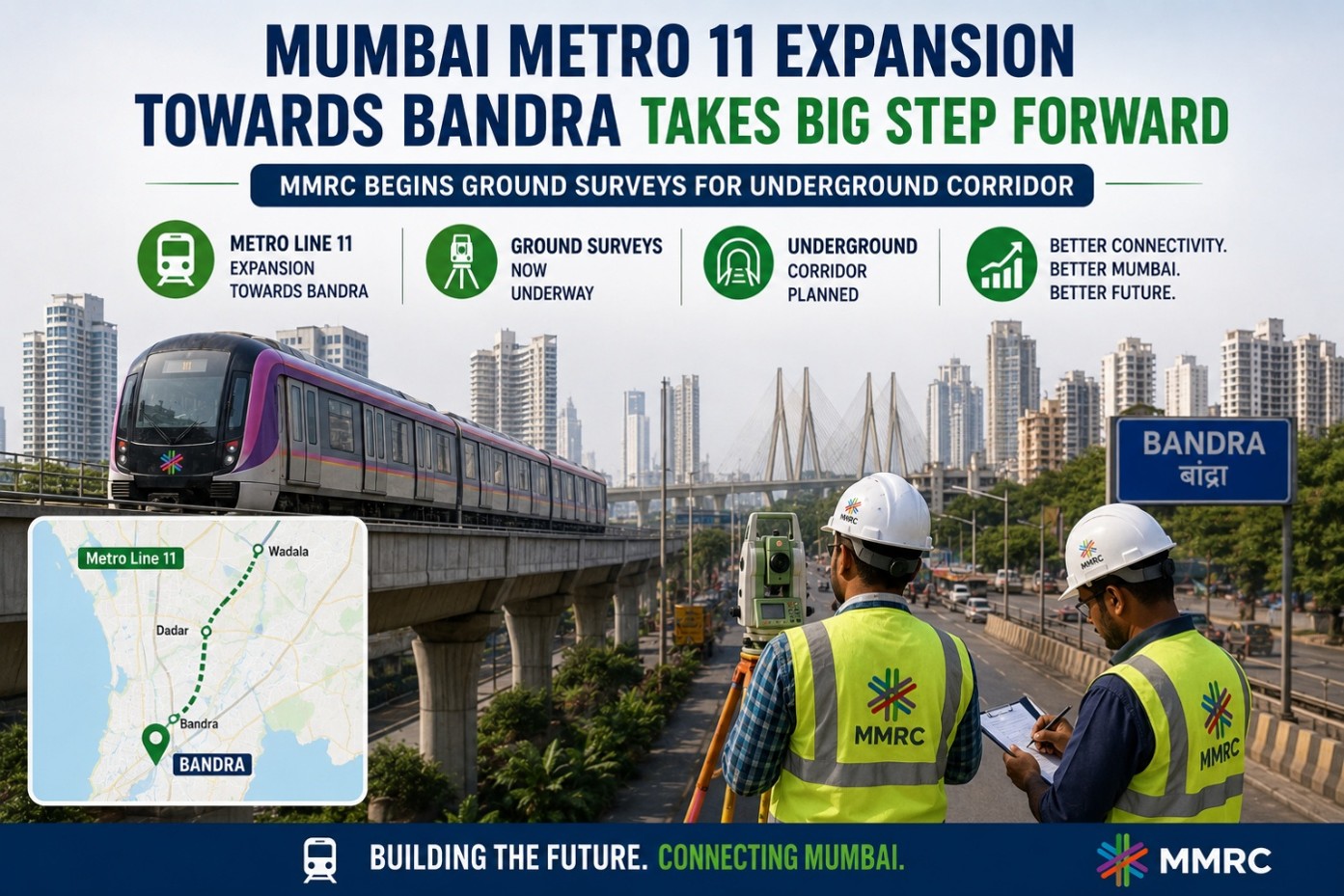
Mumbai Metro 11 Expansion Towards Bandra Takes Big Step Forward as MMRC Begins Ground Surveys for Underground Corridor
Thu May 21 2026
Mumbai Metro Line 11 has entered the preparatory phase with MMRC initiating underground utility and obstacle surveys for the proposed 6.9-km extension from Wadala to Bandra Terminus via Dharavi. Using Ground Penetration Radar technology, the surveys will map underground infrastructure before construction begins. The ₹23,487-crore project is expected to enhance connectivity between central Mumbai, Bandra Terminus and south Mumbai while strengthening the city’s expanding metro network.
Mumbai’s long-awaited Metro Line 11 expansion connecting key parts of the city has moved into the preparatory stage, with the Mumbai Metro Rail Corporation (MMRC) initiating groundwork for the proposed underground extension from Wadala to Bandra Terminus via Dharavi.
The latest development marks an important milestone for one of Mumbai’s most ambitious future metro corridors, which is expected to significantly strengthen east-west and north-south public transport connectivity across the city. The project is also expected to improve connectivity between central Mumbai, Bandra Terminus and the larger Metro network while eventually linking the corridor to the Gateway of India through south Mumbai.
MMRC Begins Preparatory Work for Metro 11 Underground Extension
As part of the initial phase, MMRC has floated a tender to appoint a specialised agency for conducting underground utility and obstacle surveys along the proposed route.
According to officials, the surveys will help identify underground infrastructure and technical challenges before large-scale civil construction begins on the corridor.
The preparatory work is especially important because the proposed Metro alignment passes through some of Mumbai’s most densely populated urban stretches, including Dharavi and surrounding infrastructure-heavy zones.
Officials stated that the survey process is one of the first major on-ground activities for the project.
Advanced Ground Penetration Radar Technology to Be Used
The underground mapping exercise will use Ground Penetration Radar (GPR) technology to detect and map utilities and underground structures up to a depth of five metres.
According to MMRC officials, the surveys will identify:
- Water pipelines
- Drainage networks
- Electricity cables
- Telecom ducts
- Underground obstructions
The selected consultant will prepare detailed plans, photographs and technical reports related to the underground infrastructure detected along the alignment.
Officials added that the consultant will also coordinate with civic authorities and infrastructure agencies to verify existing underground utilities before submitting the final report.
The final survey report is expected to be submitted within one month of appointment.
Maharashtra Govt Cleared Metro 11 Extension Earlier This Year
The proposed extension was formally cleared earlier this year after the Maharashtra government directed MMRC in March to extend Metro Line 11 by 6.9 kilometres from Wadala to Bandra Terminus through Dharavi.
The extension is being viewed as a strategically important infrastructure project due to its role in connecting major transport corridors, railway hubs and densely populated urban zones.
Originally, Metro Line 11 was conceived as an extension of Metro Line 4 connecting Wadala, Ghatkopar, Thane and Kasarvadavali.
However, the revised alignment now focuses on creating direct connectivity towards Bandra Terminus, one of Mumbai’s most important railway stations.
Metro 11 to Eventually Connect Wadala to Gateway of India
The larger Metro 11 project is expected to eventually connect Wadala to the Gateway of India through Nagpada and Crawford Market.
The corridor is being planned as a major underground transport link that could significantly improve access to south Mumbai while strengthening multimodal connectivity across the city.
Officials believe the project will reduce travel time, improve commuter mobility and support future transport integration within Mumbai’s expanding metro network.
₹23,487 Crore Metro Project Receives Multi-Agency Funding Support
According to the Maharashtra government’s 2026-27 state budget, the initial 16.5-kilometre Metro 11 project has been estimated at ₹23,487 crore.
Funding for the project will come from multiple agencies and institutions.
The Brihanmumbai Municipal Corporation (BMC) is expected to contribute ₹2,411 crore, while the Mumbai Port Authority will provide ₹804 crore.
The Maharashtra government and Central government will each contribute ₹3,137 crore toward the project.
Additionally, more than ₹12,000 crore is expected to be raised through institutional loans.
The large-scale funding structure reflects the strategic importance being attached to the Metro 11 corridor within Mumbai’s long-term transport planning.
Dharavi Emerging as a Major Transport and Infrastructure Hub
The proposed Metro 11 extension also highlights Dharavi’s growing importance in Mumbai’s evolving infrastructure network.
Along with the ongoing Dharavi Redevelopment Project, multiple transport and urban infrastructure initiatives are now being planned around the region, positioning Dharavi as a major future connectivity hub within the Mumbai Metropolitan Region.
Officials believe the Metro 11 corridor could become one of Mumbai’s most transformative underground transport projects once fully implemented.
With utility mapping and technical groundwork now beginning, the project is gradually moving closer toward the construction phase as Mumbai continues expanding its large-scale metro infrastructure network.