
Maharashtra
Mumbai Metro Line 4 Boosts Vikhroli Connectivity
Mon Jul 20 2026
MMRDA Approves Foot Over Bridge Project as Godrej & Boyce Pays ₹10 Crore Development Fee
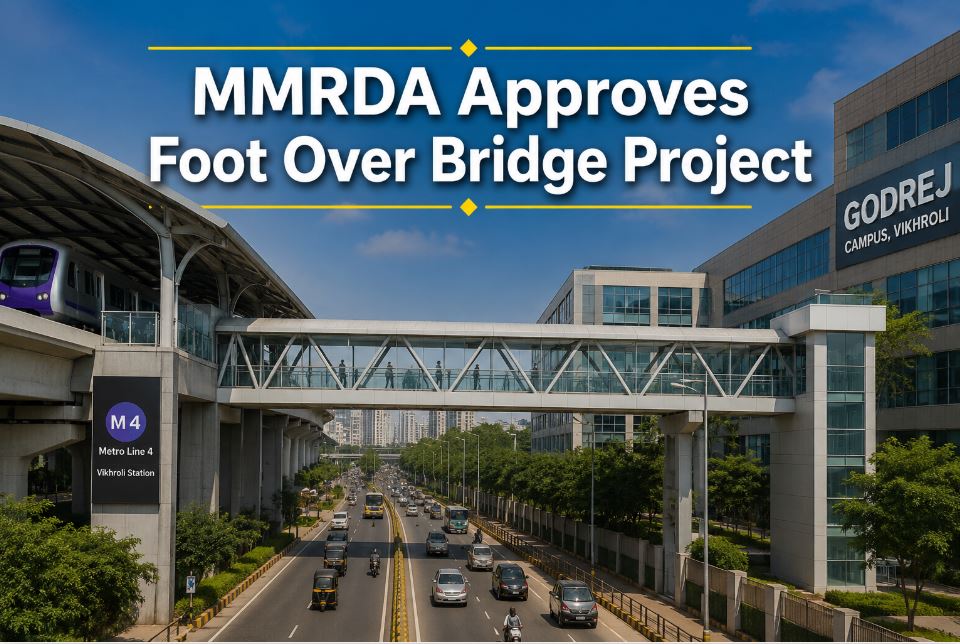
Mumbai's Metro network is set to become more commuter-friendly after the Mumbai Metropolitan Region Development Authority (MMRDA) approved a direct Foot Over Bridge (FOB) connecting the upcoming Metro Line 4 station with the Godrej campus in Vikhroli. The project is expected to make Metro travel safer, faster, and more convenient for thousands of daily commuters while strengthening Mumbai's growing public transport system.
The project will be fully funded by Godrej & Boyce, which has already paid a one-time, non-refundable development fee of ₹10 crore to MMRDA. The company will also bear the complete cost of designing and constructing the bridge under MMRDA's technical and safety guidelines.
Direct Metro Access to Improve Daily Commutes
The new foot over bridge will provide employees, visitors, and Metro passengers with direct access between the Metro station and the Godrej commercial campus.
Currently, pedestrians must cross the busy Lal Bahadur Shastri (LBS) Road to reach the campus. Once completed, the bridge will eliminate this road crossing, reducing travel time and improving pedestrian safety.
Transport planners believe the project will also encourage more people to choose the Metro for their daily commute by making station access easier and more convenient.
Second Private Development to Receive Direct Metro Connectivity
The Godrej project becomes only the second private development in Mumbai to receive MMRDA approval for direct Metro station access.
The first approval was granted to Oberoi Mall, where commuters can directly enter the shopping complex from Metro Line 7 without stepping onto the main road.
Officials say these projects demonstrate how public-private partnerships can improve commuter convenience while supporting Metro expansion across the Mumbai Metropolitan Region.
Godrej & Boyce to Fund the Entire Project
Under MMRDA's direct connectivity policy, private developers seeking access to Metro stations must:
- Pay a one-time, non-refundable development fee.
- Cover the complete cost of designing and constructing the bridge.
- Pay an additional 6% of the construction cost as MMRDA supervision charges.
- Meet strict engineering, structural, and safety standards before receiving approval.
As part of the agreement, Godrej & Boyce has fulfilled the required development fee of ₹10 crore and will finance the entire construction of the FOB.
The cheque was formally handed over by Anup Mathew, Executive Vice President and Business Head of Godrej Enterprises Estates Division, to MMRDA Metropolitan Commissioner Dr. Sanjay Mukherjee and senior MMRDA officials.
More Metro Connectivity Projects Under Evaluation
MMRDA is reviewing several similar proposals from commercial and residential developments across Mumbai.
One major proposal under consideration is from the Bharat Diamond Bourse, which is seeking direct access to Metro Line 2B.
If approved, the project is expected to serve nearly 40,000 commuters every day, reduce pedestrian traffic on nearby roads, and increase Metro usage in the area.
Officials believe more direct connectivity projects could significantly improve last-mile transportation across the city.
Government Says Policy Supports Metro Growth
Chief Minister Devendra Fadnavis said the policy has been introduced to improve direct Metro access for major commercial and residential developments while strengthening last-mile connectivity.
He noted that the model benefits both commuters and the Metro network by increasing passenger ridership and generating additional non-fare revenue through development fees. According to the Chief Minister, this approach helps support the long-term financial sustainability of Mumbai's Metro system without placing the full financial burden on commuters.
MMRDA Highlights Safety and Sustainable Revenue
Deputy Chief Minister and MMRDA Chairman Eknath Shinde said the authority is receiving positive responses from developers interested in direct Metro connectivity.
He emphasized that every proposal undergoes detailed technical and safety assessments before approval. According to him, these projects improve commuter convenience, reduce congestion around Metro stations, and create sustainable non-fare revenue that strengthens the Metro network over the long term.
Focus Remains on Better Last-Mile Connectivity
MMRDA Metropolitan Commissioner Dr. Sanjay Mukherjee said that last-mile connectivity plays a key role in increasing public transport usage.
He explained that connecting Metro stations directly with major business and residential hubs creates a smoother travel experience while ensuring that the beneficiaries bear the construction costs. This approach helps improve passenger convenience, encourages higher Metro ridership, and supports the financial sustainability of the Maha Mumbai Metro system.
MMRDA has also invited more eligible commercial and residential developments to participate in the initiative while maintaining strict engineering and safety standards.
Why This Project Matters
The approval of the Vikhroli Metro foot over bridge reflects Mumbai's broader strategy to build a more connected and efficient public transport network. By integrating Metro stations with large commercial campuses, the city aims to reduce dependence on private vehicles, improve pedestrian safety, shorten travel times, and encourage greater use of mass transit.
With additional proposals already under review, direct Metro connectivity could become an important feature of Mumbai's future infrastructure planning, making daily travel easier while creating new revenue streams to support the continued expansion of the Metro network.