
Maharashtra
Mumbai Nullahs to Get Steel Nets by May 2028
Wed Sep 23 2026
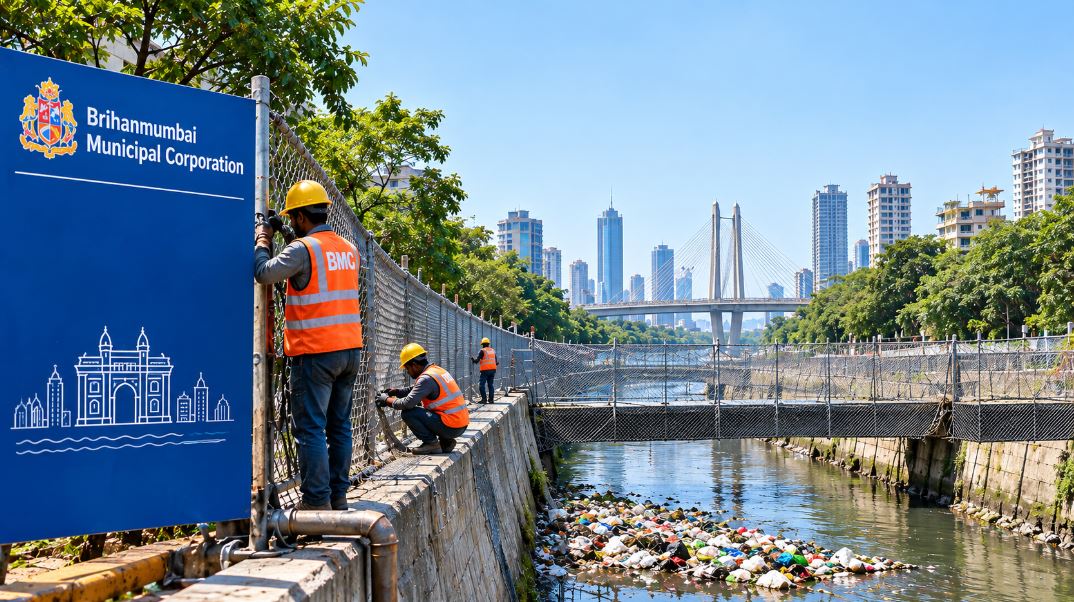
The Brihanmumbai Municipal Corporation (BMC) has set a May 2028 deadline to install steel garbage-trapping nets across major nullahs in Mumbai, expanding a measure that has already shown positive results at several locations.
The initiative is aimed at stopping residents from throwing waste into waterways, keeping nullahs cleaner and improving Mumbai’s preparedness for heavy monsoon rains. The civic body plans to gradually extend the system to vulnerable areas across the city.
Steel Nets Help Control Garbage Dumping
The BMC began testing steel nets at selected nullahs after repeated problems with garbage being dumped directly into waterways. Nets installed at Main Avenue Nullah and South Avenue Nullah have helped reduce the amount of waste entering the water channels, according to civic officials.
The nets are around 10 feet high and act as a physical barrier, making it harder for people living near the waterways to throw garbage into them.
Following the results of these trials, the BMC now plans to introduce the system across other major nullahs, especially in densely populated neighborhoods.
Vakola River to Get Garbage-Trapping Net
The BMC is also taking steps to address garbage accumulation in the Vakola River. The waterway near the Dnyaneshwar slum settlement has faced repeated dumping of household waste and other materials.
Floating garbage has frequently blocked the waterway, creating concerns during the monsoon. To address the issue, the civic body is installing a steel garbage-trapping net along the retaining wall of the Vakola River.
The project is expected to help stop large waste items from entering the waterway and make regular cleaning and maintenance easier.
BMC Sets May 2028 Deadline
Additional Municipal Commissioner (Projects) Abhijeet Bangar said the success of the steel nets at selected locations has encouraged the BMC to expand the system.
The civic body plans to install similar nets along major nullahs across Mumbai and complete the larger rollout by May 2028.
The focus will be on locations where dense settlements are located close to nullahs and where garbage dumping has been a long-standing problem.
Encroachments Could Make Installation Difficult
While the plan covers major nullahs across the city, the BMC faces challenges in areas such as Mankhurd and Dharavi.
In several locations, huts and other structures have been built directly alongside nullah walls. The limited space and existing encroachments could make it difficult for civic workers to install the steel barriers.
Officials will therefore need to assess individual locations and determine how the nets can be installed without affecting existing structures and access to the waterways.
Mumbai Has 314 Major Nullahs
Mumbai has 314 major nullahs covering a combined length of more than 300 kilometers. These include 30 nullahs in the island city, 125 in the eastern suburbs, 149 in the western suburbs and three connected with the Mithi River.
Keeping these waterways clear is important for managing stormwater during the monsoon. Although the BMC carries out pre-monsoon desilting every year, garbage dumping remains a major challenge.
Large items such as furniture, cupboards and sofas are also frequently dumped into nullahs, particularly in densely populated and slum areas.
Steel Nets Aim to Support Monsoon Preparedness
The BMC first piloted steel nets in December 2023 at nullahs in P&T Colony, Bandra West. The encouraging results led the civic body to introduce the measure at additional vulnerable locations near slums and chawls.
With the wider rollout planned by May 2028, the BMC hopes the steel nets will reduce waste entering Mumbai’s waterways, support regular cleaning and help keep nullahs functioning during heavy rainfall.
The initiative is part of the city's broader effort to improve drainage management and reduce the impact of garbage-related blockages during the monsoon.