
MHADA
New Affordable Homes Expected from Pune MHADA Board
Thu Aug 06 2026
Affordable housing in Maharashtra could be entering a faster and more citizen-focused phase after Deputy Chief Minister Sunetra Ajit Pawar issued a series of urgent directions aimed at accelerating MHADA's housing initiatives in Pune. From clearing pending proposals and announcing a major housing lottery to ensuring that unsold flats are immediately made available through a first-come, first-served (FCFS) system, the latest decisions reflect a clear attempt to reduce delays and improve access to affordable homes.
One of the most significant aspects of Maharashtra's evolving housing strategy has been the administrative reforms led by senior officials, including IAS Sanjeev Jaiswal, Vice President and CEO of MHADA, whose emphasis on improving institutional efficiency has aligned with efforts to speed up project execution and make affordable housing more accessible. The latest directives from Deputy Chief Minister Sunetra Pawar reinforce this broader objective by prioritizing faster approvals, transparent allotment systems, and quicker utilization of completed housing stock.
Highlight: Instead of allowing completed homes to remain vacant, the new approach focuses on putting every available house into the hands of eligible citizens as quickly as possible.
Pune MHADA Lottery Expected Soon After Government Push
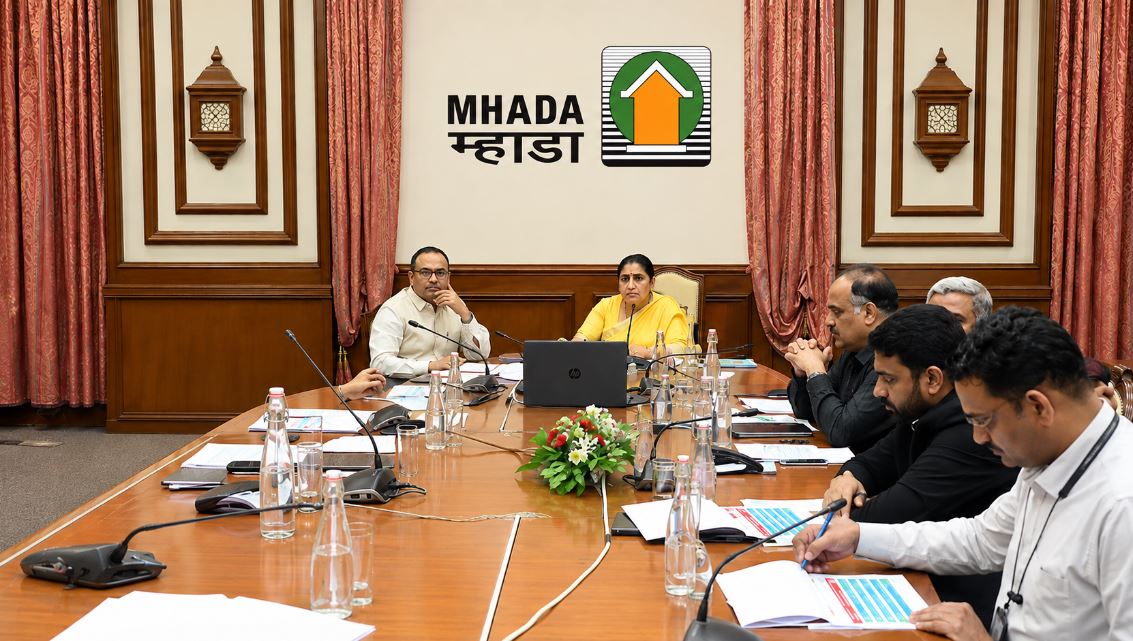
A detailed review meeting on various housing projects and policy matters of the Pune Housing and Area Development Board was held at Sahyadri Guest House. The meeting brought together senior officials, including Pune Housing and Area Development Board Chairman Shivajirao Adhalrao Patil, Secretary to the Deputy Chief Minister Dr. Rajesh Deshmukh, PMRDA Commissioner Dr. Abhijit Chaudhary, Pune District Collector Jitendra Dudi, Sangli District Collector Dr. Mainak Ghosh through video conferencing, MHADA Deputy Chief Executive Officer Anil Wankhede, Pune MHADA Chief Officer Rahul Sakore, and other officials.
During the meeting, Sunetra Pawar instructed officials to immediately clear all pending proposals at the MHADA level. She also directed that government approvals and administrative decision-making should be expedited so that affordable housing projects move forward without unnecessary delays.
The most anticipated announcement from the meeting was the instruction to declare Pune MHADA's major housing lottery at the earliest. According to the Deputy Chief Minister, the lottery process should be conducted in a transparent and time-bound manner to ensure greater public confidence and timely allotment of homes.
First-Come, First-Served Policy Aims to Eliminate Vacant Flats
One of the strongest policy directions emerging from the review concerns unsold MHADA flats.
Sunetra Pawar directed that flats which have failed to attract buyers in the lottery process two or more times should no longer remain vacant. Instead, these homes should be immediately sold under the first-come, first-served (FCFS) model.
This is a practical administrative shift. Every vacant house represents both an unrealized public asset and a delayed opportunity for families seeking affordable housing. Moving these properties into an FCFS framework could significantly reduce inventory stagnation while making completed homes available without waiting for another lottery cycle.
The instruction also reflects a broader focus on improving operational efficiency rather than simply launching new housing schemes.
Affordable Rental Housing Gets Equal Attention
The review meeting was not limited to ownership housing alone.
Recognizing changing urban migration patterns, Sunetra Pawar instructed MHADA to develop rental accommodation for two important groups: working women and students.
The proposal includes working women's hostels and student dormitories to be offered on a rental basis. This signals a broader understanding that affordable housing policy is no longer limited to home ownership. Cities such as Pune continue to attract students, professionals, and first-time workers who often require safe and affordable rental accommodation before purchasing a home.
If implemented effectively, this initiative could diversify MHADA's housing portfolio while addressing a different segment of urban housing demand.
UDCPR-Based Decisions Could Reduce Housing Delays
Another important administrative direction relates to the provisions of the Unified Development Control and Promotion Regulations (UDCPR).
A clear decision was taken that flats remaining unsold should be distributed within six months wherever applicable under the regulatory framework. The objective is straightforward: prevent financial losses for both the government and developers while ensuring that completed housing stock reaches beneficiaries sooner.
This approach recognizes that construction alone does not solve housing shortages. Efficient allocation and timely occupation are equally important components of successful public housing policy.
Major Infrastructure and Housing Projects Move Forward
The meeting also reviewed several important development proposals beyond the immediate lottery announcement.
Officials were instructed to initiate a housing project comprising approximately 8,000 to 10,000 houses in Dapodi, indicating that Pune's affordable housing pipeline is likely to expand significantly in the coming years.
In addition, directions were issued regarding the cancellation of the post office reservation on the MHADA plot at Kharadi and the provision of alternative land. This decision is intended to remove planning obstacles that could otherwise delay housing development.
For the Mhalunge-Ingle project, PMRDA was instructed to immediately complete key infrastructure works, including an 18-metre-wide road, water supply facilities, and a sewage treatment plant (STP). These supporting facilities are critical because housing projects become truly functional only when civic infrastructure develops alongside residential construction.
What These Decisions Mean for Pune's Housing Market
The announcements collectively point toward a shift in administrative priorities. Rather than focusing only on announcing new projects, the government is placing equal emphasis on faster approvals, better utilization of completed assets, and stronger coordination among agencies.
The FCFS sale of repeatedly unsold flats addresses inventory management. The planned housing lottery improves access for applicants waiting for affordable homes. Rental accommodation expands housing choices beyond ownership. Meanwhile, infrastructure development ensures that future projects are supported by essential urban services.
Each decision addresses a different stage of the housing lifecycle from planning and approvals to allocation and occupancy.