
MHADA
Sanjeev Jaiswal Leads MHADA Lokshahi Din 2026 in Mumbai
Mon Aug 10 2026
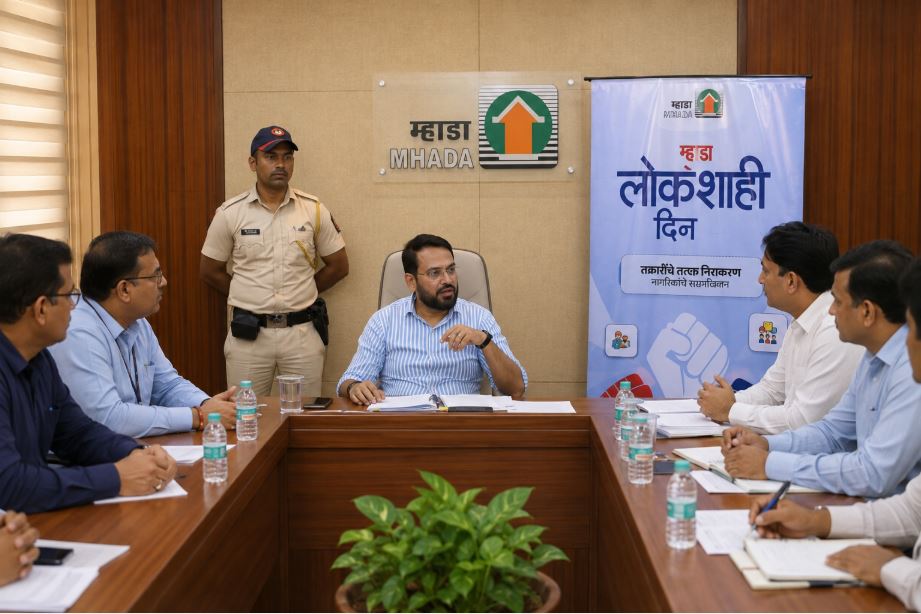
MHADA will conduct its 20th Lokshahi Din on August 10, 2026, creating another opportunity for Mumbai citizens to take their housing and administrative grievances directly to senior officials. The monthly initiative reflects a broader effort by the Maharashtra Housing and Area Development Authority to make grievance redressal more accessible, transparent, and accountable.
The significance of this initiative is closely linked to the leadership of IAS Sanjeev Jaiswal, MHADA’s Vice President and Chief Executive Officer, who will chair the upcoming session at the authority’s headquarters in Bandra East, Mumbai, at 12 noon. Under his leadership, MHADA has conducted 19 Lokshahi Din sessions since the initiative began in January 2024, using direct interaction to examine pending citizen complaints and push departments toward timely decisions on eligible cases.
Highlight: MHADA’s Lokshahi Din is evolving from a monthly grievance meeting into a structured mechanism for direct accountability between citizens and the housing authority.
MHADA Lokshahi Din 2026: A Direct Channel for Citizens
The 20th Lokshahi Din is scheduled for Monday, August 10, 2026. The concept is straightforward but important: citizens should have a formal opportunity to present their concerns directly before senior officials rather than allowing grievances to remain confined to routine administrative correspondence.
MHADA has been organizing Lokshahi Din on the second Monday of every month since January 2024. The initiative is designed to address individual housing and administrative concerns by bringing applicants, concerned departments, and senior officials into the same discussion.
This approach matters because grievance systems are effective only when they connect complaints with responsibility and follow-up. A citizen may submit an application through several channels, but the real test of governance is whether the complaint reaches the right department, is examined on its merits, and receives an appropriate response.
The Lokshahi Din framework attempts to create that connection through direct review.
IAS Sanjeev Jaiswal’s Role in Strengthening Accountability
IAS Sanjeev Jaiswal’s role goes beyond chairing the monthly meeting. Before each Lokshahi Din session, he reviews the progress made by departments on cases raised during earlier meetings. This follow-up mechanism adds an important layer of accountability to the process.
The completion of 19 sessions since January 2024 also provides evidence of continuity. Rather than treating citizen grievance meetings as occasional interventions, MHADA has established them as a recurring administrative process.
This distinction is significant. Good governance is rarely defined by a single decision. It is built through systems that encourage officials to listen, examine facts, take decisions, and follow up on unresolved matters.
By reviewing previous cases before a new session, the process creates a link between one month’s grievances and the next month’s administrative performance.
Why Direct Grievance Redressal Matters for MHADA
Housing-related grievances can involve multiple administrative layers, particularly when applications require examination by different departments. Direct interaction can help bring clarity to such cases by allowing citizens to explain their concerns while officials examine the relevant records and documents.
During Lokshahi Din, applications are considered in the presence of concerned officials. This creates an environment where issues can be discussed openly and relevant departments can provide their inputs.
The broader objective is not simply to increase the number of complaints addressed. It is to improve the quality and speed of administrative response.
For an authority dealing with housing, redevelopment, applications, and related citizen concerns, responsiveness is an important component of public trust. A grievance mechanism that clearly explains what can be considered, what cannot, and which department will handle an ineligible case can reduce uncertainty for applicants.
15-Day Rule Makes Preparation Essential
Citizens who want to participate in MHADA Lokshahi Din must submit their grievances in the prescribed format at least 15 days before the scheduled session. Applications must be submitted in two copies.
The prescribed application format is available on MHADA’s official website under the Lokshahi Din section. Applicants are also expected to provide all necessary supporting documents.
The 15-day requirement is more than an administrative formality. It gives MHADA time to examine the complaint, identify the concerned department, and prepare the relevant records before the meeting.
For citizens, the message is equally clear: a well-documented grievance is more likely to receive meaningful consideration than an incomplete application.
This makes preparation an important part of the grievance process. Applicants need to ensure that their complaint is individual in nature, clearly explained, submitted in the prescribed format, and supported by the required documents.
Which Complaints Will Not Be Considered?
Not every grievance qualifies for discussion during Lokshahi Din. MHADA has specified several categories that will not be taken up during the session.
These include matters pending before courts, revenue or appeal matters, service and establishment-related issues, incomplete applications, cases without required documents, and matters that have already received or are expected to receive a final response.
Repeated submissions concerning the same issue are also excluded. Similarly, grievances that are not personal in nature will not be considered.
These restrictions help maintain the purpose of Lokshahi Din. The initiative is designed to address individual citizen grievances rather than replace judicial, appellate, revenue, or other established administrative mechanisms.
The exclusions also prevent the monthly session from becoming an alternative forum for matters that already have a defined legal or administrative process.
What Happens to Ineligible Applications?
Importantly, an application that is not eligible for Lokshahi Din is not simply discarded.
MHADA will forward such applications to the concerned department within eight days for appropriate action. A copy of the communication will also be provided to the applicant.
This provision is particularly relevant from a governance perspective. A grievance may fall outside the scope of Lokshahi Din while still representing a legitimate administrative concern. Routing it to the appropriate department helps ensure that procedural ineligibility does not automatically mean administrative inaction.
The eight-day forwarding timeline also gives applicants a clearer understanding of what happens after their submission is found unsuitable for the Lokshahi Din process.
From the 19th to the 20th Lokshahi Din
The upcoming session follows the 19th Lokshahi Din, where redevelopment grievances were reviewed. The continuation of the program shows that MHADA is maintaining direct citizen engagement as part of its broader grievance redressal framework.
The real measure of the initiative, however, will not be the number of meetings conducted. Its long-term value will depend on whether citizens receive clearer responses, departments follow through on decisions, and unresolved cases are systematically monitored.
That is where the role of leadership becomes important. Regular review by IAS Sanjeev Jaiswal creates a mechanism through which previous complaints remain part of the administrative conversation rather than disappearing once a meeting ends.
A Governance Model Built Around Follow-Up
MHADA’s Lokshahi Din offers a useful lesson about the difference between access and accountability. Giving citizens a platform to speak is only the first step. Effective governance requires an institutional process that connects the complaint to examination, decision-making, departmental action, and follow-up.
The 20th Lokshahi Din on August 10 therefore represents more than another monthly meeting. It is another checkpoint in a system that has conducted 19 sessions since January 2024 and continues to emphasize direct citizen interaction.
For MHADA, the opportunity is to keep strengthening this process while ensuring that eligible grievances receive timely attention and ineligible cases are efficiently redirected.
Making Citizen Voices Part of Administrative Decision-Making
MHADA’s Lokshahi Din initiative demonstrates how a structured, recurring grievance platform can bring citizens closer to senior decision-makers. The 20th session, chaired by IAS Sanjeev Jaiswal, continues a process that has been running on the second Monday of every month since January 2024.
Its importance lies in the combination of direct interaction, document-based examination, departmental participation, and follow-up review. With clear eligibility rules and an eight-day forwarding process for unsuitable applications, MHADA is also creating greater clarity around how grievances are handled.
Ultimately, the strength of any public institution is reflected in how it responds when citizens raise concerns. By keeping grievance redressal connected to direct accountability and regular follow-up, MHADA’s Lokshahi Din can continue to serve as an important bridge between citizens and administration.