
MHADA
Sanjeev Jaiswal Reviews Citizen Grievances at MHADA Lokshahi Din
Wed Aug 12 2026
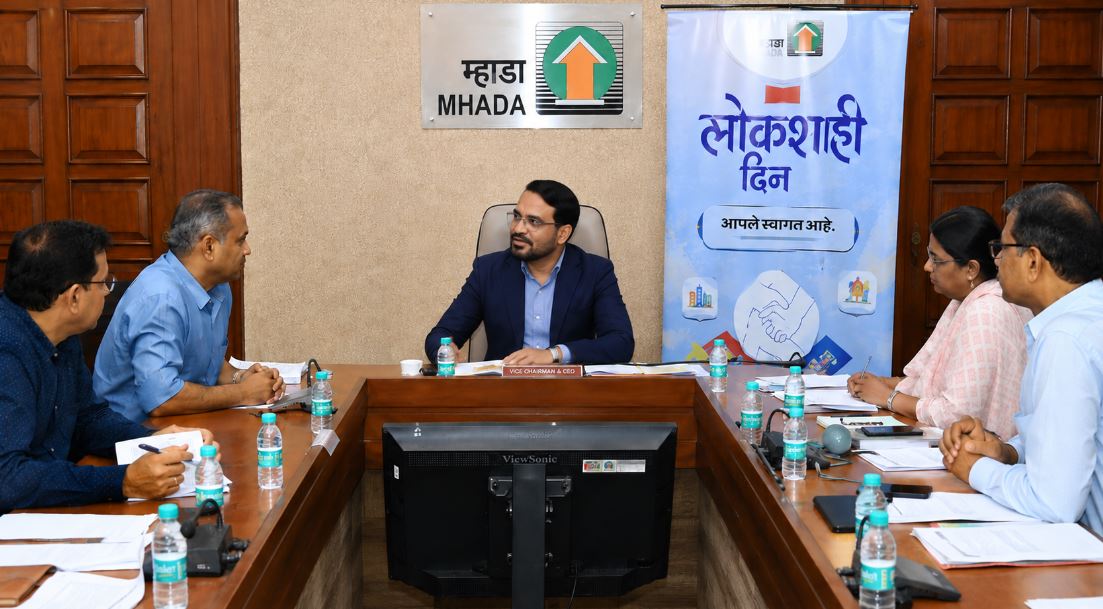
A responsive housing administration is measured not only by the schemes it announces, but also by how seriously it listens when citizens raise concerns. MHADA’s 20th Lokshahi Din offered a clear example of this approach, with two applications heard at the authority’s headquarters in Bandra East and directions issued for further review and action in both cases.
The proceedings were presided over by IAS Sanjeev Jaiswal, Vice Chairman and CEO of the Maharashtra Housing and Area Development Authority (MHADA). His directions focused on re-hearing and reviewing the two cases through the appropriate departments and under the relevant legal provisions. The emphasis was not simply on closing complaints, but on ensuring that earlier decisions and applicable rules are properly examined before further action is taken.
Highlight: MHADA’s 20th Lokshahi Din puts procedural review at the center of citizen grievance redressal, signaling the importance of listening before deciding.
MHADA 20th Lokshahi Din Focuses on Citizen Grievances
Lokshahi Din is designed to give citizens an opportunity to place grievances and pending issues directly before the administration. At the 20th session, two applications were taken up for hearing, covering matters related to cooperative housing societies and decisions taken by concerned authorities.
The significance of such hearings lies in creating a direct administrative channel for citizens. Housing society disputes can involve multiple stakeholders, regulatory provisions and previous decisions. A structured hearing allows the administration to examine whether the concerns raised have been appropriately considered and whether further action is required.
At the Bandra East headquarters, both applications resulted in directions for the concerned departments to undertake additional review.
Navi Chikhalwadi Housing Society Case Sent for Re-Hearing
The first application was submitted by Deepak Rane concerning the registration of Shubham Housing Cooperative Society at Navi Chikhalwadi MHADA Colony, Building No. 10. The applicant also raised concerns about the functioning of the society’s office bearers.
Rane sought a hearing on the matter and requested necessary action concerning the functioning of the housing society and its office bearers. Rather than treating the complaint as a routine administrative submission, the case was directed for re-examination.
During the hearing, MHADA Vice Chairman and CEO Sanjeev Jaiswal instructed the concerned Deputy Registrars and Cooperative Societies to conduct a re-hearing of the matter. The Chief Officer of the Mumbai Building Repair and Reconstruction Board was also directed to take action so that the concerned Deputy Registrars could review the case.
This direction is important because a re-hearing creates an opportunity to reassess the matter through the competent authority instead of allowing an unresolved dispute to remain stuck in the administrative process. For residents, the value of such intervention ultimately depends on whether the review produces a clear and legally sound outcome.
Kurla Housing Society Complaint to Be Reviewed
The second application concerned Yashodeep Cooperative Housing Society in Kurla East’s Nehru Nagar area. Applicant Krishna Jadhav had raised a complaint against the managing committee and approached Lokshahi Din regarding an earlier decision issued by the Deputy Registrar, Cooperative Societies.
Jadhav presented his case during the hearing, particularly in relation to the decision that had already been taken.
After considering the application, Sanjeev Jaiswal directed the concerned Deputy Registrar, Cooperative Society, to review the earlier decision. The review is to be undertaken in accordance with the provisions of the Cooperative Housing Societies Act and by taking into account the earlier decision in the case.
The direction highlights an important principle in administrative decision-making: reviewing an earlier order does not necessarily mean reversing it. It means examining whether the decision remains consistent with the applicable legal provisions and the facts already considered in the matter.
Why Review Matters in MHADA Housing Society Disputes
Housing society complaints can become complicated when different administrative authorities, cooperative society rules and previous orders intersect. In such situations, speed is useful, but accuracy is essential.
The two cases heard during MHADA’s 20th Lokshahi Din demonstrate why review mechanisms matter. In one case, a re-hearing was ordered concerning the registration and functioning of a cooperative housing society. In the other, an earlier decision was directed to be reviewed in light of the relevant law and the previous order.
The broader lesson is that effective grievance redressal is not merely about receiving complaints. It requires an institutional process through which concerns can be heard, decisions can be reconsidered when necessary, and competent officers can be asked to take clearly defined next steps.
Sanjeev Jaiswal’s Focus on Effective Grievance Redressal
Under the leadership of MHADA Vice Chairman and CEO Sanjeev Jaiswal, the proceedings placed emphasis on moving the two applications toward further administrative action. The directions issued during the hearing assigned responsibilities to the relevant officers rather than leaving the cases at the stage of representation.
This approach matters because citizen confidence in public institutions is shaped by what happens after a complaint is submitted. A hearing becomes meaningful when it leads to a defined process for examination and follow-up.
In these two cases, the instructions for re-hearing and review provide that next procedural step. The concerned departments will now have to examine the matters while considering the applicable legal provisions and earlier decisions.
Lokshahi Din and the Larger Governance Question
The value of Lokshahi Din extends beyond individual complaints. It represents a governance mechanism through which citizens can directly bring unresolved housing-related matters before the administration.
For an organization dealing with housing, redevelopment, repairs and cooperative society-related issues, grievance redressal is particularly significant because administrative decisions can directly affect residents and housing societies. A system that allows citizens to present their cases and seek review can help identify where further examination is warranted.
The 20th Lokshahi Din therefore illustrates a broader idea: good governance is not only about making decisions; it is also about creating credible avenues to question, review and improve those decisions.
What Happens Next in the Two Cases?
The immediate outcome of the hearing is procedural rather than final. In the Navi Chikhalwadi case, the concerned Deputy Registrars and Cooperative Societies have been instructed to conduct a re-hearing, with the Mumbai Building Repair and Reconstruction Board’s Chief Officer asked to facilitate the necessary action.
In the Kurla case, the concerned Deputy Registrar has been directed to review the earlier decision by considering the Cooperative Housing Societies Act and the previous decision in the matter.
The next stage will therefore depend on the concerned authorities completing these reviews and taking appropriate action based on their findings.
A Hearing Is Valuable When It Leads to Action
MHADA’s 20th Lokshahi Din shows how citizen grievance mechanisms can serve a practical role in housing administration. Two applications were heard, and both resulted in specific directions for further examination.
The intervention by IAS Sanjeev Jaiswal also underlines an important governance principle: unresolved citizen concerns require more than acknowledgement. They require an appropriate forum, careful consideration of the law and previous decisions, and clear instructions to the officers responsible for the next step.
For the applicants involved, the re-hearing and review directions provide another opportunity for their concerns to be examined through the prescribed administrative process. More broadly, the proceedings reinforce the importance of making grievance redressal a meaningful part of public administration, where listening is followed by review, responsibility and action.